
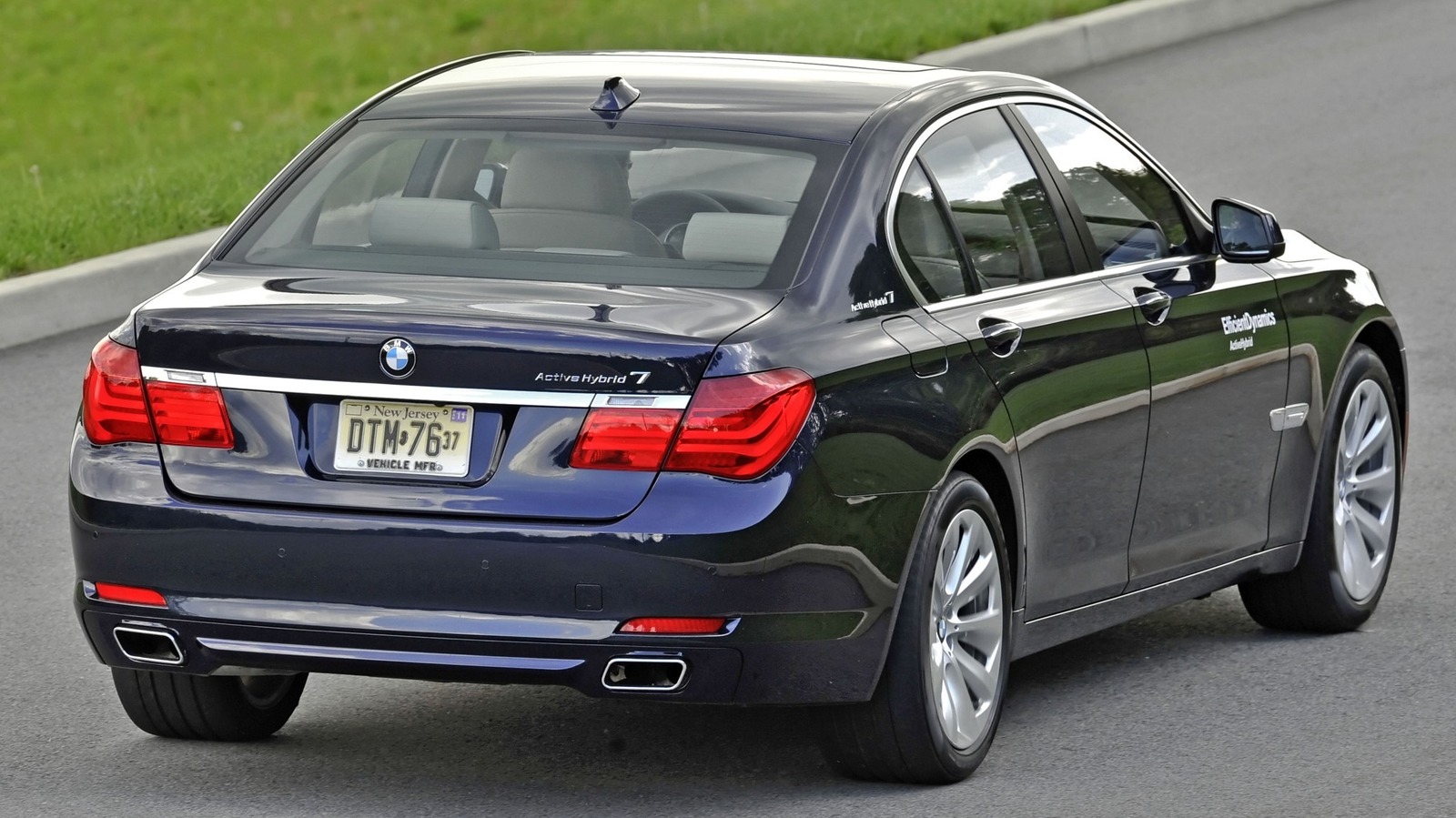


Some cars whisper luxury. Others shout ambition. The BMW ActiveHybrid 7 screams something else entirely: that its owner has a profoundly dysfunctional relationship with money, risk, and basic self-preservation.
Jalopnik’s Andy Kalmowitz put the question to readers this week — what car tells the world you make terrible decisions? His own answer landed on the F01-generation ActiveHybrid 7, a machine that married BMW’s notoriously problematic N63 twin-turbocharged 4.4-liter V8 to an electric motor stuffed inside the transmission housing. The payoff for all that complexity? Roughly a 15 percent improvement in fuel economy over a standard 750i.
The N63 earned its reputation the hard way. Oil consumption issues, turbocharger failures, fuel injector problems, and valve stem seal leaks turned it into a repair shop’s annuity. BMW even launched a customer care program — essentially a quiet recall — to address some of its worst tendencies. Bolting a hybrid system onto that foundation wasn’t engineering ambition. It was engineering hubris.
When these cars were new, they stickered north of $100,000. Today they trade hands for a fraction of that, which is precisely the trap. A depreciated German luxury hybrid with a known-bad powertrain sitting on Craigslist for $8,000 looks like a steal until the first diagnostic scan. Then it looks like a second mortgage.
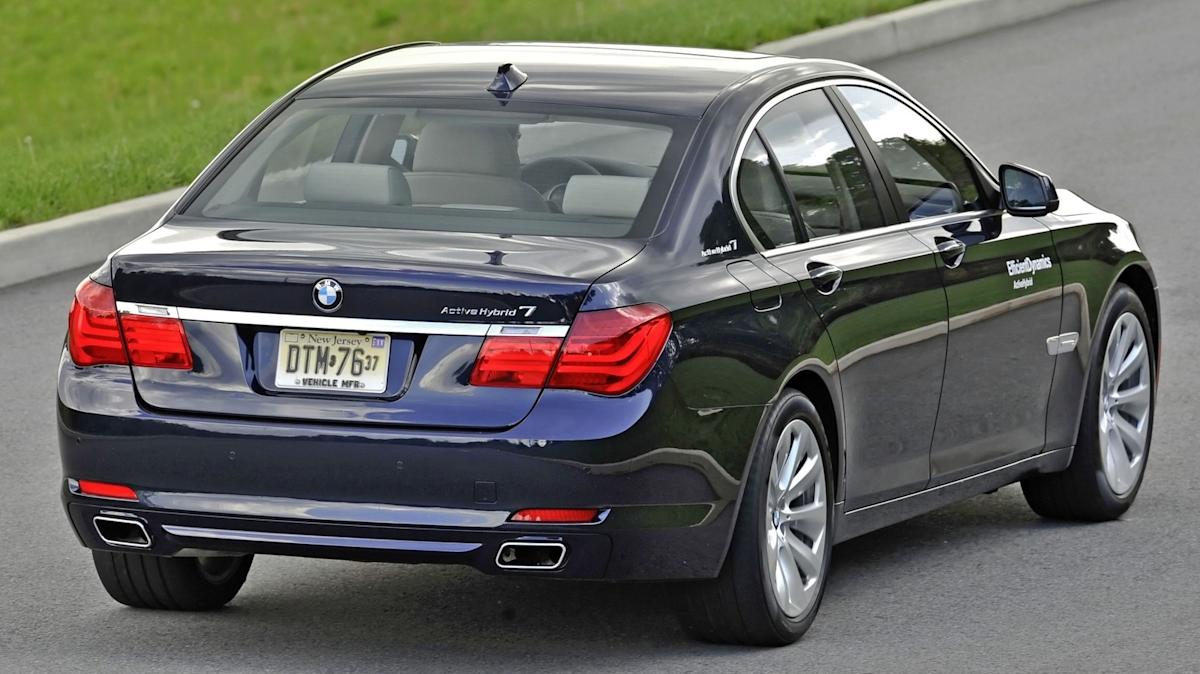
Kalmowitz’s inspiration came from TikToker Raphael Montes, who apparently purchased a thoroughly wrecked ActiveHybrid 7 at the urging of his followers. The content practically writes itself — a car that was unreliable when BMW’s own technicians serviced it, now in the hands of someone chasing internet engagement. As Kalmowitz put it with characteristic bluntness, “I’m a bit worried it might kill him.”
The broader question Jalopnik posed taps into something real about car culture. We love to pretend vehicle choice is purely rational — commute distance, cargo needs, fuel costs. It never is. Cars are emotional purchases dressed up in spreadsheet logic, and some emotional purchases are worse than others.
The ActiveHybrid 7 sits in a special category: a car that was irrational when it was new and becomes exponentially more irrational with each passing year and each additional mile. What makes it the perfect “bad decisions” car isn’t just the mechanical fragility. It’s the specific flavor of delusion required to buy one.
You have to believe you’re getting a deal. You have to believe you’re smarter than the last three owners who dumped it. You have to look at a hybrid system grafted onto one of BMW’s most failure-prone engines and think, “This time will be different.”
The car doesn’t have to be a bad decision in isolation, Kalmowitz noted. It can simply fit a wider terrible-decision ethos. If you’re willing to roll the dice on an N63 hybrid with unknown service history, what other corners are you cutting?
BMW has built plenty of cars worth the headaches. The E39 M5, the E30 325is, even the maligned F80 M3 reward their owners with something transcendent enough to justify the repair bills. The ActiveHybrid 7 never offered that bargain. It was always a 7 Series that got slightly better mileage in exchange for dramatically worse reliability, aimed at buyers who wanted a green halo without giving up twelve cylinders’ worth of ego. Eight cylinders, technically, but the ego was twelve-cylinder grade.
The comment sections lit up predictably — Chrysler Crossfires, Mitsubishi Eclipses with automatic transmissions, any Maserati Ghibli. All worthy nominees. But the ActiveHybrid 7 holds a special place because it required such a specific combination of optimism and ignorance to choose. It’s not a car for people who don’t know better. It’s a car for people who should.
Share this Story