


A 2006 Porsche Cayenne Turbo S — 520 horsepower, twin-turbo V8, originally stickered at $112,000 — is listed on Facebook Marketplace for $6,500. That’s the same price as a 26-year-old Daihatsu kei car listed two clicks away. Welcome to the used car market in 2026, where depreciation doesn’t just bite, it devours.
Amber DaSilva’s weekly Facebook Marketplace roundup for Jalopnik reads like a dispatch from the automotive afterlife, where once-proud machines go to be reborn or recycled. The Cayenne is the headliner, but it’s far from the only car telling a story about where values — monetary and cultural — actually sit right now.
Consider the 1984 Toyota Corolla AE86 listed at $6,000. It has no engine. It’s not even a GTS. An SR5 Corolla shell from the Reagan era commands the same money as a Porsche SUV with a functioning powertrain, because anime and drift culture have rewritten the collector hierarchy in ways no Monterey auction house predicted.
The listing includes a pile of aftermarket parts, turning it into a build-your-own-race-car kit. That only reinforces how detached enthusiasm pricing has become from any rational assessment of what a car is versus what it represents.
Then there’s the Daihatsu Naked, also at $6,500, being pitched not as a quirky import novelty but as a practical commuter. The seller leads with fuel economy — over 30 miles per gallon — rather than the right-hand-drive charm or the obscurity factor. Even enthusiasts shopping for oddball Japanese imports are doing the math at the pump.
At the bottom of the price ladder, a 1982 Dodge Ramcharger with a bashed-in front end sits at $1,500 with an ad that reads like a haiku: “Runs and drives. Needs some tlc. 1500 takes it home.” A 1981 Chevy K5 Blazer in Massachusetts asks $3,200 and comes with rust that has skipped the charming patina phase entirely, jumping straight to structural concern. These are trucks that would have fetched five figures in the COVID market frenzy. Now they’re priced like lawnmowers.
The 1984 Mercedes-Benz 190e at $13,300 occupies a different lane entirely. Once the car you bought when you couldn’t afford a real Mercedes, it’s become arguably the prettiest Benz on the road — a complete inversion of its original market position. Depreciation humbled it, then time made it beautiful. The Cayenne hasn’t gotten there yet. It may never.
A 2001 BMW 325i wagon at $4,890 rounds out the affordable end, a solid E46 that exists in the increasingly rare space between cheap enough to buy and decent enough to enjoy. DaSilva admits she’d prefer it drifted into walls, but acknowledges not everyone shares her taste for destruction.
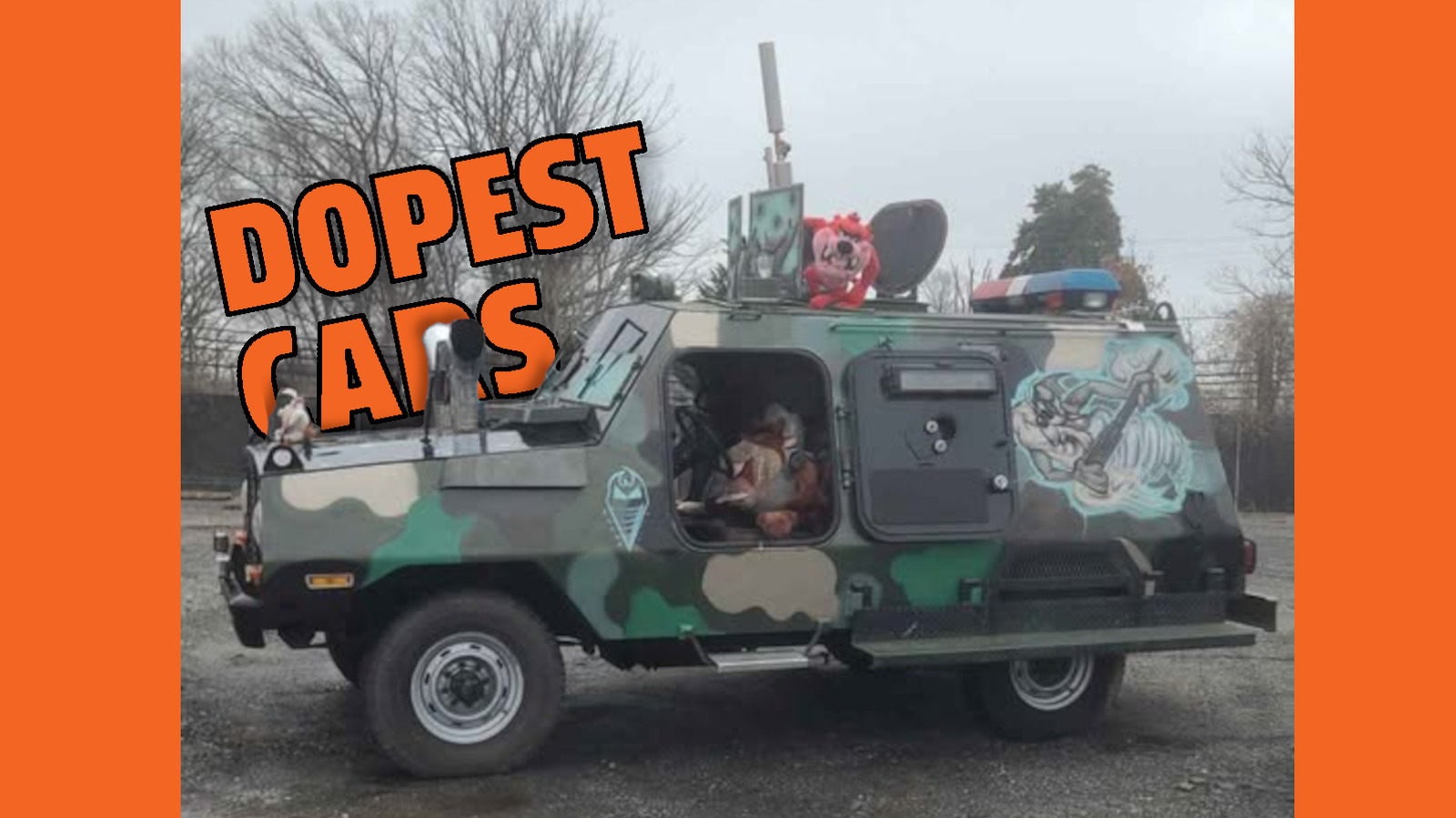
And then, because Facebook Marketplace is Facebook Marketplace, there’s a 1983 Response Police Tank listed at $47,000. It appears to be an armored chassis-cab covered in Tasmanian Devil decals, and no one involved in the listing seems prepared to explain why. Some things resist analysis.
The thread connecting all of these listings is the growing disconnect between what cars cost new, what they cost now, and what people actually want. A Porsche loses 94 percent of its value. A Toyota with no engine holds its price like gold. A Daihatsu gets sold on gas mileage. A police tank gets sold on vibes.
The used market has always been irrational. But right now it feels like it’s operating on a different set of rules — ones written by enthusiast forums, anime fandoms, and the collective anxiety of people watching fuel prices and tariff headlines.
The old logic, where a car’s resale tracked roughly to its original prestige, is dead. The new logic hasn’t fully formed yet. It just shows up on Facebook Marketplace, one listing at a time, priced somewhere between absurd and inevitable.

Share this Story