



A 1974 Reliant Scimitar GTE — the same car that once served as a daily driver on the streets of Los Angeles, appeared in a Lemonheads photo shoot, and helped launch a car writer’s career — is up for sale again. The asking price is $3,500. The car has now outlasted the patience of two consecutive owners who adored it but couldn’t keep up with it.
Jason Torchinsky, co-founder of The Autopian, owned the British shooting brake for roughly 15 years before selling it during the pandemic in 2020. He drove it daily, loved it fiercely, and eventually admitted what every honest enthusiast dreads admitting: he wasn’t the right custodian for a rare, parts-scarce, right-hand-drive fiberglass oddball living in America.
The buyer was Myron Vernis, a serious collector with an impressive stable. His mechanic got the Scimitar running again shortly after purchase. Then the same gravity took hold — too many projects, not enough hours.
This is the lifecycle of almost every interesting obscure car in private hands. Someone falls in love, buys it cheap, drives it hard, hits a wall of unobtainable parts and competing priorities, then passes the torch to the next optimist. The Scimitar has now completed that cycle twice in five years.
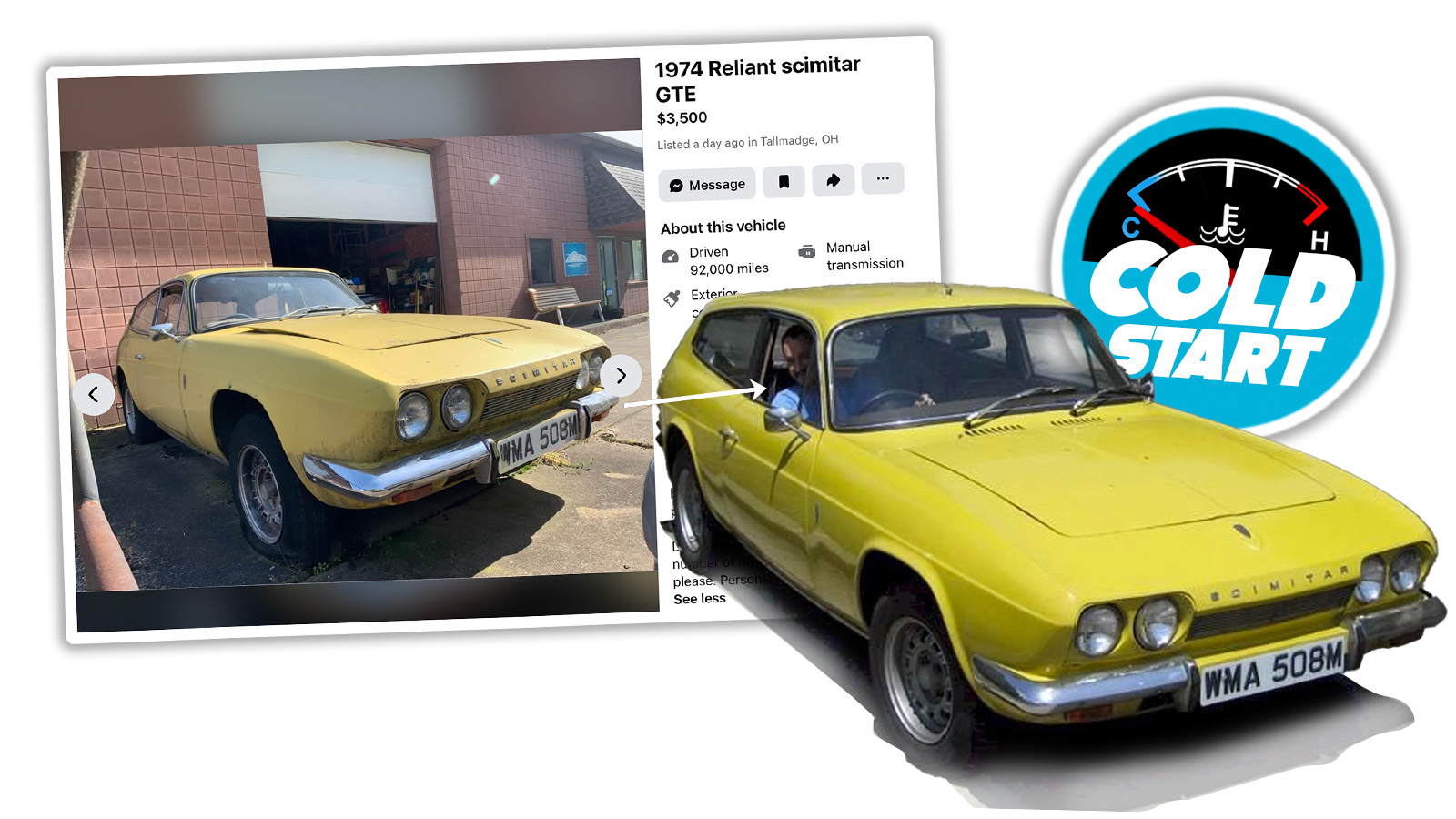
The bones sound decent. Torchinsky reports the interior is in strong shape — seats, headliner, and carpets all serviceable. The fiberglass body is solid, though the hood needs reattachment and the dash cover is cracked. It needs tires, and it needs someone who understands that a car built by a company better known for three-wheelers is going to demand creativity when something breaks.
The Scimitar GTE holds a genuine place in automotive history. It was the first production car with split-folding rear seats. Its Laycock de Normanville overdrive operated on both third and fourth gears, giving a six-speed feel from a four-speed box, and the Ford Essex V6 under the hood gave it legitimate pace by 1970s British standards. Princess Anne owned one — several, actually — and you will hear about this from strangers if you drive it in public.
At $3,500, the car is priced like a problem, which is honest. It’s not running reliably. Parts sourcing in North America ranges from difficult to archaeological, though an engine swap has been floated as a realistic path forward — drop in a more common V6 or V8 and the maintenance equation changes entirely.
Torchinsky himself considered buying it back. He talked himself out of it, citing zero garage space and zero free time, which is the most self-aware thing a car enthusiast can say and the hardest. He’s hoping someone from the Autopian community picks it up, partly so the car lands with an appreciative owner, partly so he can maybe drive it once more when the work is done.
The comment section beneath his post tells the whole story of the enthusiast condition in 2025. One reader calls it tempting but can’t swing another non-running project. Another already has eight undriveable cars and a previously Torchinsky-owned vehicle in the fleet. A third just filled their last garage bay with a 1950 Chrysler.
That’s the paradox of a car like this. It’s too rare to ignore and too demanding to casually own. Three and a half grand gets you a piece of British motoring history with a colorful provenance and a body style that still looks right fifty years later. It also gets you a commitment that two smart, passionate car people couldn’t keep. The Scimitar isn’t asking for money. It’s asking for time, and that’s always been the more expensive currency.




Share this Story