
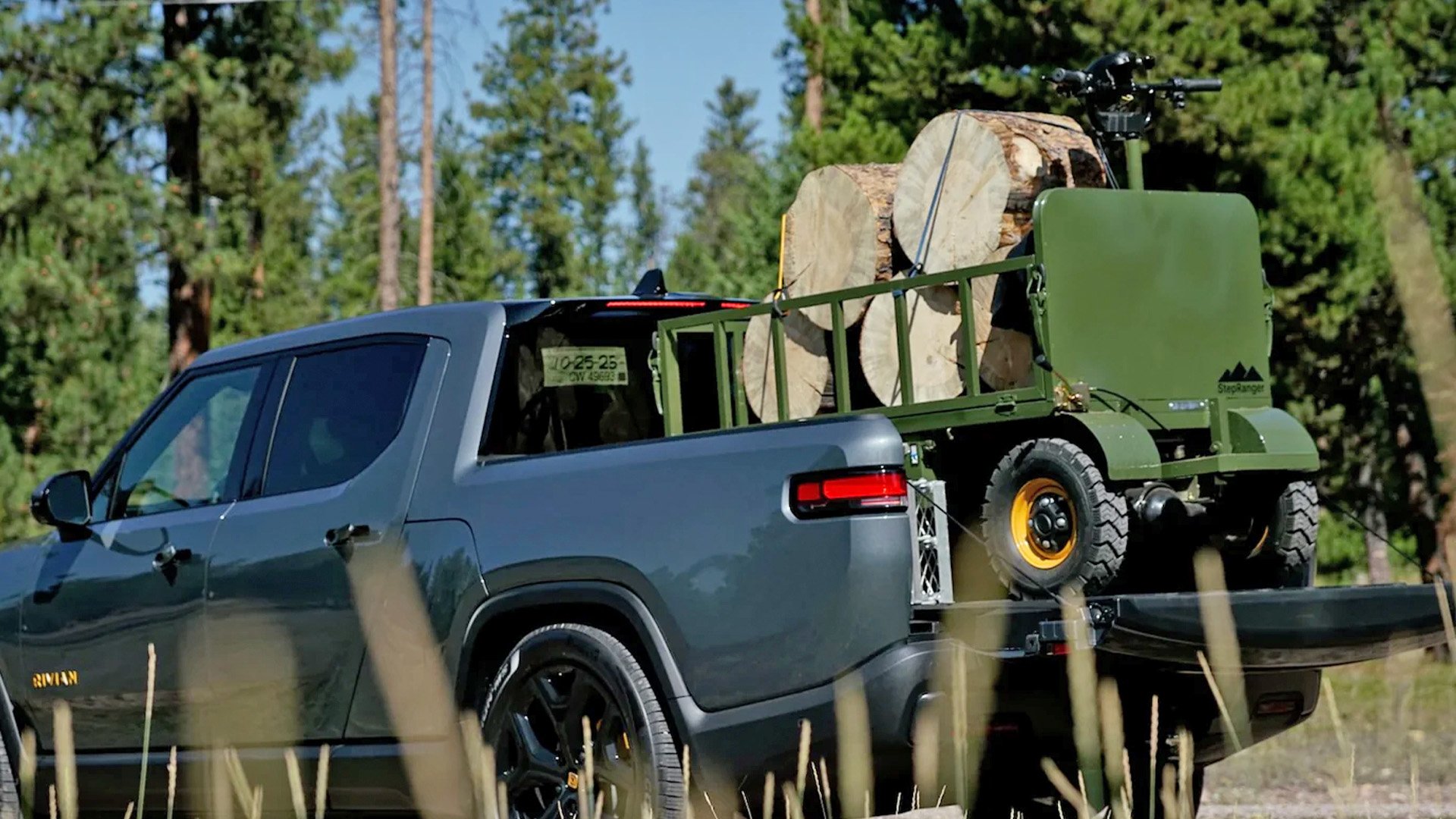


A flat platform on four wheels with a step on the back for the operator and handlebars for steering. That’s the StepRanger, and it might be the most honest work vehicle to come along in years, precisely because it doesn’t pretend to be anything more than what it is.
Billed as a “micro-truck,” the StepRanger occupies a space so far below the current arms race of bloated pickups that it almost feels like satire. It measures 65 inches long with the rear step folded down and just 31 inches wide. That’s short enough to fit inside the bed of a Rivian R1T — a tender for your truck, the way a dinghy serves a yacht.
The concept is dead simple. Park your full-size pickup where it has to stop — at a fence line, a narrow alley, a crowded job site — then roll the StepRanger out of the bed and keep going. An electric motor pushes it to a top speed of 15 mph, and a 48-volt battery delivers 15 to 17 miles of range, which the company says covers a full day of typical use.
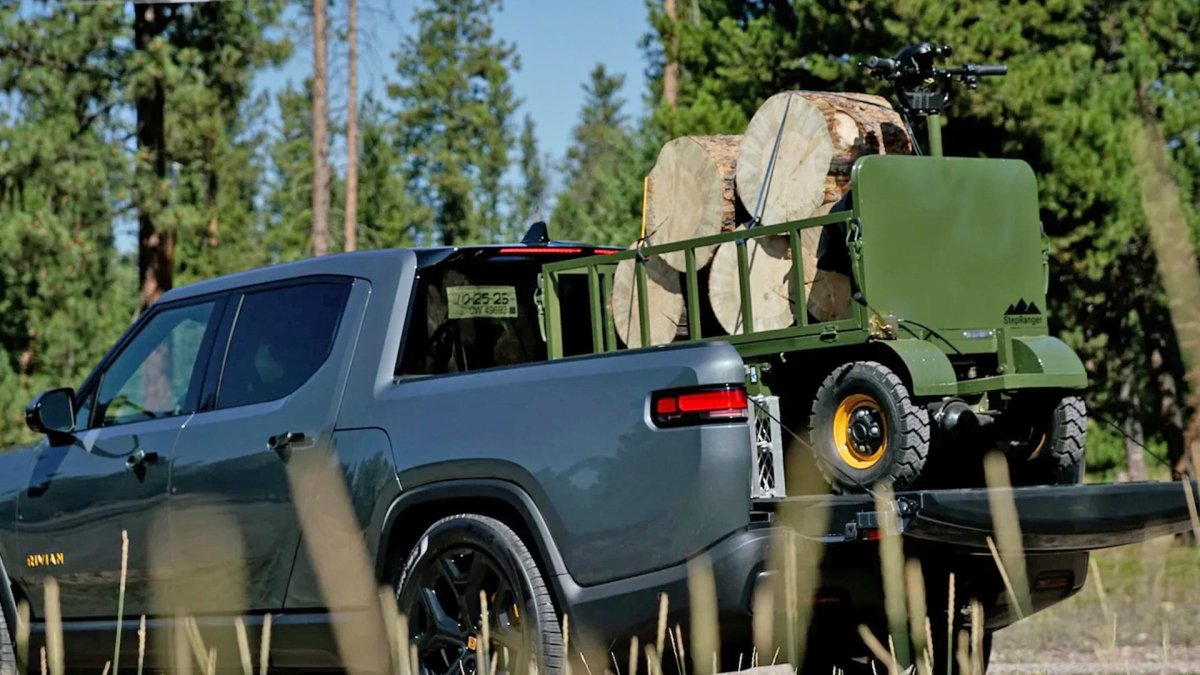
There’s no seat. The operator stands on a fold-down step at the rear, which means virtually the entire 59-inch-long, 31-inch-wide platform is available for cargo. The payload capacity is a claimed 1,000 pounds. Side railings fold flat, so loading and unloading is about as complicated as setting a box on the floor.
The price is $2,700 plus $250 for shipping anywhere in the lower 48. Snow and mud tires run $160, and a pair of tiny snow chains costs $64.95. Once unboxed, the only setup required is charging the battery.
This thing arrives at an interesting moment. The average new truck transaction price has blown past $60,000, and the average new truck weighs north of 5,000 pounds. Yet a staggering amount of pickup use — hauling feed bags, moving lumber across a property, shuttling tools around a warehouse — doesn’t require 400 horsepower or a six-foot bed. It requires something that fits through a gate.
Kei trucks have been filling a version of this role for people willing to navigate the patchwork of state street-legal requirements. The StepRanger doesn’t compete with them, exactly. It’s not street-legal transportation — it’s a powered wheelbarrow with ambition, and that distinction keeps it out of regulatory limbo while solving a real problem.
The 1,000-pound payload claim deserves scrutiny. That’s a lot of weight on a platform this small with a standing operator. But if it holds up, the StepRanger punches absurdly above its weight class relative to its price — a decent two-wheel hand truck costs $200, carries maybe 600 pounds, and requires you to supply the motive power yourself.
There’s something refreshing about a vehicle that strips away every comfort, every feature, every inch of sheet metal that doesn’t directly contribute to moving stuff from one place to another. No touchscreen. No subscription. No over-the-air updates. Just a motor, a battery, a platform, and a pair of handlebars.
In a market that has spent two decades convincing buyers they need more truck than they actually use, the StepRanger is a quiet counterargument. It doesn’t replace anything in your driveway. It just does the job your $70,000 pickup was never going to fit through the door to do.

Share this Story