


General Motors will build the reborn 2027 Chevrolet Bolt for just 18 months before killing it a second time to make room for gasoline-powered Buicks and Equinoxes at its Fairfax, Kansas plant. Let that sink in.
The Bolt was GM’s bestselling EV by a wide margin. Fans revolted when Mary Barra announced its cancellation in 2022 so the Orion Township factory could build electric Silverados that nobody was lining up to buy. The outcry forced a reversal at CES 2023, and now the little hatchback is back with a new lithium iron phosphate battery, a NACS fast-charging port, and 262 miles of range starting at $28,995.
It is, by nearly every measure, a better car than the one it replaces. It’s also already a dead man walking.
The mechanical upgrades are real and meaningful. DC fast-charging leaps from an agonizing 55 kW max to 150 kW, slashing an 80 percent fill from nearly an hour to roughly 25 minutes on a Tesla V4 Supercharger. The new drive motor makes 210 horsepower, a modest bump, and despite losing nearly 100 lb-ft of torque on paper, a much taller 11.59:1 final drive ratio means the car actually reaches 60 mph two-tenths of a second quicker than before.
Efficiency on a hilly Malibu drive route hit around 4 miles per kWh, making that range estimate look honest.
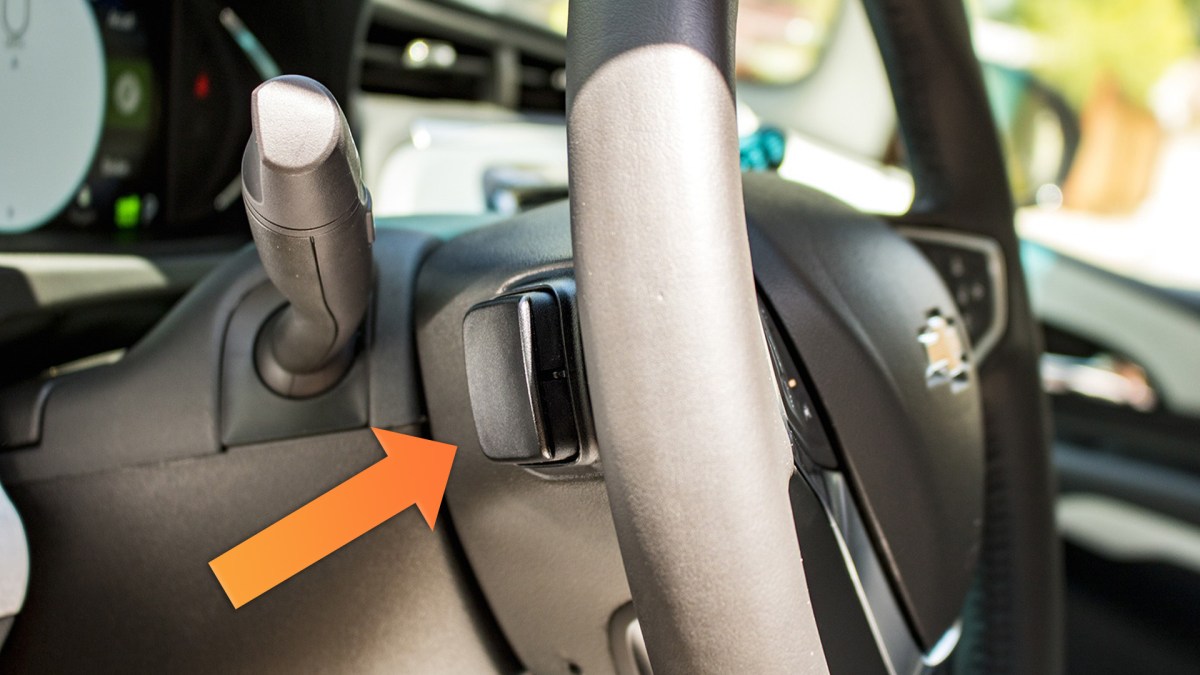
But the Bolt also lost something in the resurrection: its steering wheel-mounted regenerative braking paddle, one of the quirkiest features in any mainstream EV. Chief Engineer Jeremy Short explained the reasoning plainly. The paddle was born from limitation, not inspiration.
“Before, it was kind of born out of necessity,” Short said. We didn’t have a multi-level one-pedal system at the time.” The original Bolt’s brake controller blended friction and regen crudely, and the paddle gave enthusiasts a manual override to squeeze out extra range. Now, the brake controller is sophisticated enough that simply pressing the brake pedal harvests more energy than the old paddle ever could.
Short traced the feature’s lineage back to the Chevy Volt, where 38 miles of electric range made every tool count. “But if we took you out and said, ‘Hey, drive this profile and use the regen on-demand paddle,’ you would actually be less efficient than using the brake pedal now,” he said.
The new Bolt does offer two levels of one-pedal driving, one gentle and one aggressive, delivering up to 85 kW of regen force on throttle lift. But toggling the feature now requires tapping a persistent icon on the touchscreen rather than flipping a physical switch. That’s a step backward in usability, even if the underlying system is a step forward in efficiency.
Other changes reflect GM’s deeper parts bin. The cabin borrows its larger infotainment screen running Android Automotive OS, ditching Apple CarPlay and Android Auto entirely. The body adopts the slightly larger EUV proportions exclusively.
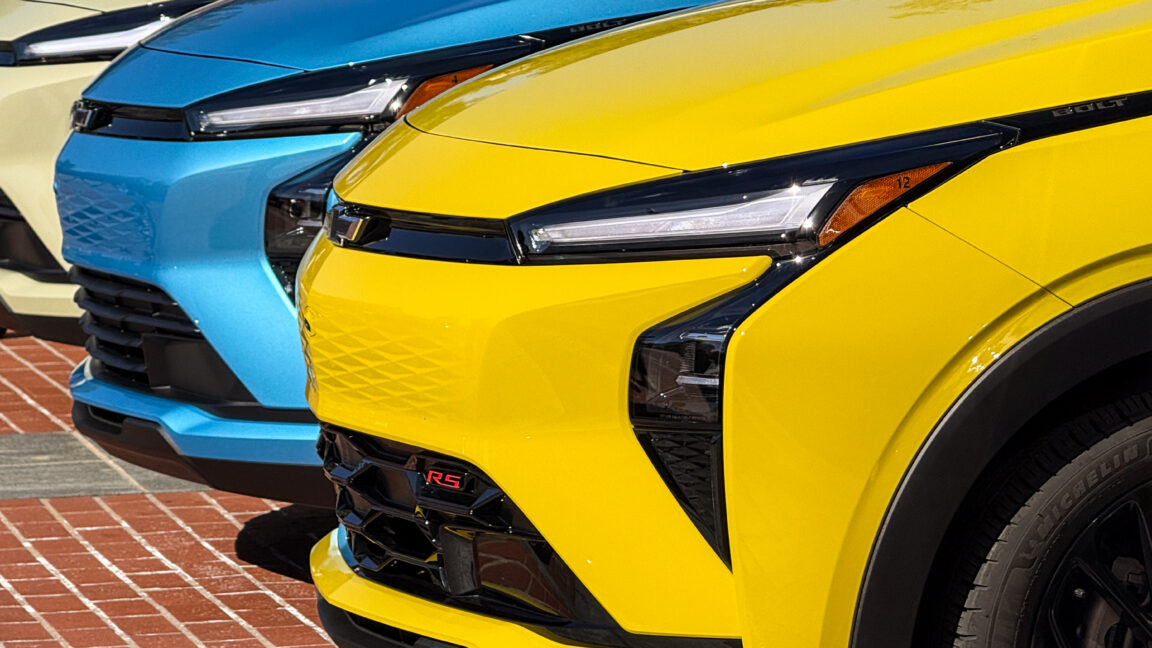
A sportier RS trim at $32,995 adds cosmetic touches but shares identical suspension tuning with the base LT. The $1.8 billion battery recall that plagued the first generation is addressed head-on by the switch to lithium iron phosphate chemistry, which is inherently more stable and tolerant of regular charges to 100 percent. That alone removes the Bolt’s most damaging legacy.
So here sits a car that fixes virtually every complaint leveled against its predecessor—charging speed, battery safety, powertrain efficiency, infotainment modernity—and GM is building it on a countdown clock. Chevrolet says there will be enough inventory to stock dealers for about two years. After that, the Fairfax line pivots to internal combustion.
GM killed the Bolt once to chase electric truck dreams that haven’t materialized. Now it’s killing the Bolt again to build gas cars. The product keeps getting better. The strategy keeps getting harder to explain.



Share this Story