
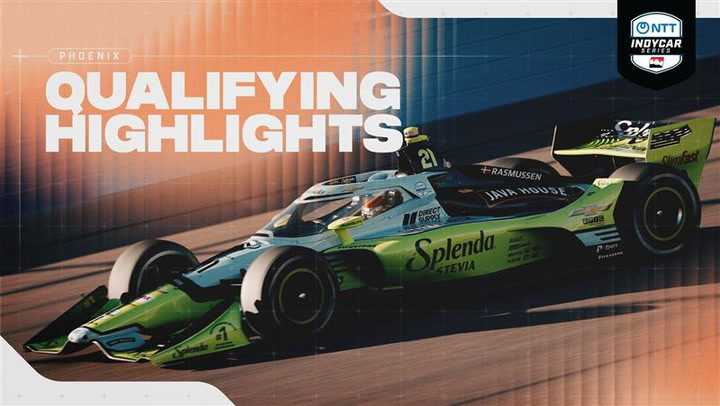


Alex Palou won the 2026 IndyCar season opener at St. Petersburg by more than 13 seconds, a record margin for that event. Now the series rolls into Phoenix Raceway this Saturday with the reigning champion looking every bit as untouchable as he was during his eight-win 2025 campaign that included the Indianapolis 500.
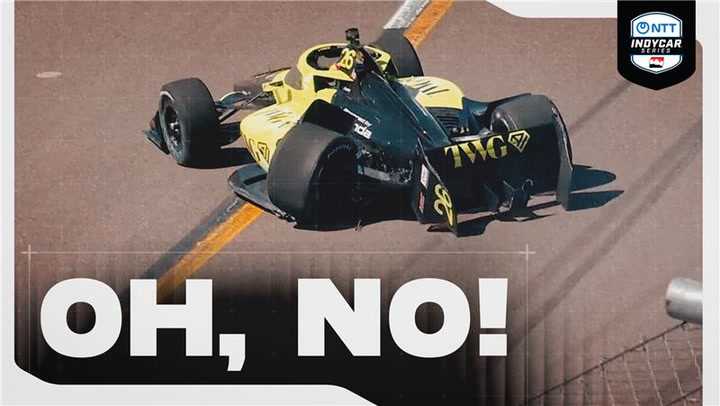
Meanwhile, Will Power’s season is already sideways. The veteran Australian crashed during qualifying at Phoenix, extending what IndyCar’s own coverage is calling a “tough start” to 2026. Power, now racing under the Andretti Global banner, can ill afford mechanical or self-inflicted setbacks against a Chip Ganassi Racing operation that looks fully locked in behind Palou.
The contrast between those two storylines frames everything happening in the desert this weekend.
Phoenix Raceway hasn’t hosted an IndyCar race since 2018, and before that, it was off the calendar from 2006 to 2015. The one-mile oval carries deep history with USAC, CART, and IRL cars circling it from 1964 onward, but for most of today’s grid, this is uncharted territory. Only Scott Dixon, Power, and Graham Rahal have previous IndyCar laps here.
That inexperience showed quickly. Felix Rosenqvist crashed hard in the opening practice session, and Power’s qualifying wreck confirmed that the short oval punishes drivers who push beyond its narrow margin of forgiveness.
David Malukas grabbed his first career NTT P1 Award in qualifying, a breakthrough moment for the young driver that suggests the weekend could produce unexpected names at the front. When a track is new to nearly everyone, the advantage shifts toward adaptability over experience. Malukas appears to have found something others haven’t.
Mick Schumacher completed his first oval qualifying session in IndyCar, another milestone in a rookie campaign that puts the former Formula 1 driver on a completely different kind of learning curve. He’s one of three notable newcomers on Honda power this year, alongside Dennis Hauger and Louis Foster at Rahal Letterman Lanigan Racing. Hauger, last year’s Indy NXT champion, qualified third and finished 10th in his debut at St. Petersburg.
Dale Coyne Racing has quietly emerged as a team worth monitoring. Both cars reached the Firestone Fast Six at St. Pete for the first time since Detroit 2022. Romain Grosjean, back with Coyne after a previous stint in 2021, started sixth and finished eighth.
Hauger showed poise beyond his experience level. For a team that perpetually operates with fewer resources than the heavyweights, that’s a significant early marker.
Honda engines power a deep roster in 2026. Andretti Global fields Power, Kyle Kirkwood, and Marcus Ericsson. Ganassi runs Palou, Dixon, and Kyffin Simpson, while Coyne has Grosjean and Hauger, and Rahal brings Rahal himself, Foster, and Schumacher.
The manufacturer has two previous Phoenix wins, both courtesy of Tony Kanaan in 2003 and 2004, plus Dixon’s victory when the series returned in 2016.
Palou’s dominance is the central fact of this season so far. He won at St. Pete in a manner that didn’t invite debate. Thirteen seconds is not a gap that suggests a lucky strategy call or a fortuitous caution; it suggests a driver and team operating at a level the rest of the field hasn’t yet matched.
Phoenix, though, is a fundamentally different challenge. Street courses reward precision and car setup, while short ovals reward commitment, traffic management, and nerve. Palou has all of those qualities, but an oval race compresses the margins, and one restart, one lapped car, one moment of hesitation can unravel a dominant weekend.
The Good Ranchers 250 goes green Saturday at 3:00 PM Eastern on Fox. For Power, it’s a chance to salvage a weekend that started in a wall. For Malukas, it’s a chance to prove his pole wasn’t a fluke. For Palou, it’s a chance to confirm something the rest of the paddock already suspects but doesn’t want to say out loud: that 2026 might already be his.
Share this Story