
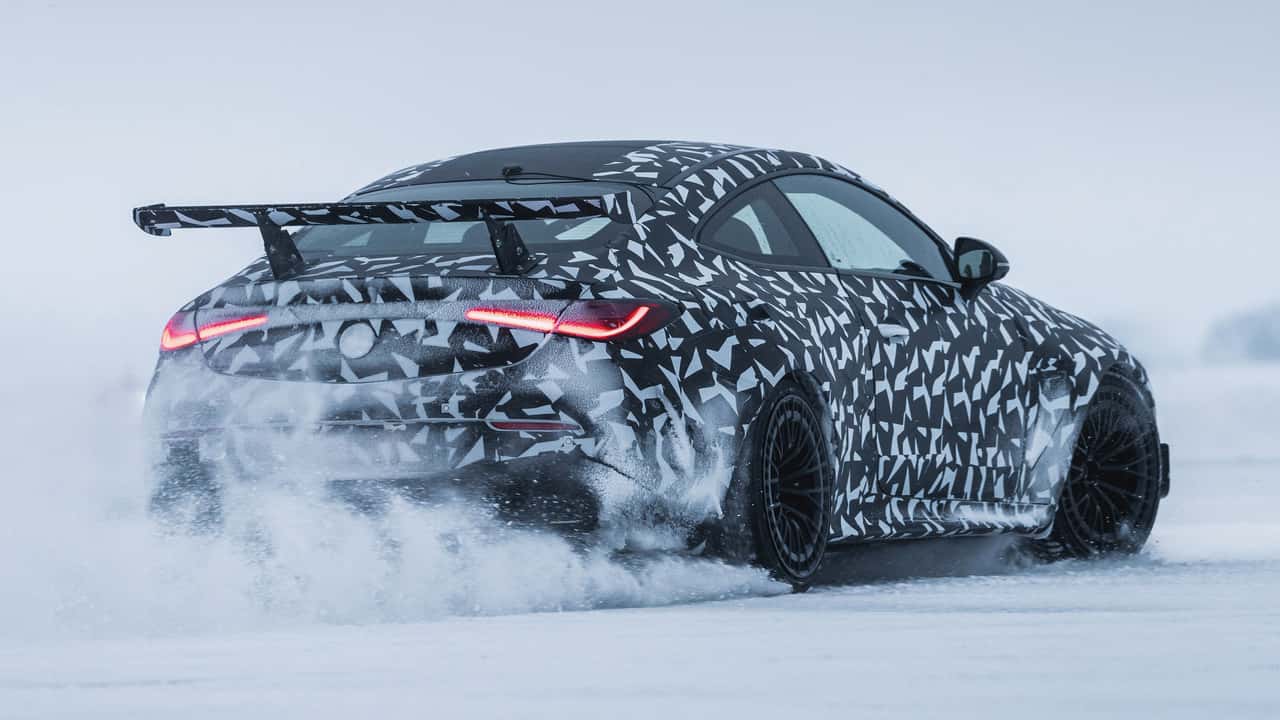


Thirty cars. That’s the entire global production run Mercedes-AMG is reportedly planning for the CLE 63 Coupe, a 646-horsepower V8 monster shown behind closed doors to North American dealers this week in Sindelfingen, Germany.
The number is almost absurdly small. Even the PureSpeed, the roofless, windshield-less SL that launched the Mythos ultra-exclusive sub-brand, managed 250 units. Thirty makes this less a production car and more a private invitation.
But the CLE 63 wasn’t the only card Mercedes played at the dealer preview. The company rolled out a four-door AMG G63 Cabriolet with an electric fabric roof, a new AMG GT Black Series, three electric AMG models, and a next-generation E-Class that will debut as an EV in early 2028. This was a full-spectrum product blitz designed to reassure a dealer body watching BMW and Porsche push aggressively on both sides of the powertrain divide.
The CLE 63’s 646 horses represent a 203-hp leap over the CLE 53, and all of it is expected to come from a twin-turbo 4.0-liter V8 — no plug-in hybrid assist, no electrified four-cylinder compromise. That last point matters. Mercedes-AMG caught serious heat when it gave the C63 sedan a turbocharged 2.0-liter four-pot with hybrid help.
Enthusiasts revolted. Affalterbach apparently listened.
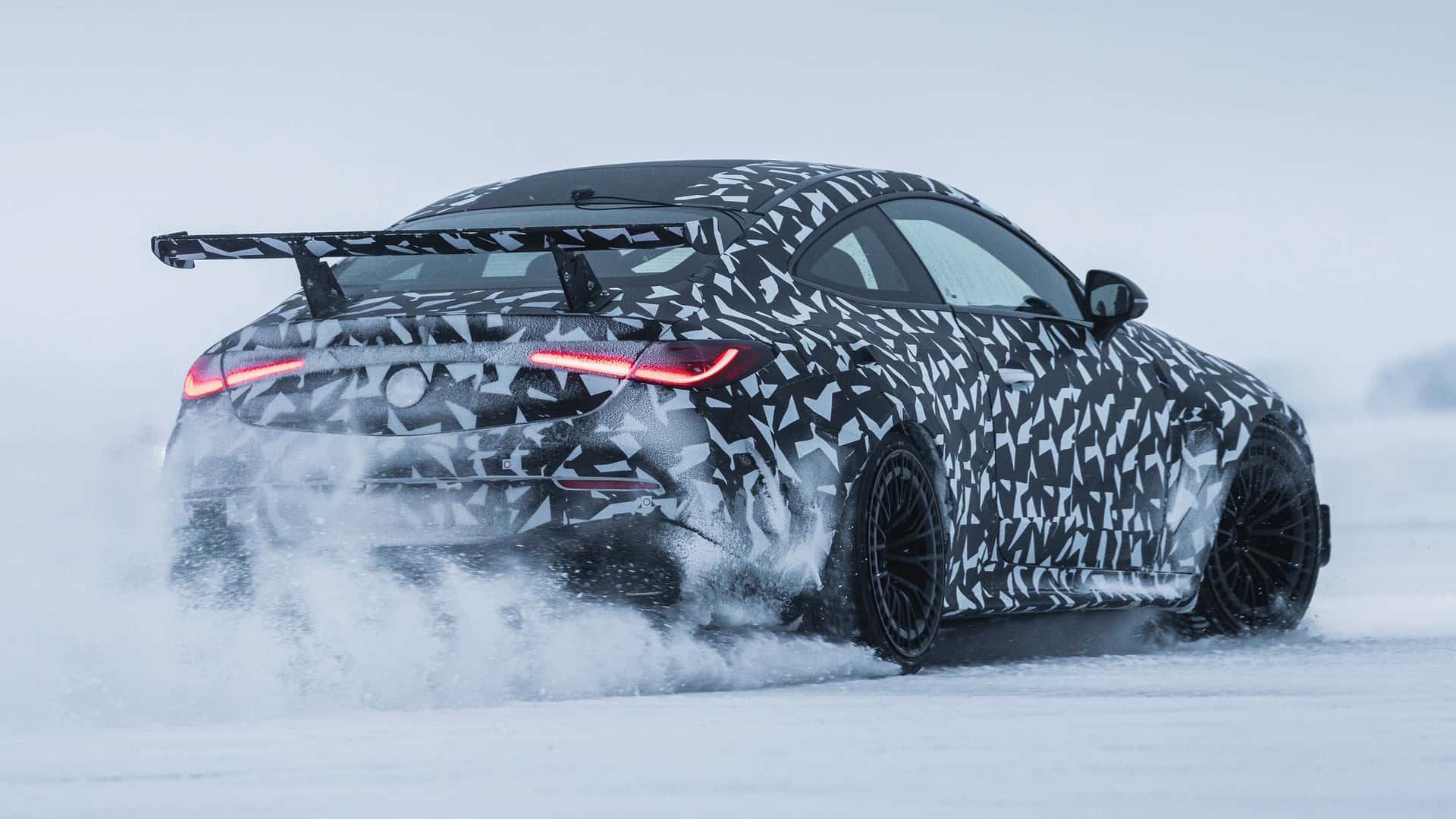
According to Autocar, AMG initially considered the same four-cylinder hybrid architecture for the top CLE. The decision to revert to a V8 is as much a brand management move as an engineering one. When your flagship performance coupe exists to project desire, you cannot afford to explain away the engine choice.
The G63 Cabriolet targets a different kind of buyer entirely — the kind who wants spectacle on wheels. Production starts Q3 2027, with U.S. deliveries in 2028. A four-door open-top G-Wagen is peak late-cycle excess, and Mercedes knows its clientele will eat it up.
The new GT Black Series is sketchier in detail but easy enough to map. It will sit above the $200,000-plus GT 63 Pro, likely as a stripped two-seater with at least 646 horsepower from the same V8. Expect it to cost substantially more and sell in small numbers, continuing the tradition set by the previous Black Series cars.
On the electric side, the replacement for the AMG GT 4-Door arrives in the U.S. early next year. An SUV variant follows in late 2027, with a coupe-styled derivative near the end of 2028. These three models form the backbone of AMG’s electric future, running on the MB.EA platform Mercedes has been developing to replace the EQE and EQS architecture.
The EQE sedan may exit production as soon as this year, according to Autocar. Its replacement arrives not as a standalone electric model but as a variant of the next E-Class, which dealers were also shown. Gas engines and plug-in hybrids will follow the EV launch, and a wagon is confirmed.
The days of separate EQ branding appear numbered.
Mercedes officially declined to comment on any of these future products. That silence is standard procedure, but the sheer breadth of what dealers reportedly saw suggests a company trying to hold two worlds together — combustion heritage and electric ambition — without letting either side feel neglected.
The tension is real. Building a 30-unit V8 halo car while simultaneously ramping three electric AMG models is not a pivot. It is a straddle.
Mercedes is betting it can sell $300,000 collector-grade combustion machines and six-figure electric super sedans to overlapping but distinct audiences, all while meeting tightening European emissions rules that make every V8 harder to justify.
Thirty CLE 63s won’t move the financial needle. They don’t need to. They exist to remind the world that AMG still builds cars worthy of irrational devotion — and to give dealers something to talk about while the electric lineup finds its footing.
Share this Story