
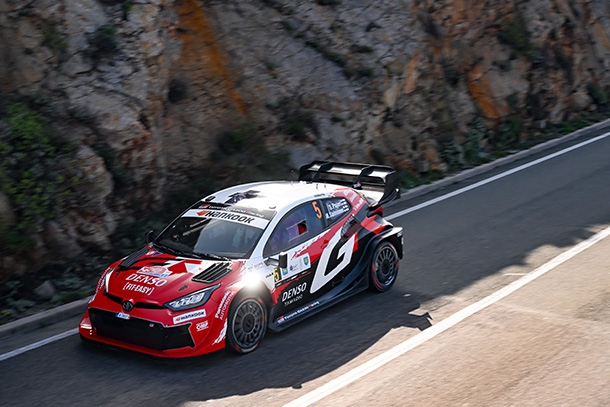


Takamoto Katsuta arrives at Rally Islas Canarias next week leading the WRC drivers’ championship for the first time in his career. Two wins in a row — Safari Kenya’s brutal dirt, then Croatia’s treacherous broken asphalt — and the Japanese driver sits atop a standings sheet that reads like a Toyota internal memo.
GR Yaris Rally1 cars hold the top four positions. All four. Evans second, seven points back. Solberg third, 13 off the lead. Pajari fourth, with podiums in each of the last three rounds. The stranglehold is so complete it borders on absurd.
And now Sébastien Ogier returns.
The reigning world champion, sixth in the standings after just two starts this season, slots back into the lineup for round five on April 23-26. That gives Toyota five factory-caliber drivers on an island where they swept the top four positions at last year’s WRC debut. Deputy team principal Juha Kankkunen — yes, that Juha Kankkunen — allowed himself a measured prediction: “I’m sure it could be closer between the different cars this time, like we saw in Croatia, but I’m feeling quite confident.
Confident is underselling it.
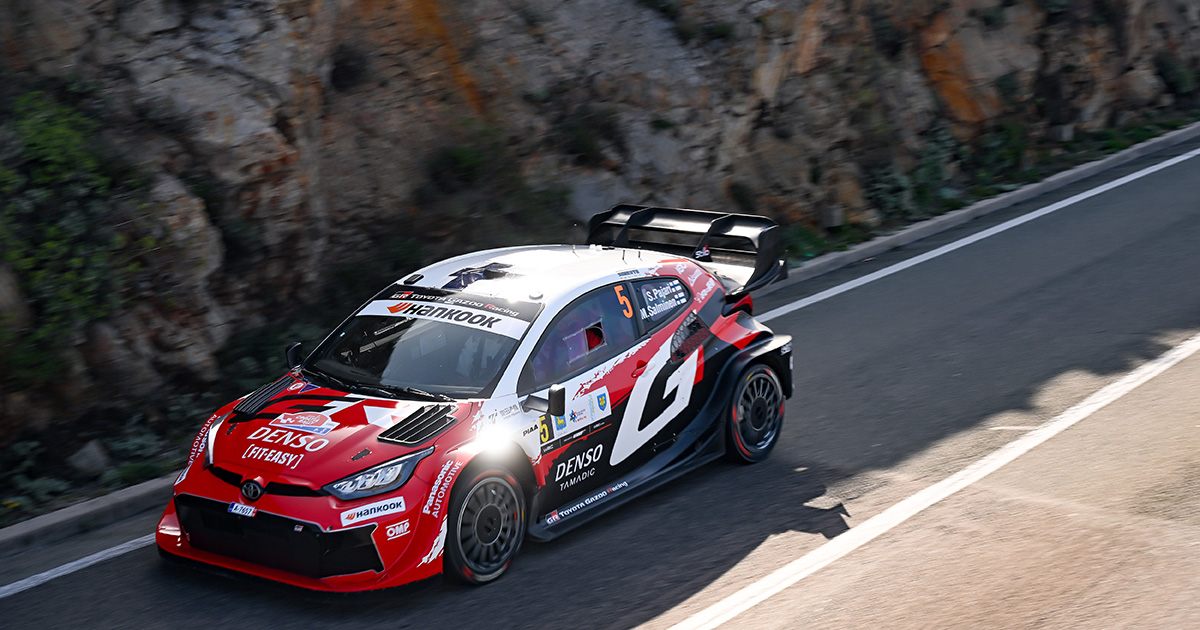
Gran Canaria’s volcanic lava-infused asphalt is a different animal from what the crews just faced in Croatia. Where Croatian roads were filthy with gravel and grime, the Canarian mountain stages offer consistently high grip on clean, smooth surfaces. Evans called it “the most racing-like rally on the calendar,” requiring setups run low and stiff, more formula car than rally car.
That consistency should, in theory, tighten the gaps. Everyone gets the same grip. No lottery of dirty lines or surprise gravel patches. Ogier himself noted the conditions “offer a more level playing field.” He finished second here last year and plainly wants more.
But a level playing field only matters if someone else shows up to play on it. The question hovering over this 50th edition of Rally Islas Canarias isn’t whether Toyota will be competitive — it’s whether anyone can crack their formation.
The stages are unforgiving in their own way. Barriers on one side, volcanic rock walls on the other, and abrasive surfaces that chew through tyres. Katsuta was blunt: “There is absolutely no room for error because everybody is driving absolutely on the limit. A small mistake can cost you a lot, even if it’s only a few tenths.”
Solberg, tackling the event for the first time in a Rally1 car, pointed to his pace on Croatia’s cleaner Sunday stages as a confidence builder. Pajari, who somehow led much of Croatia despite it not suiting his style, believes the Canaries could suit him even better.
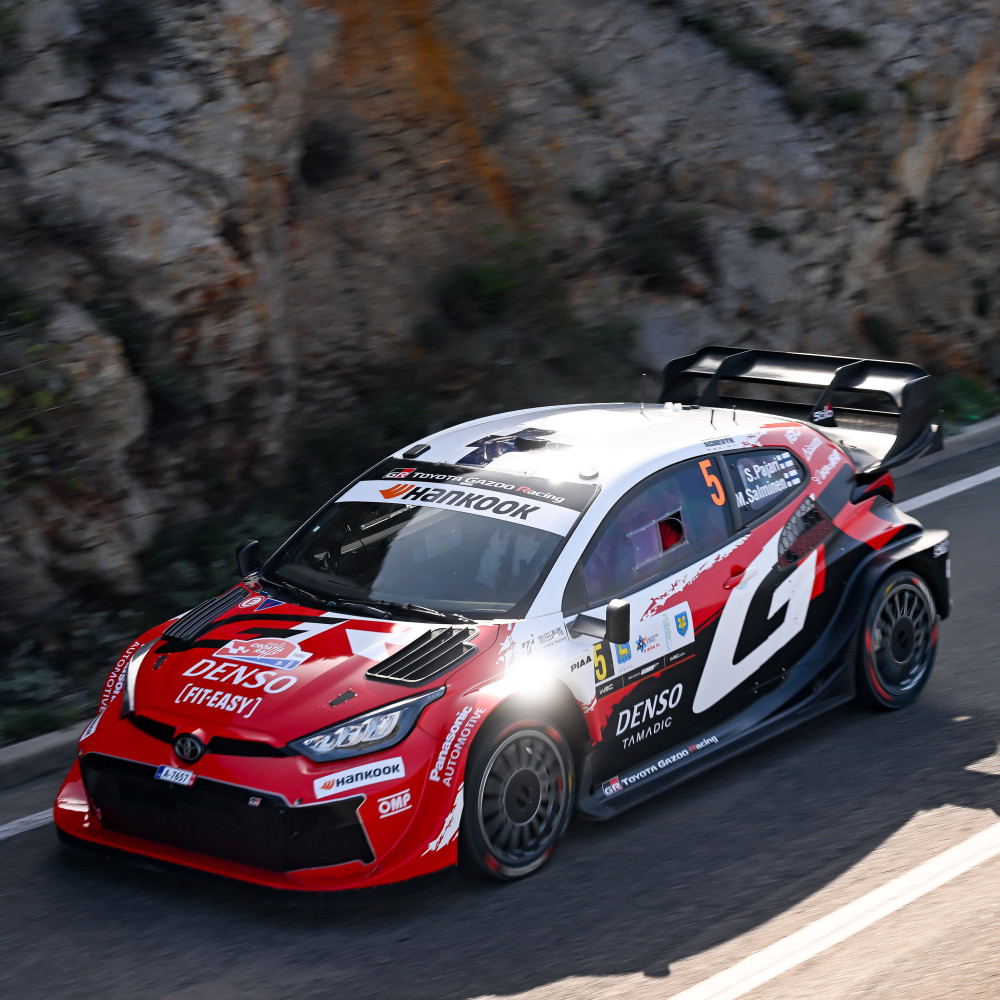
The rally opens Thursday night with a super special at the Gran Canaria Stadium in Las Palmas, the same venue hosting the service park. Friday brings two loops of three mountain stages bookended by that stadium test. Saturday is the marathon — three stages run twice. Sunday wraps with two repeated tests and the power stage.
In WRC2, Toyota development driver Yuki Yamamoto begins his points-scoring campaign alongside seven other GR Yaris Rally2 entries, including local Canary Islands champion Enrique Cruz and Spanish star Alejandro Cachón. That class could deliver some fireworks on home roads.
The bigger picture is harder to ignore. Five rounds into 2026 and no rival manufacturer has found a consistent answer to the GR Yaris. Katsuta’s rise from promising project driver to championship leader is a story unto itself — a quiet, methodical ascent now punctuated by back-to-back victories that nobody outside the Toyota garage saw coming at this pace.
Whether Gran Canaria’s high-grip volcanic asphalt finally gives the competition an opening or simply hands Toyota another lockout will say a great deal about the balance of power for the rest of this season. The roads are ready. The opposition needs to be.


Share this Story