
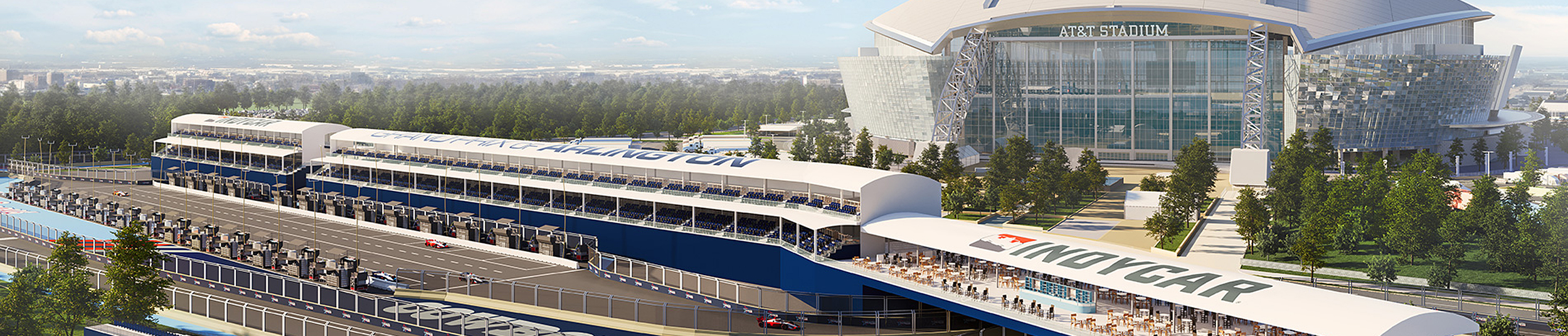


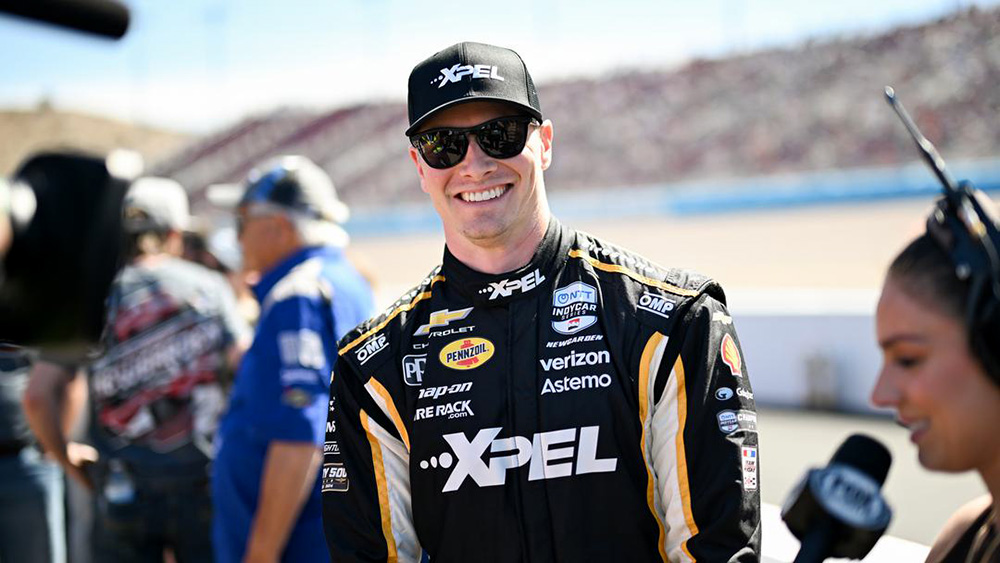
Josef Newgarden holds the NTT IndyCar Series points lead heading into Sunday’s inaugural Java House Grand Prix of Arlington, but he’s looking over his shoulder at a pack of drivers separated by barely a long putt’s worth of points. The race marks the first time open-wheel cars will thread through the sports and entertainment district anchoring AT&T Stadium and Globe Life Field. It’s a visual spectacle that also happens to be a competitive minefield nobody has figured out yet.
The 2.73-mile temporary street circuit is the second-longest track on the 2026 calendar, trailing only Road America. Its nearly mile-long main straightaway, the longest of the season, will produce closing speeds that make overtaking attempts both tantalizing and terrifying. A technical horseshoe section wrapping around the Cowboys’ stadium promises to separate the bold from the reckless.
Nobody has turned a competitive lap here. That’s the story within the story.
Drivers have leaned on simulators, particularly Honda’s Driver in the Loop facility in Indianapolis, where a modified cockpit spins a full 360 degrees in yaw while projecting images on a nine-meter-diameter screen. It’s impressive hardware, but simulators don’t replicate bumps, surface changes, or the chaos of 27 cars discovering a track’s secrets simultaneously during a 45-minute practice session.
Alex Palou, the four-time and reigning series champion, arrives 19 points behind Newgarden after contact cost him dearly at Phoenix. A win at St. Petersburg kept the Chip Ganassi Racing driver from falling further back, but the deficit marks the first time since June 2024 that Palou hasn’t led the standings. That’s a streak measured in years, not races.
Kyle Kirkwood sits just five points off the lead and may carry the sharpest edge into Arlington. The Andretti Global driver won two street races last season, finished on the podium at Phoenix, and reportedly made a personal reconnaissance trip to walk the Arlington circuit. On a weekend where knowledge is currency, that kind of preparation could pay compound interest.
The event itself represents a power play by Penske Entertainment. Partnering with Jerry Jones’s Cowboys operation and REV Entertainment, the Texas Rangers’ events arm, gives IndyCar a foothold in the DFW metroplex, the nation’s fourth-largest media market. The series hasn’t raced in the greater Dallas-Fort Worth area in recent memory, and the split-pit-lane design, borrowed conceptually from Detroit, signals ambitions for a spectacle that sells beyond the racing itself.
Arlington is the first of three new street races on the 2026 schedule, with Markham, Ontario following in August. The series is aggressively expanding its street-course portfolio at a moment when permanent road courses and ovals struggle to generate the same civic buzz. Whether that strategy produces lasting venues or a string of one-and-done experiments remains an open question. The history of American street racing is littered with circuits that looked brilliant on a rendering and vanished within three years.
The rookie battle adds another layer. Dennis Hauger, running for Dale Coyne Racing, leads the Rookie of the Year contest and faces a weekend where experience counts for nothing because nobody has any. Mick Schumacher, in his rookie IndyCar season with Rahal Letterman Lanigan Racing, confronts the same blank canvas.
Seventy laps covering 191.1 miles. A brand-new track surrounded by two of the most recognizable stadiums in American professional sports. A championship fight where three drivers are within a decent pit stop of the lead. Fox has the broadcast at 12:30 p.m. ET Sunday.
Arlington wanted a major motorsport event. Now it has one. The track just has to deliver racing worthy of the setting.

Share this Story