


The wrecking ball is coming for the Glass House. Ford’s iconic 12-story headquarters in Dearborn, the building where every CEO since Henry Ford II made decisions that shaped the American auto industry, will be “sustainably decommissioned and ultimately demolished” over the next 18 months. The company says it with the clinical detachment of a real estate filing.
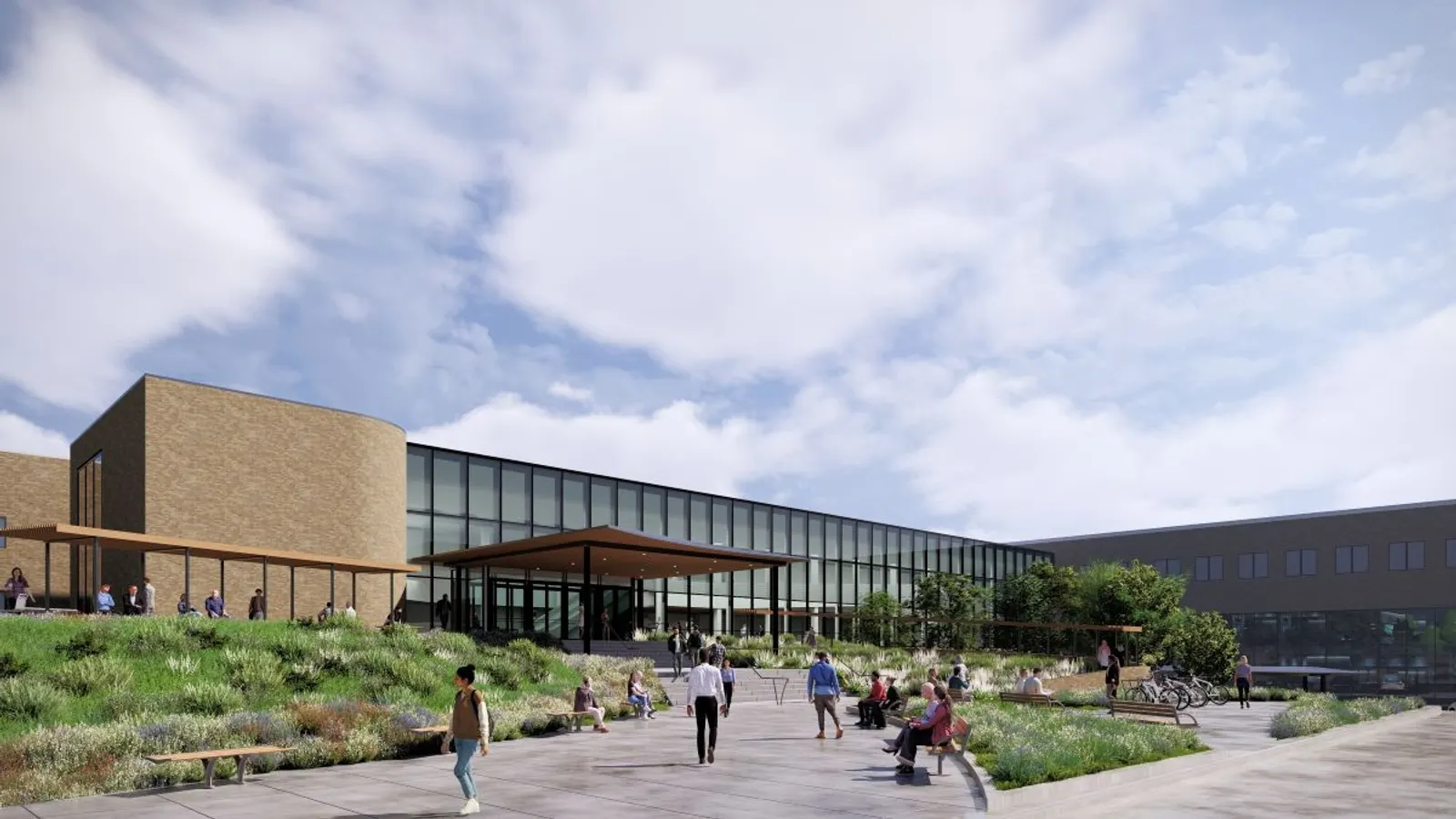
In its place — or more precisely, next to where it stood — Ford is building something twice as large. Construction started in April on World Headquarters South, a renovation of the 73-year-old Product Development Center that will join the main World Headquarters building opened last November. Combined, the complex will span 3.3 million square feet, house up to 11,000 employees, and target completion in 2029.
The PDC opened in 1953. The Mustang was born there. So was the Ford GT. But decades of expansions turned it into what Jim Dobleske, CEO of Ford Land, called “a maze that no longer suited modern product development” — a polite way of saying the building became an obstacle to the very work it was supposed to enable.
Ford is gutting it accordingly. Interior walls and drop ceilings are being ripped out. Windows and skylights are going in. The goal is 5,000 employees working alongside labs, testing bays, and prototyping space — the kind of integrated layout that didn’t exist when these buildings were designed during the Eisenhower administration.
One detail stands out. Ford Racing is moving into the building. CEO Jim Farley wants the racing operation physically closer to the rest of the engineering and business teams, arguing it will accelerate the transfer of track-developed technology into production vehicles.
It’s a deliberate organizational choice, not just a real estate decision. Farley has made no secret of his belief that motorsport sharpens engineering discipline, and embedding the racing team inside headquarters puts that conviction into concrete and steel.
The amenity list reads like a tech campus brochure: cafés, markets, wellness rooms, mothers’ rooms, and a 30,000-square-foot fitness center with strength training, cardio equipment, and locker rooms. A separate wing will handle vendor and visitor meetings, keeping outside traffic away from daily work areas. A 3,100-space parking deck with EV chargers starts construction this summer and should be done by 2027.
Ford framed the whole project in the language of its Ford+ growth strategy, emphasizing collaboration, speed, and the transition to a software-driven company. In a letter to employees last September, the company acknowledged Glass House’s legacy as “the nerve center of our global operations” before declaring that the future demands something fundamentally different.
There’s a tension Ford isn’t saying out loud. The automaker is spending heavily on a physical campus designed for deep collaboration at a moment when the industry is still sorting out hybrid work, headcount pressures, and whether 10,000 employees in one complex reflects confidence or overcapacity. Building for the future is one thing. Knowing what that future actually looks like is another.
The Glass House stood for nearly 70 years. Ford is betting its replacement will define the company for the next era. Whether that era belongs to Ford as much as the last one did is the question no headquarters renovation can answer.

Share this Story