
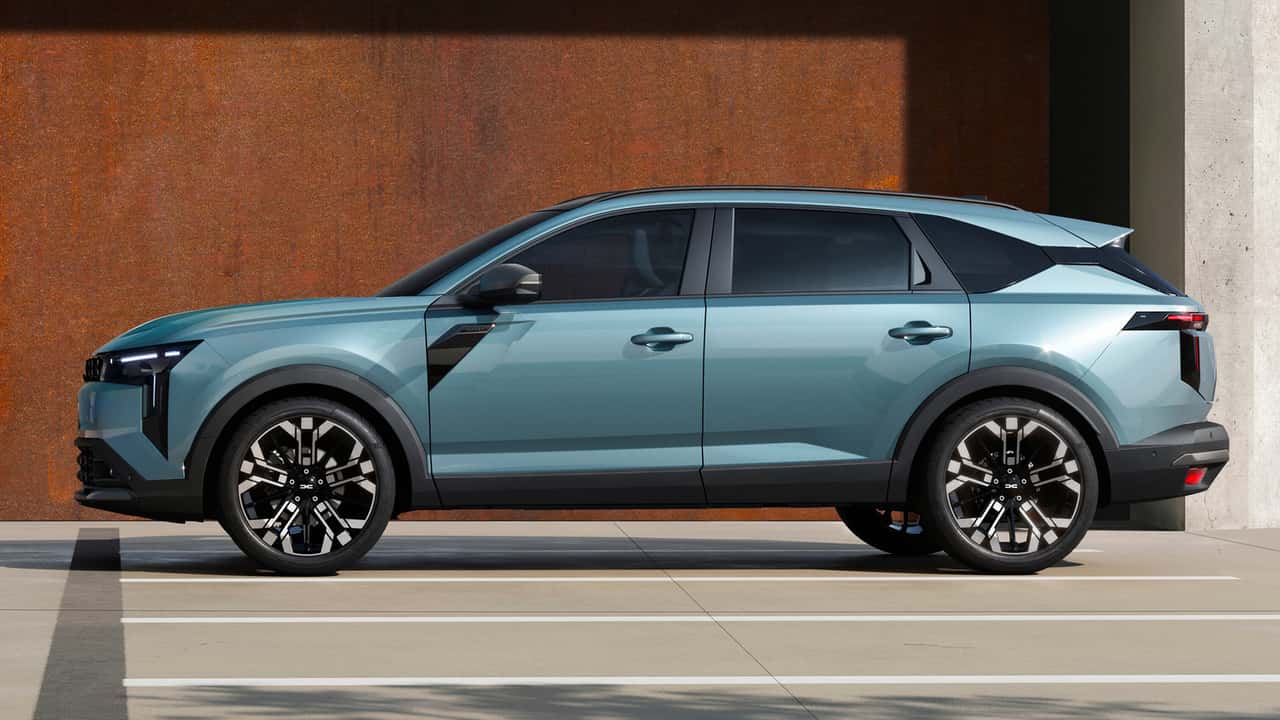


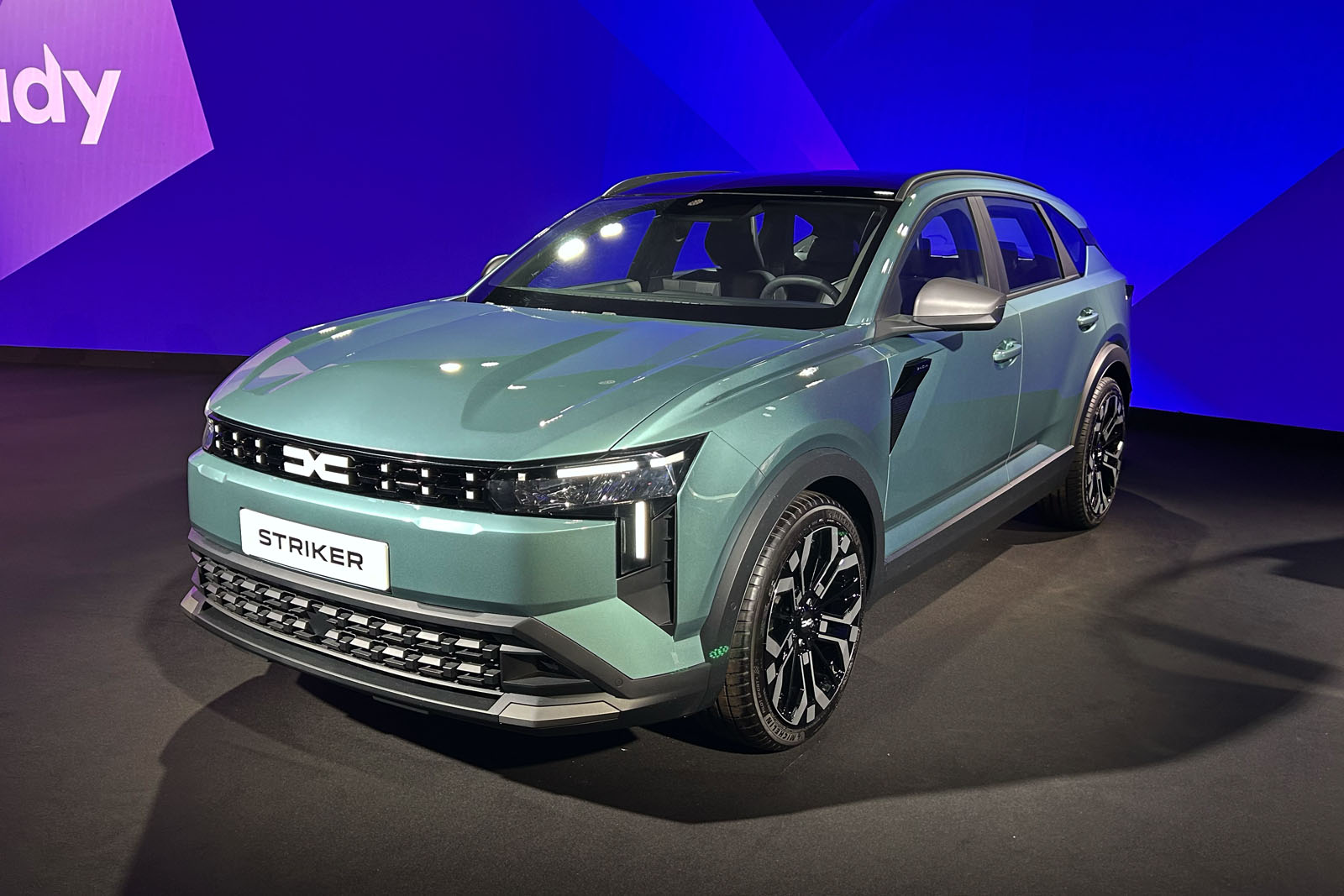
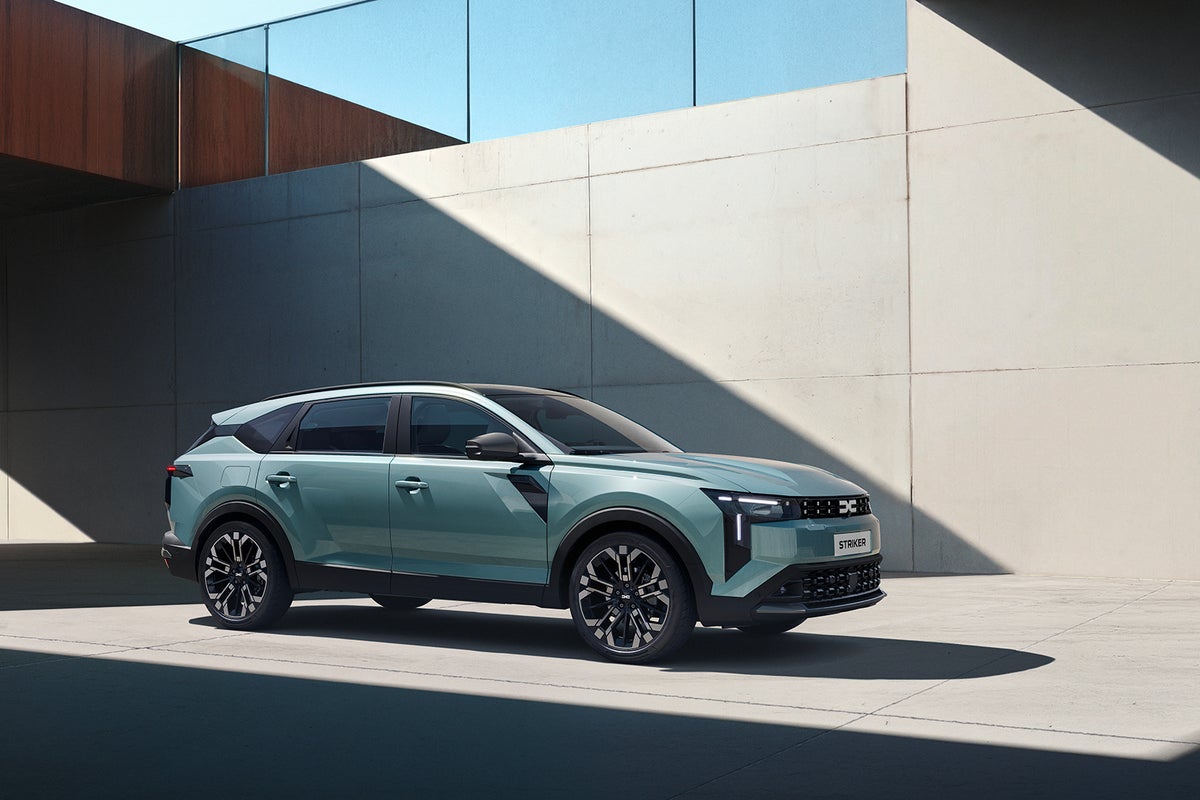
The Romanian brand that made its name selling cheap Sanderos to first-time buyers just unveiled a car that looks like it belongs in a different tax bracket. The Dacia Striker, revealed during Renault Group’s futuREady Strategy Day, is a 4.62-metre raised estate designed to go head-to-head with the Skoda Octavia Estate — at a price that starts below £22,000. That’s not a typo.
A C-segment load-lugger with available all-wheel drive, hybrid powertrains, and the footprint of a proper family car, priced to undercut the segment’s established players by a wide margin.
The Striker shares its CMF-B platform and most of its mechanical guts with the Bigster SUV, but the resemblance stops at the skin. A raked roofline sits lower than the Bigster’s, the proportions are sleeker, and the overall silhouette reads more wagon than crossover. Dacia boss Katrin Adt has been careful to draw a line between the two, calling the Striker “a totally different offer to the customer.”
Powertrain options will mirror the Bigster’s lineup: a 1.2-litre three-cylinder petrol paired with a rear electric motor for 152 bhp and all-wheel drive, plus mild-hybrid and full-hybrid configurations ranging from 138 to 153 bhp. An LPG variant will be available in continental markets. No battery-electric version at launch, which makes sense — Dacia is saving its EV firepower for other models.
The timing is deliberate. Europe’s C-segment remains the continent’s fattest sales pool, and Dacia wants a third of its volume to come from it by 2030. Right now the figure sits around a fifth.
The Bigster already proved the brand can punch above its weight class, racking up 67,573 sales in its first full year and becoming the best-selling C-segment SUV among retail buyers in the second half of 2025. That number matters because Dacia doesn’t lease-dump cars into fleets. It sells them to people spending their own money.
More than 65 percent of Dacia customers come from outside Renault Group entirely, and over 70 percent of existing owners buy another one. Those are retention numbers most premium brands would frame and hang on the boardroom wall.
The Striker is just one piece of a broader offensive. Dacia confirmed four fully electric vehicles by decade’s end, starting with a city car this year priced under £15,600 that shares architecture with the new Renault Twingo. The next-generation Sandero will get both electric and combustion options.
The brand’s weapon is what it calls “design-to-cost” engineering, a discipline that reportedly delivers a 15 percent cost advantage over competitors. It’s the reason a Sandero has been Europe’s best-selling car to private buyers since 2017, and why Dacia crossed 10 million global sales last year since the original Logan launched in 2004.
Full interior details and complete specifications are being held back until the Striker’s formal debut in June. But the car shown during the strategy presentation looked finished, not conceptual. The vertical front end, glossy black taillight bridge, and textured exterior panels all suggest Dacia’s design team has figured out how to make affordable look intentional rather than compromised.
Skoda has owned the value-estate space for two decades with the Octavia. The Fabia and Superb wagons bracket it on either side. Nobody seriously challenged that grip because nobody could match the combination of space, quality, and price.
Dacia just walked into the room with a lower number on the sticker and a straight face. Whether the Striker can match the Octavia’s driving refinement and interior quality remains to be seen. But at potentially £5,000 less to start, a lot of buyers won’t care.

Share this Story