
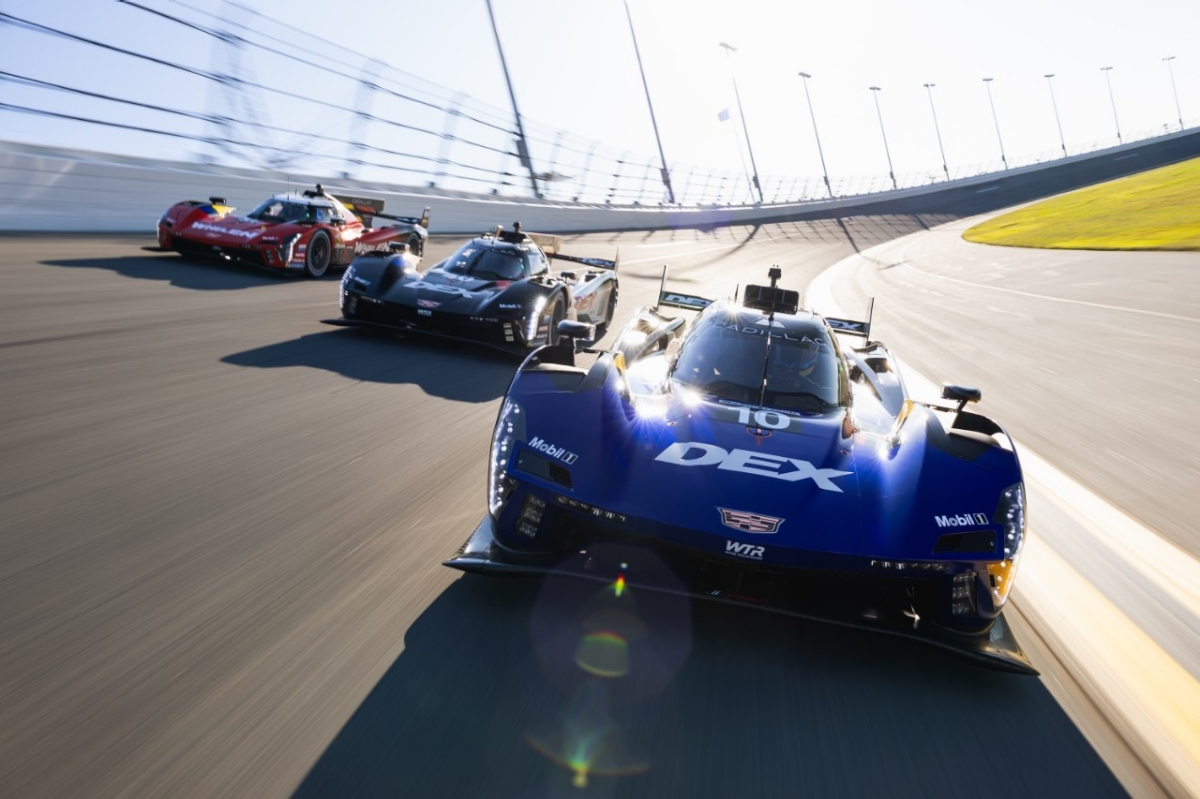


The Cadillac V-Series.R doesn’t need more raw speed. It needs to be meaner in a crowd. That’s the bet Cadillac Racing placed heading into its fourth season of GTP competition, and two races into 2026, the early returns suggest it was the right one.
The offseason aero update — most visibly a repositioned rear wing, dropped back to its earlier, lower mounting — was designed not to chase lap time on a clear track but to make the car more predictable and aggressive when surrounded by other prototypes. It’s a subtle distinction that separates the teams who understand endurance racing from those still chasing qualifying heroes.
“We really tried to focus on the traffic side of things,” said Earl Bamber, who drives the No. 31 Cadillac Whelen entry. “The feel of the car is a lot better in traffic. Overall performance, it’s not really that adjusted.”
That’s the tell. Cadillac didn’t swing for a wholesale redesign. The EVO package was targeted, surgical.
In a class where Balance of Performance keeps everyone within spitting distance on pace, the margins are made in the messy middle of a race — dicing through GT traffic, holding position under braking into Turn 1 with a competitor’s dirty air upsetting your front end.
Ricky Taylor, piloting the No. 10 Wayne Taylor Racing entry, put it plainly: “The races are won head-to-head, battling with other cars, so finding performance in traffic was really important.”
A second-place finish at the Rolex 24 at Daytona in January validated the approach. The No. 31 car was in the fight all day and all night, and Frederik Vesti called it a race they “just missed out” on after a hectic back-and-forth battle. Not a car that faded. Not a car the drivers lost confidence in at three in the morning surrounded by slower traffic.
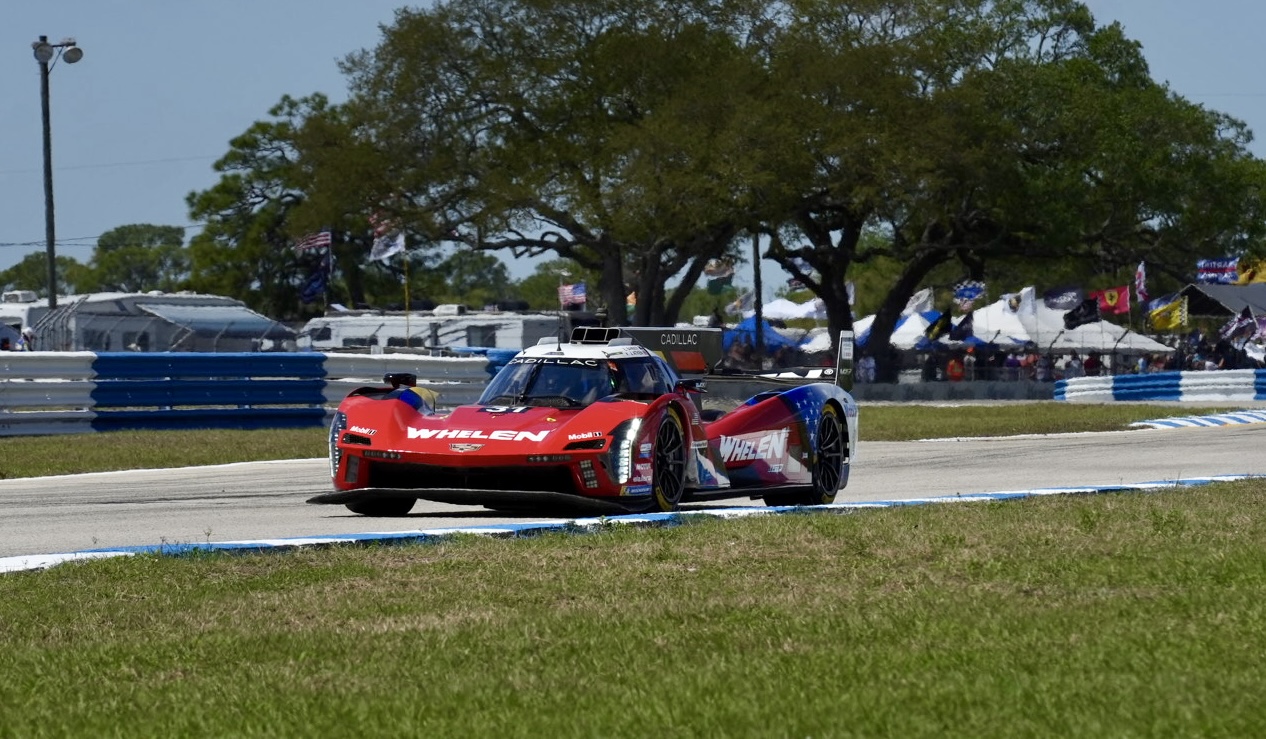
Behind the aero tweaks sits a broader organizational shift now entering its second year. Wayne Taylor Racing took over Cadillac’s IMSA operation in 2025, while Cadillac Hertz Team Jota launched in WEC. The first season was about getting everyone pointed the same direction.
Program manager Keely Bosn says 2026 is where that investment pays compound interest. Bamber and Jack Aitken will race both the full IMSA and WEC calendars, creating a live data pipeline between the two championships.
“We can bring the knowledge and feedback from what Jack and Earl learn across both series and use it holistically across all our teams,” Bosn said.
The driver roster also carries new crossover firepower. Colton Herta, test driver for the Cadillac Formula 1 Team, joins the No. 40 car for Daytona, Sebring, and Road Atlanta. NASCAR’s Connor Zilisch made his GTP debut at Daytona in the No. 31.
Neither name is window dressing. Herta already knows the Wayne Taylor Racing operation, and Zilisch arrived off what Bosn called a “breakout NASCAR season.” Both represent the kind of multi-discipline talent that wins endurance races.
The 2026 IMSA calendar is mostly stable, with Road America stretching to a six-hour endurance format and Indianapolis trimming to a sprint. Stability suits Cadillac. Direct year-over-year comparisons will show exactly how much ground the aero package and team integration have gained.
Sebring this weekend will be the real test. Daytona rewards straightline efficiency and survival. Sebring punishes everything — cars, drivers, strategy, patience.
The concrete-patched runway surface shakes loose every weakness a car tries to hide. If the V-Series.R can fight through traffic on Sebring’s narrow, bumpy corridors the way it did under Daytona’s lights, Cadillac won’t just be a contender for individual races. It’ll be the team the rest of GTP has to plan around for the full season.

Share this Story