
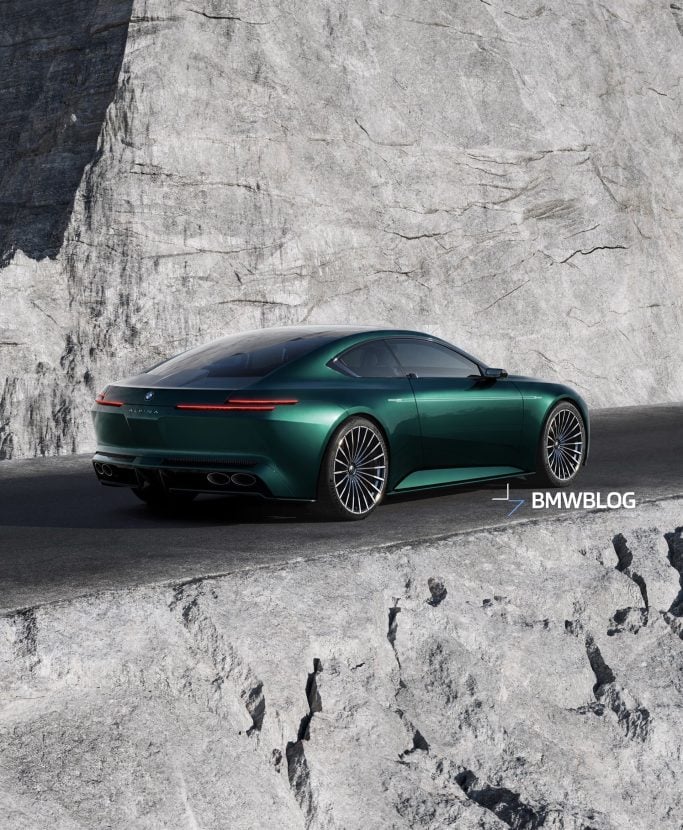


Adrian Van Hooydonk made an unusual promise for a car that doesn’t exist yet. The BMW Group Head of Design confirmed that both ALPINA Blue and ALPINA Green — colors that have been on road cars since the 1970s — will be available on the production version of the Vision BMW ALPINA concept. He said customers who want the period-correct shade rather than a modern reinterpretation can have it.
That level of color commitment at the concept stage is rare. It tells you BMW knows exactly what it bought when it acquired ALPINA, and exactly what it risks losing if it gets the details wrong.
The Vision BMW ALPINA is the first real signal of where the brand lands inside BMW’s portfolio. ALPINA operated independently for over six decades, building cars at its Buchloe facility that BMW sold through its dealer network under a unique regulatory arrangement. The acquisition ended that independence, and the Vision answers the obvious question: ALPINA becomes a distinct model line within BMW, not a separate company producing its own vehicles.
The concept itself is a long, low grand tourer — the kind of car ALPINA always built better than M GmbH. Think Munich to Monaco without white knuckles. The traditional ALPINA pinstripe detailing runs along the lower body and around the wheels, historically applied by hand at Buchloe. Whether that survives BMW-run production is anyone’s guess.
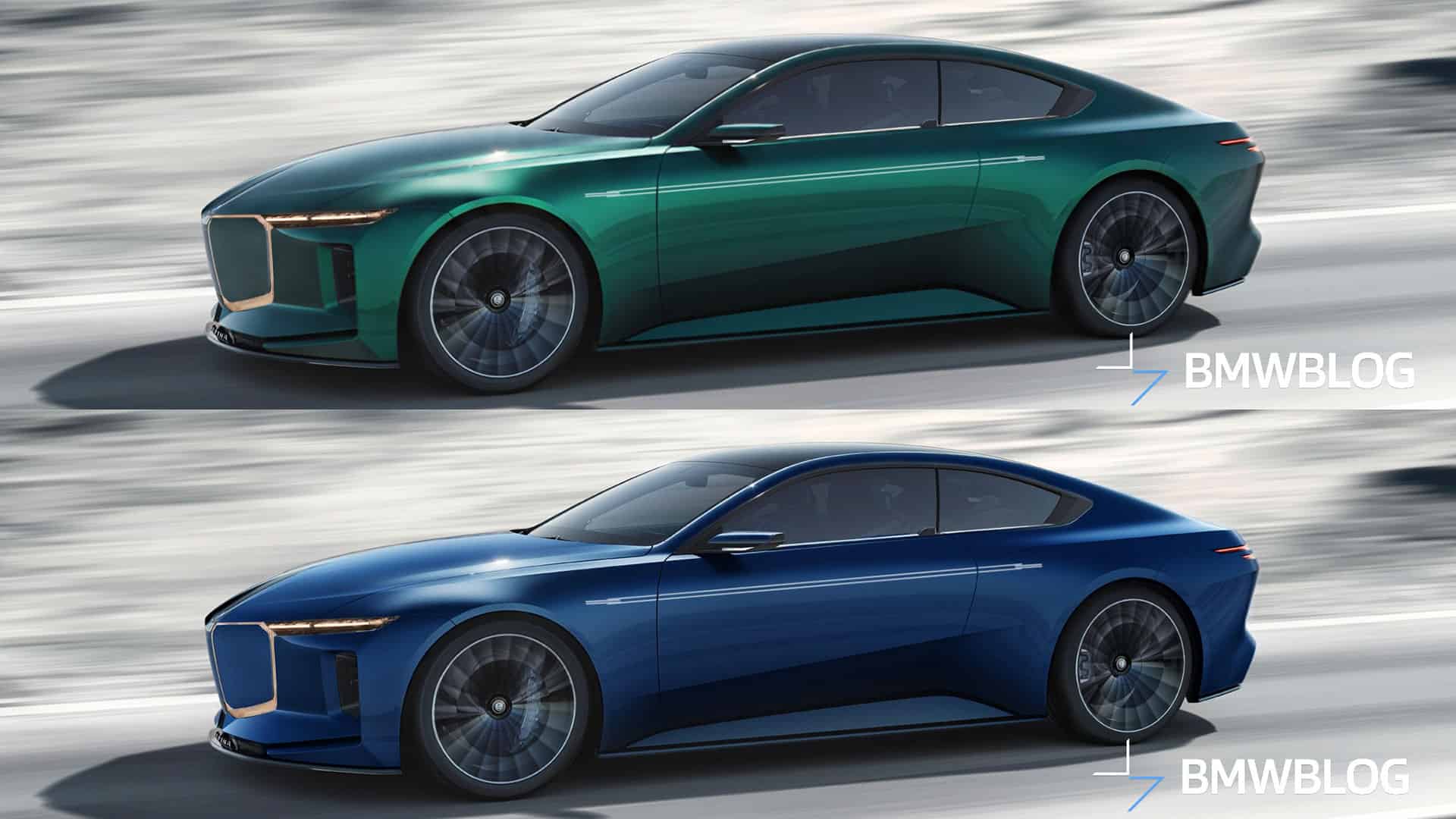
BMWBLOG rendered the Vision in both heritage colors, and the results expose an interesting tension. ALPINA Blue is the obvious choice, the signature shade that dressed B7 Turbos and B6 2.8s through the brand’s golden era. The specific hue has shifted over the decades — 1970s blues ran warmer and more saturated than later versions.
Van Hooydonk’s promise to match period-correct shades acknowledges that drift. On the concept’s long flanks, a cooler modern blue gives the car a gravity that brighter treatments would undermine.
ALPINA Green is the more compelling render. Fewer cars ever left Buchloe wearing it, which makes surviving examples genuinely rare. The shade occupies territory between British Racing Green and a darker sage, avoiding both corporate blandness and retro pastiche.
On the Vision’s complex surfaces, it shifts — darker in the creases, richer across flat panels. Paired with the concept’s chrome-finish ALPINA wheels, green is the bolder statement. Blue is the safer one.
Then there is the color BMW actually invented. The official Vision ALPINA shade draws from alpine mist — a cool grey bleeding into pale green, the kind of light you see on an overcast morning in the Alps when the snow line sits high and the sun stays hidden. It is a quiet color on a car with enough surface complexity to carry quietness.
It also captures something essential about ALPINA’s customer base, which has always leaned toward understatement relative to the M crowd. A color referencing landscape rather than racing heritage fits that identity precisely.
Van Hooydonk went further, confirming an ALPINA Individual program where, in his words, the customer’s imagination is the limit. The first production model to benefit will be the new 7 Series-based B7, expected next year.
BMW paid for ALPINA’s name, its engineering legacy, and its customer loyalty. But heritage brands live or die on details — the exact shade of blue, the hand-applied pinstripe, the choice between a grand tourer and a track weapon. Getting the colors right is the easy part.
The harder question is whether a corporate parent can replicate the obsessive specificity of a family-run shop in Buchloe. Paint codes are a start. They are not the finish.


Share this Story