
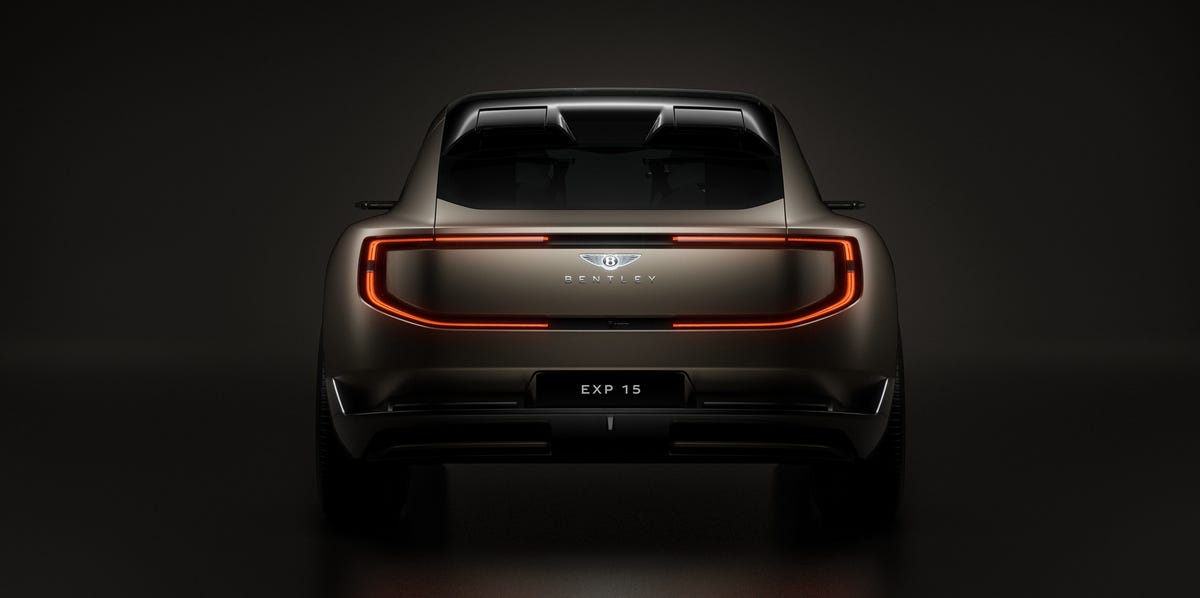


Bentley filed a trademark for “Barnato” last August across the United States, the European Union, and the United Kingdom. The filing covers motor vehicles, electric vehicles, charging cables, and charging stations. It’s about as subtle as a sledgehammer through a Crewe factory window.
Woolf Barnato was the man who saved Bentley from financial ruin in 1926, buying a controlling stake with his inherited diamond mining fortune and becoming chairman. He then won Le Mans three consecutive times from 1928 to 1930 behind the wheel of his own company’s cars. The man didn’t just write checks. He drove.
His most famous stunt came in 1930, when he raced a Bentley Speed Six against Le Train Bleu, a French luxury express running from Cannes to Calais. Barnato didn’t just beat the train. He beat it to London, arriving four minutes before the locomotive even reached Calais. French authorities fined him for the speeding. He probably framed the ticket.
Now his name appears destined for Bentley’s first battery-electric vehicle, a compact SUV that spy photographers have already caught testing on public roads. Bentley has confirmed the car will be revealed before the end of 2026 and go on sale in 2027. The company has also said it won’t launch a second EV until at least 2030, which makes the Barnato trademark’s explicit mention of electric vehicles hard to misread.
The connection isn’t just nominal. Last year’s EXP 15 concept, the electric SUV that previews this production model, was deliberately photographed alongside Barnato’s Gurney Nutting Sportsman coupe, the modified Speed Six he nicknamed the “Blue Train Special.” Bentley’s design team drew direct inspiration from that car. They are building the mythology before they build the order books.
There is a competing possibility. Bentley has also filed for “Torcal” in the EU and UK, though that name hasn’t appeared in any U.S. trademark filings. And the company still holds rights to “Mulsanne,” but CEO Frank-Steffen Walliser recently killed that prospect, noting the big sedan never sold well enough to justify resurrection.
Barnato is the smarter play, and Bentley knows it. The brand is asking customers to make a leap of faith into electrification, to spend north of six figures on a powertrain that has no heritage at Crewe. Naming the car after the man who rescued the company a century ago, who raced it to glory, who embodied the reckless confidence that defined the marque’s golden era, is a calculated emotional anchor.
It is also a bet that heritage can do what spec sheets alone cannot. The luxury EV market is getting crowded fast. Rolls-Royce already has the Spectre, Porsche has refined the Taycan, and Mercedes is deep into EQ territory.
Bentley is arriving later than any of them, with a single electric model and no follow-up for at least three years. What they do have is a name that evokes diamond fortunes, midnight races against trains, and three Le Mans trophies won by the company’s own chairman. Whether that story can sell a battery-powered SUV in 2027 is the real question Bentley is answering.
A trademark filing is not a guarantee. Bentley could change course. But the evidence is stacking up in one direction.
The filings span three major markets. The concept car was staged as a love letter to Barnato’s legacy. The timeline fits perfectly.
Woolf Barnato died in 1948. Seventy-nine years later, his name is almost certainly going on the hood of something he never could have imagined. But the man once raced a train for the fun of it. He probably wouldn’t mind the audacity.
Share this Story