
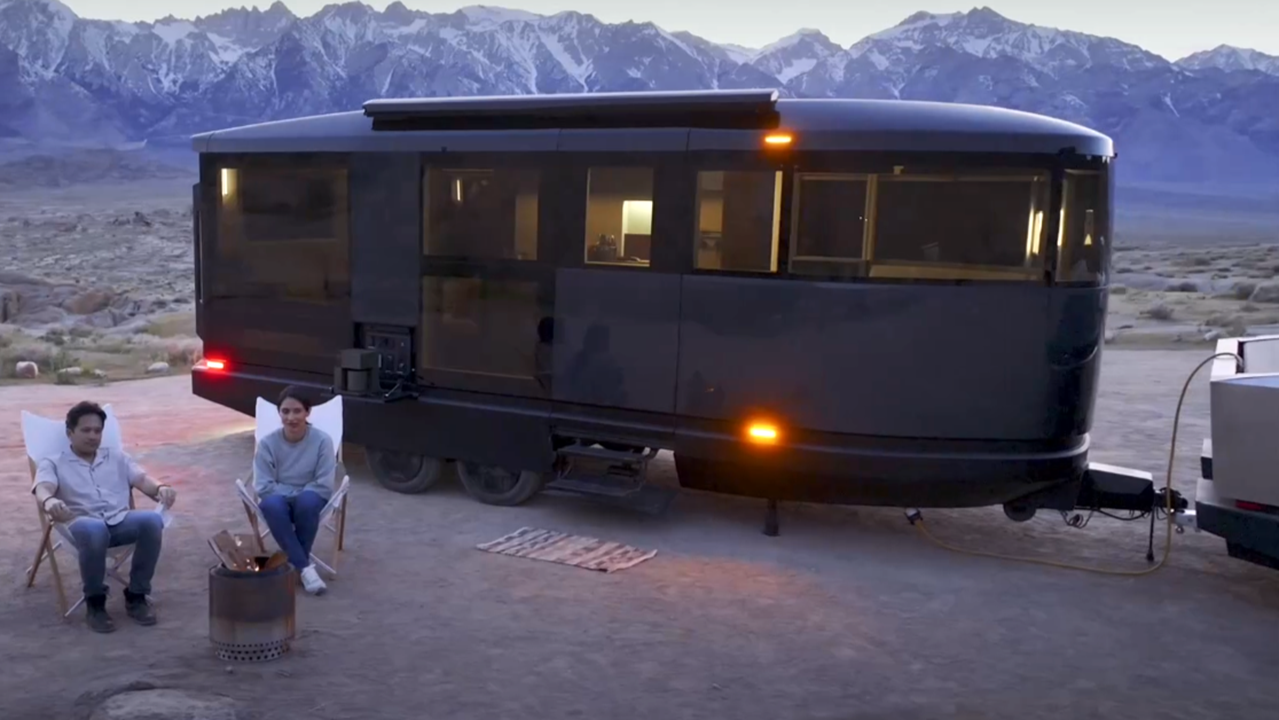


Aboard RV has one functional prototype, a few dozen employees, and $13 million in fresh funding. It wants you to believe it can reinvent the travel trailer by building it like a car. Get in line.
The Orange, California startup, founded in 2024 by former BMW and Li Auto engineer Jiangtao Lyu, went public this week after closing a Pre-Series A round led by Ondine Capital and Llama Ventures. The pitch is familiar to anyone who has followed the parade of electrified trailer startups over the past three years: automotive-grade construction, lithium batteries, a self-propelling electric drive motor, and an app-controlled coupling system. Starting price is $80,000, with $100 refundable deposits open now.
What separates the Aboard from the Pebble Flow, the Lightship AE.1, and the half-dozen other ventures chasing the same customer? An extended-range electric vehicle powertrain. A 41 kWh lithium iron phosphate battery powers the trailer until it runs low, then a four-cylinder engine of undisclosed origin fires up as a 60 kW generator.
Aboard claims it refills the battery to 80 percent in 30 minutes and provides “weeks” of off-grid camping. The company pegs total energy storage at 200 kWh when combining battery and generator capacity, though the math on that figure remains conveniently unexplained.
The 24-foot trailer weighs 7,500 pounds and features stamped metal body panels and doors, a rear tailgate that opens into a patio or cargo bay, and a dry bath with an exterior access door. An induction kitchen is designed for two cooks. A queen bed deploys in the rear at night, assuming you haven’t filled that space with bikes and gear first.
The generator sits directly in front of the convertible dinette-slash-bed at the nose. Sleep tight.
Aboard says series production will begin in Q4 of this year. That timeline, for a company with one prototype and renders doing most of the talking, is ambitious to the point of fantasy. We still don’t know the engine manufacturer, fuel tank size, freshwater capacity, ceiling height, solar panel specs, or whether a dealer network exists.
More details are promised at Outside Days in Denver on May 29.
The electrified trailer space has become absurdly crowded. Pebble Flow entered production last year as the first self-propelled travel trailer you could actually buy. Lightship’s AE.1 followed closely.
AC Future wants to solve California’s housing crisis with a trailer. Evotrex claimed it invented the power-generating RV, a claim that doesn’t survive even casual scrutiny. Airstream and Dethleffs have both built electric trailer prototypes. Every one of these companies is staffed with automotive engineers promising to drag the RV industry out of its plywood-and-staples dark age.
They’re not wrong about the problem. Traditional RV construction quality remains a running joke among owners, and the Indiana-based incumbents have shown little appetite for rethinking how trailers are designed or assembled. But diagnosing a disease and curing it are different things, especially when your cure requires scaling automotive manufacturing processes on startup capital.
Thirteen million dollars is not a lot of money to bring a vehicle to production. Tesla burned through billions before it figured out how to build cars reliably. Rivian is still bleeding cash.
The RV startup graveyard already has plots reserved, and most of these companies are competing for the same narrow slice of buyers wealthy enough to spend $80,000 on a trailer and adventurous enough to bet on a brand with no service history.
Aboard RV may ultimately deliver something genuinely better than the white boxes rolling out of Elkhart. But right now, it’s one prototype, some renders, and a promise. The RV industry has seen plenty of those.

Share this Story