
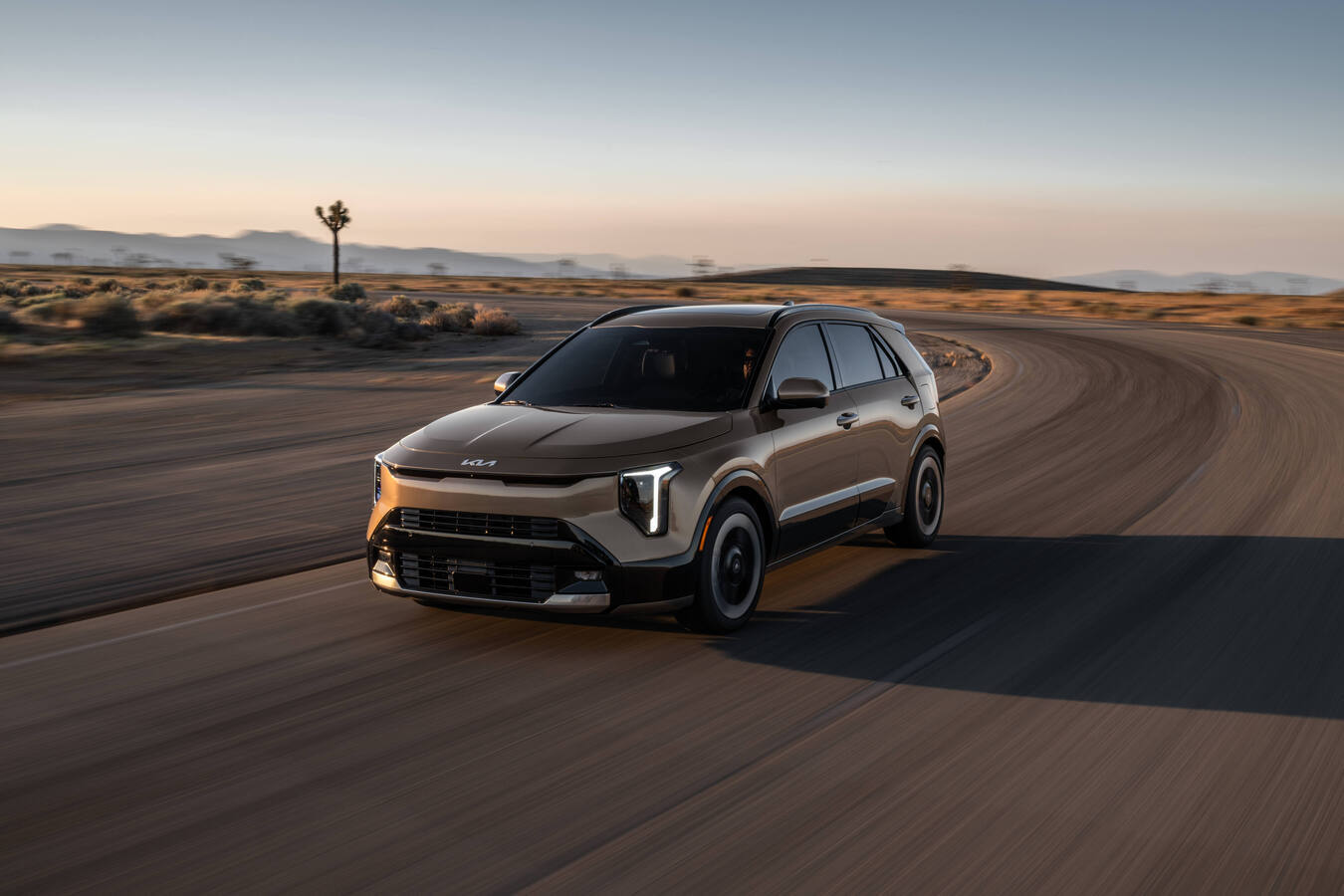


Ten years in, the Kia Niro is dropping any pretense of being anything other than what it always did best: efficient hybrid transportation in a crossover wrapper. The 2027 refresh, announced July 1 and expected on sale this summer, commits the Niro exclusively to hybrid power while layering on a cosmetic overhaul, a tech upgrade, and a new trim level.
That word “exclusively” deserves a moment. The previous-generation Niro offered plug-in hybrid and full-electric variants. Those are gone now, consolidated into Kia’s growing EV portfolio anchored by the EV3, EV6, and EV9.
The Niro is no longer trying to be all things to all buyers. It’s a hybrid crossover, full stop.
Under the hood, nothing changes. The same 1.6-liter four-cylinder paired with an electric motor still produces 139 combined horsepower through a six-speed dual-clutch automatic. That’s modest by any standard, but Kia says engineers focused on suspension tuning, ride refinement, and cabin quietness rather than chasing numbers.
In a segment where most buyers care more about fuel economy than zero-to-sixty times, it’s a defensible choice.
The visual refresh is more substantial than the mechanical one. Up front, redesigned fascias incorporate Kia’s Star Map lighting signatures with new daytime running light graphics meant to give the Niro a wider, more planted stance. The rear gets 3D-style taillamps and a cleaned-up bumper treatment.
Two new paint colors round out the exterior changes. None of it is revolutionary, but the Niro needed to look less anonymous next to the sharper-dressed Sportage and EV3.
Inside is where Kia spent the real money. A panoramic curved display pairs a standard 12.3-inch infotainment screen with an available 12.3-inch digital instrument cluster, replacing what had been a 4-inch unit on lower trims. Wireless Apple CarPlay and Android Auto are standard across the board.
The available Connected Car Navigation Cockpit system brings over-the-air updates and streaming access to Disney+, Netflix, and YouTube when parked.
A new S trim slots into the lineup alongside LX, EX, and SX models, though Kia is holding pricing until closer to launch. That fourth trim suggests Kia wants to fill a gap between the entry-level LX and the better-equipped EX. It likely targets buyers who want the bigger screen without paying for the full technology suite.
The driver-assistance upgrades are genuinely meaningful. Forward Collision Avoidance now covers junction turns, cyclists, and direct oncoming traffic. Highway Drive Assist 2, previously unavailable on the Niro, adds semi-automated highway driving with lane centering and adaptive speed control.
The SX Touring trim picks up a 360-degree Surround View Monitor and a Blind-Spot View Monitor that pipes live video into the instrument cluster when you hit the turn signal.
Kia also squeezed in a voice assistant activated by “Hey, Kia,” capable of handling climate, audio, and other vehicle functions. It requires a Kia Connect subscription, as do the streaming services and display themes, including branding from all 30 NBA teams and Disney properties. The subscription economy has firmly arrived inside the Niro’s cabin.
The broader play here is strategic positioning. Kia is carving clean lanes between its products. The Niro handles the affordable hybrid space, the Sportage covers conventional and plug-in hybrid territory, and the EV lineup handles electrification.
No overlap, no internal cannibalization.
At 139 horsepower with a dual-clutch gearbox, the 2027 Niro is never going to be the car enthusiasts dream about. But Kia isn’t building it for them. It’s building it for the buyer who wants a sensible crossover that sips fuel, parks easily, and now happens to stream Netflix.
A decade into its life, the Niro knows exactly what it is. And for once, that clarity might be its biggest advantage.

Share this Story