
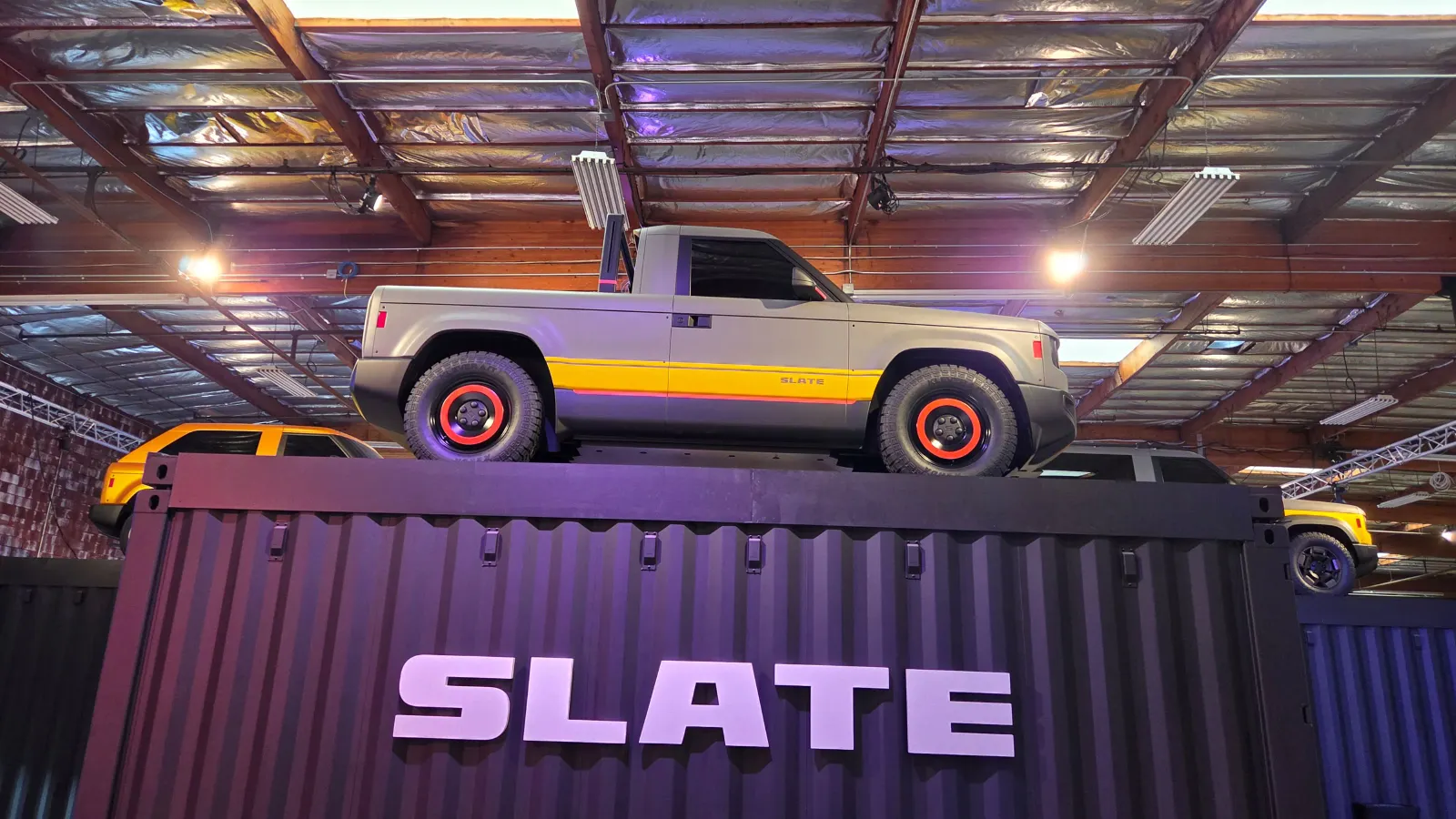


The waiting game for the cheapest electric truck in America is over — and what showed up in a cavernous industrial space east of Los Angeles on Wednesday looks exactly like what you’d expect for $24,950: a gray, two-door, no-frills box on wheels.
Slate CEO Peter Faricy unveiled the pickup to a crowd of journalists and influencers at the company’s Studio West facility in City of Industry, California, pitching it as a vehicle that “grows with them over time.” Translation: it ships stripped, and you pay to make it livable.
The pickup starts at $24,950. Two SUV variants — Squareback and Fastback — begin around $30,000. Pre-orders opened June 24 with a $300 deposit, or $250 for the 180,000-plus existing reservation holders who already put down $50.
Slate says more than 10,000 pre-orders rolled in on day one. Deliveries are targeted for Q4 2026 from the company’s manufacturing facility in Warsaw, Indiana.
The Jeff Bezos-backed startup, which closed a $650 million Series C round earlier this year, is built on a single thesis: affordability is the biggest barrier to vehicle ownership. President of vehicles Chris Barman put it plainly: “Everything in your life might be more expensive, but your Slate won’t be.”
That claim carries a large asterisk. The truck doesn’t connect to the cloud. There’s no infotainment system.
Entertainment and navigation run through your smartphone. The body comes in one color — gray — unless you buy a wrap from Slate’s online marketplace, where more than 100 colors are available for under $500.
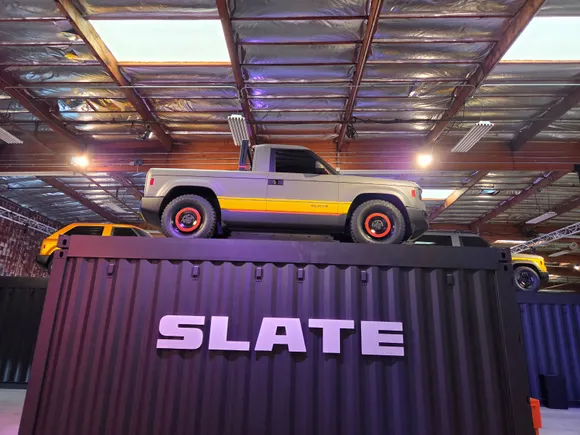
That marketplace is where Slate clearly intends to make its real money, offering over 800 accessories: stereos, roof racks, lighting, wheels, seat covers, interior color panels. A third of them cost less than $100. Half are under $250. CFO Ryan Green insists the company will profit on vehicles and accessories both, but the math on a $25,000 EV with LFP batteries and a 205-mile range leaves slim pickings on hardware alone.
Slate quietly shifted from nickel manganese cobalt cells to lithium iron phosphate units supplied by China-based Gotion, manufactured at the company’s Illinois plant. Battery packs get assembled in Indiana. The truck comes with a 10-year/110,000-mile battery and powertrain warranty — generous on paper for a startup with zero production history.
Towing capacity tops out at 2,000 pounds. Payload is 1,550 pounds. Those numbers put it firmly in light-duty territory, closer to a glorified side-by-side than a work truck.
Repairs are meant to be DIY-friendly through Slate’s online training platform, Slate U, with backup from more than 3,000 RepairPal shops nationwide.
The elephant nobody would discuss: Carvana. The online used-car retailer was granted an option to invest in Slate during the Series C round, but executives shut down every distribution question. “We aren’t talking about any of our partners today,” Green said.
AutoPacific president Ed Kim, who attended the event, suspects a deal exists but can’t be disclosed yet. Kim sees a market for a truly affordable EV but flags an obvious vulnerability: “Two-door vehicles tend not to be big sellers.”
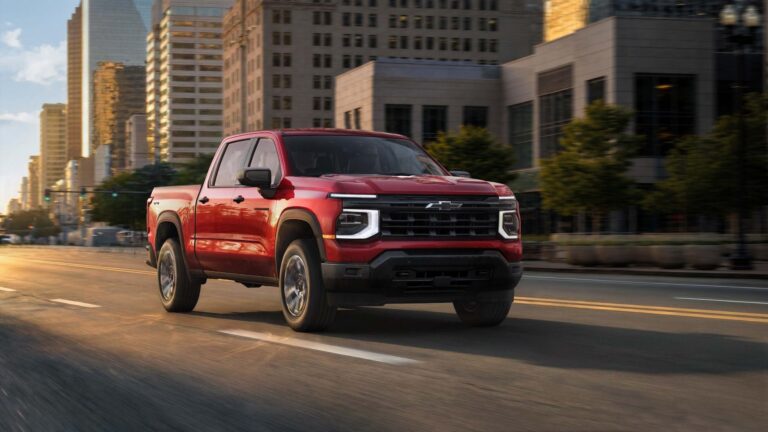
He’s right. The American truck market is dominated by four-door crew cabs, and Ford is bringing a $30,000 four-door electric pickup in 2027 that will make Slate’s two-door layout look like a deliberate limitation rather than a charming quirk.
Slate’s real differentiator may be customization — the idea that buyers build their truck over time, swapping panels and adding gear as budgets allow. It’s a compelling pitch for a generation raised on phone cases and sneaker drops. Whether that translates to actual vehicle purchases at scale is another question entirely.
The startup has money, reservations, and a factory. What it doesn’t have yet is a single delivered truck or a proven distribution channel. Everything between here and Q4 is execution — and execution is where EV startups go to die.
Share this Story