
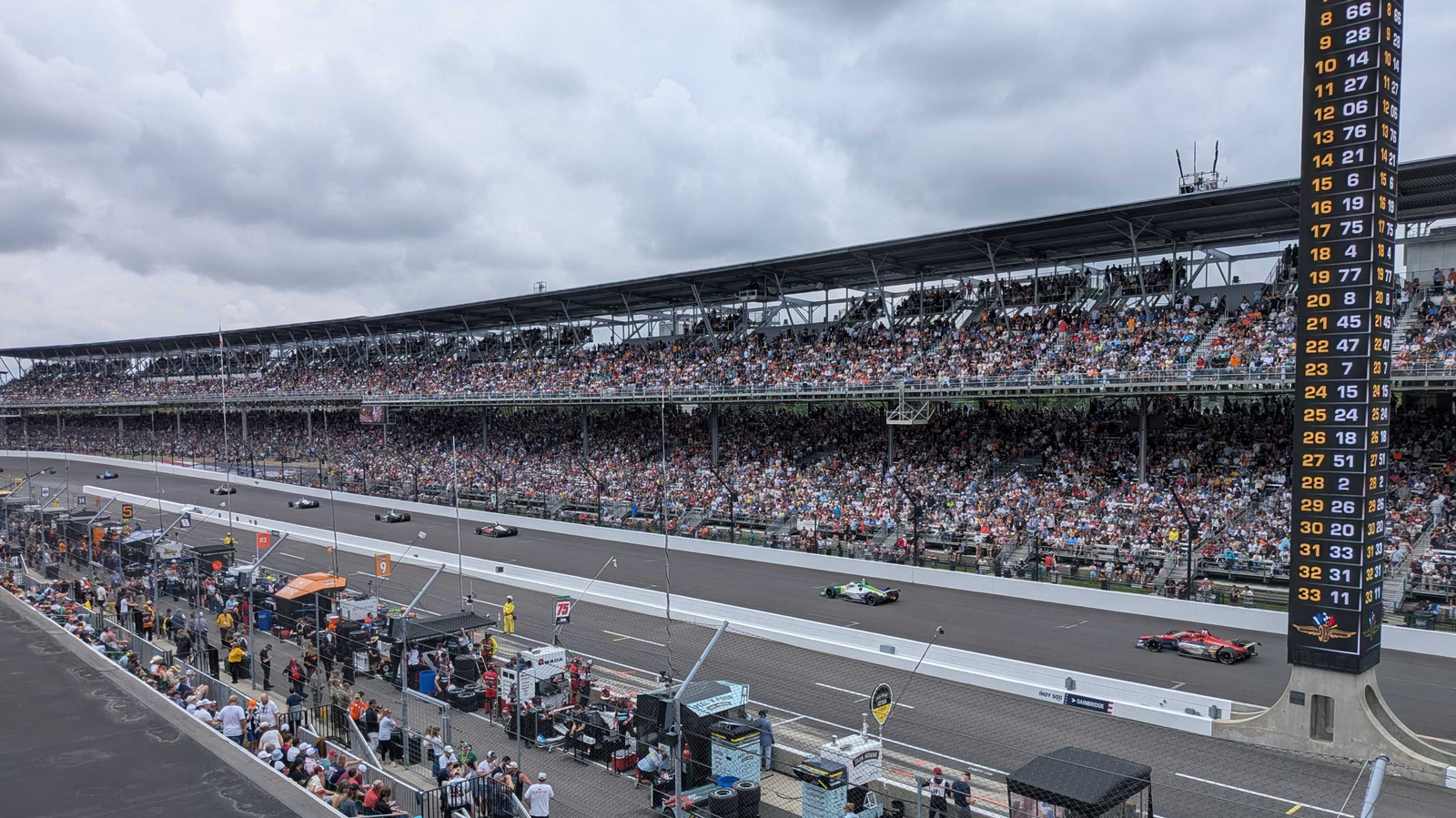


Three hundred and fifty thousand people packed the Indianapolis Motor Speedway for this year’s Indy 500. That’s more than the race has drawn in a decade. And according to one journalist who showed up bracing for bedlam, it was about as chaotic as a Tuesday at Waffle House.
Jalopnik’s Collin Woodard flew in on a Honda-sponsored trip expecting the kind of drunken madness the internet had promised him for years. He got pleasant weather, manageable crowds, and exactly one person falling over on wet grass. Someone else had to point that person out to him.
The disconnect between the Indy 500’s reputation and its reality is the story here, and it’s one that matters for a race trying to sell itself as both an iconic spectacle and a family-friendly event. Woodard, a self-described SEC tailgating veteran, arrived with battle-tested credentials from Georgia-Florida weekends, summers working in Daytona and Panama City Beach, and a lifetime of dodging banana-costumed aggressors on Frat Beach. By those standards, Indy didn’t even register.
The Speedway’s sheer scale is the great equalizer. Georgia football games feel claustrophobic with fewer than 100,000 fans. The Brickyard swallowed three and a half times that number and still left room to breathe.
Woodard said he never hit the kind of crowd density that stops you from getting where you need to go. Even the mass exodus of Snake Pit revelers after the electronic music stage shut down amounted to a bunch of drunks doing a competent job of walking in one direction.
Modern IndyCars aren’t punishingly loud, either. Woodard noted the sound level sits well below a NASCAR race, comfortable enough that you can hold a conversation trackside without shouting. Ear protection is still smart, but forgetting it won’t ruin your day.
He went so far as to say he’d bring his pre-teen niece and elementary-school nephew next year. The only zones he’d steer kids away from are the Snake Pit and the infamous Coke lot, which function as the Speedway’s back-alley dumpsters — present but entirely avoidable.
The Coke lot is the wrinkle. Woodard didn’t make it there this time, but he heard enough to know the real debauchery lives outside the gates, not inside them. The lot reportedly makes the Snake Pit look quaint.
He knows he shouldn’t go. He knows it would offer him nothing he needs. He also knows he wants to go back and see it, which is exactly how the Indy 500 keeps its outlaw mystique alive while being safe enough for someone’s eight-year-old.
That duality is the Indy 500’s quiet genius. The race has cultivated a reputation as one of America’s great parties, a bucket-list bacchanal, while the actual experience inside the facility is closer to a very large, very well-run county fair with open-wheel cars. The danger stays contained in specific zones, and the rest of the property is just a really good day at the races.
Indianapolis Motor Speedway drew its biggest crowd in more than a decade this year, and the operation handled it without breaking a sweat. Cooler temperatures and the threat of rain may have helped thin out the wanderers, but regulars told Woodard the vibe felt normal. The place was simply built for this.
For decades, the Indy 500 has traded on its legend — the drink, the danger, the sheer sensory overload. The truth is quieter, more spacious, and far more welcoming than the mythology suggests. The wildest thing about the Greatest Spectacle in Racing might be how hard it works to convince you it’s wilder than it actually is.
Share this Story