
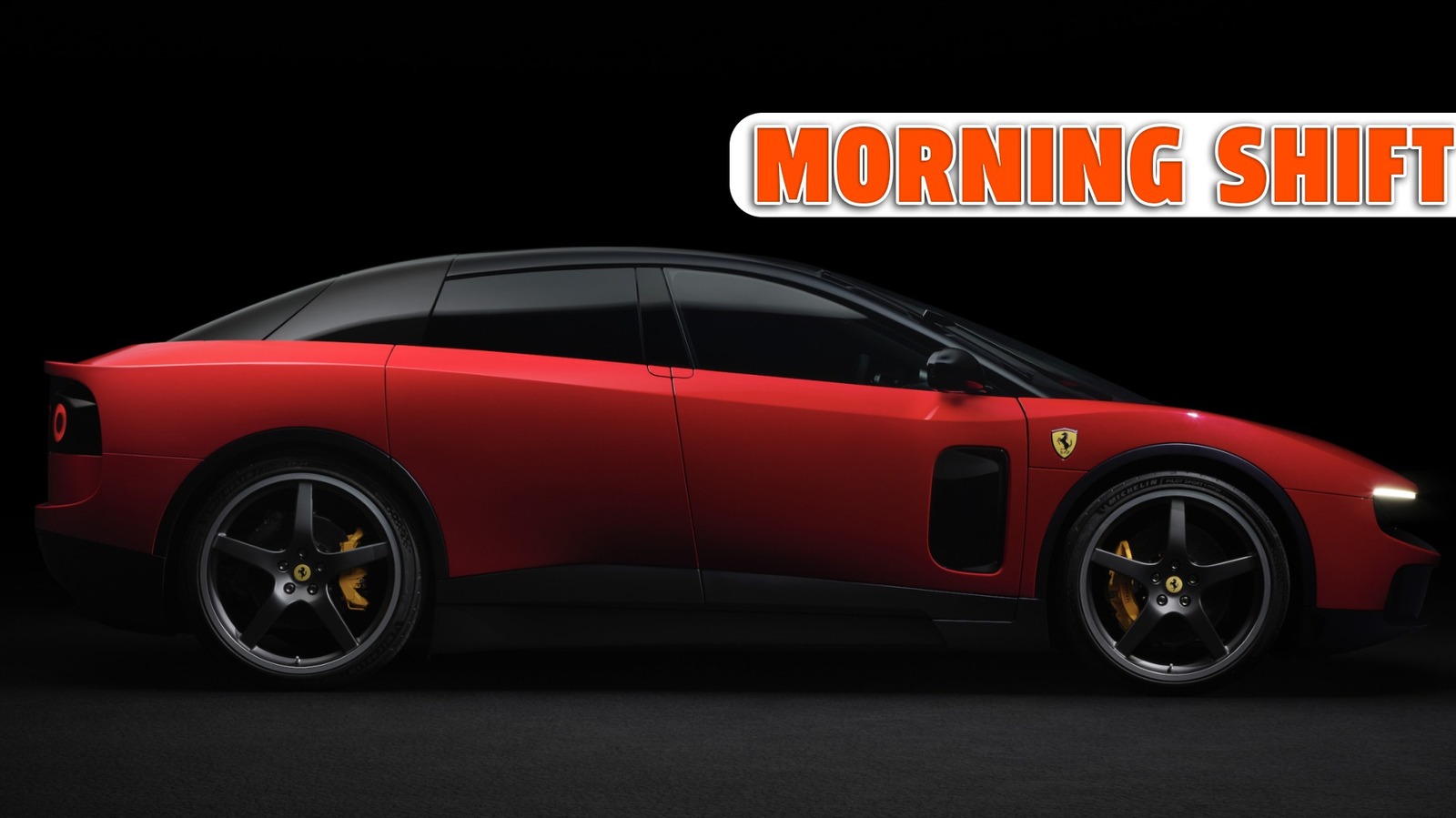


Benedetto Vigna has a message for everyone who looked at Ferrari’s first electric vehicle and recoiled: you’re wrong, and the people who actually matter are already wiring money.
The Ferrari CEO took the stage at an automotive event in Modena this week to defend the Luce, a $640,000 four-door EV designed by Jony Ive that has drawn criticism not for being electric but for being, well, deeply strange looking. Vigna told Reuters there is “strong interest, including from new clients,” and that Ferrari has “already received bank transfers” from customers who attended the Rome launch earlier this week. Precise order figures, he promised, will come in July alongside second-quarter earnings.
That timeline is convenient. It buys Ferrari two months of breathing room before anyone can verify whether “strong interest” translates into actual volume or just a handful of ultra-wealthy collectors hedging their bets.
Vigna also pushed back against comparisons to Chinese EVs, insisting the Luce shares “nothing” with other battery-powered cars on the market in terms of interior, exterior, or performance. He invited critics to see and drive the car before passing judgment. He stressed the Luce was an addition to the lineup, not a replacement for anything.
The defensiveness was telling.
At $640,000, the Luce enters a category where price alone is supposed to signal exclusivity and innovation. Vigna called it a fair price for what Ferrari has built. But the specs released so far don’t suggest anything a Porsche Taycan Turbo GT or Rimac Nevera can’t match or exceed at a fraction of the cost.
Ferrari is betting that the prancing horse badge and Ive’s polarizing design language are worth a roughly $400,000 premium over the competition.
Meanwhile, across the Pacific, Toyota is moving in the opposite direction on electrification. The world’s largest automaker quietly shelved development of its next-generation Lexus EV, the LF-ZC, which was supposed to showcase gigacasting and advanced battery technology when it launched in mid-2027. Toyota cited weak demand and the death of America’s $7,500 EV tax credit under President Trump.
The technologies developed for the LF-ZC will migrate to other vehicles, a spokesperson said, but the flagship itself is dead. Two automakers, two wildly different reads on the EV market, and both responses reveal more about corporate identity than consumer demand.
Toyota has never been a true believer in battery electrics. CEO Kenta Kon is reviewing the company’s target of 1.5 million EV sales and pushing to improve profitability. Killing the LF-ZC fits a pattern of caution that Toyota has practiced for years, even as it launched the Lexus ES hybrid and all-electric TZ.
The company is hedging, not retreating entirely, but certainly not leading.
Ferrari, on the other hand, is charging forward with a car nobody asked for at a price almost nobody can afford, then daring critics to question its judgment. That’s either supreme confidence or a company so insulated by its brand mystique that it genuinely cannot process negative feedback.
The truth probably sits somewhere uncomfortable for both. Toyota is using policy uncertainty as cover for its own EV ambivalence. Ferrari is using exclusivity as armor against legitimate design criticism.
Neither posture is particularly honest.
What connects these stories is simpler than strategy: the EV transition has entered its messy middle period, where automakers no longer have to pretend unanimity about the future. Some are doubling down. Some are pulling back. And the customers caught in between are left trying to figure out whether $640,000 buys them innovation or just a very expensive conversation starter.
Vigna says July will bring the receipts. Toyota says the market has spoken. One of them is going to look very foolish by year’s end.

Share this Story