
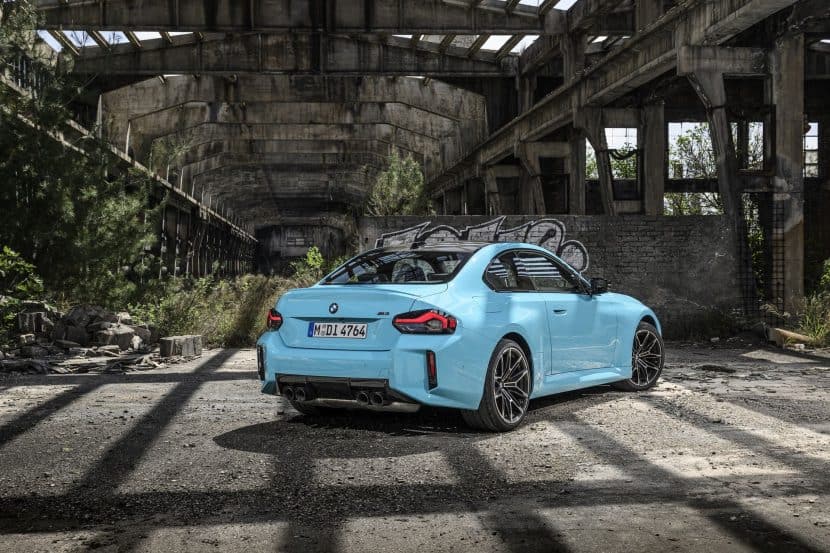


The United States strong-armed BMW into building something the M division never originally planned: an all-wheel-drive M2. BMW M CEO Frank van Meel confirmed as much at the Goodwood Festival of Speed, telling Bimmer Today that customer demand from America’s Snowbelt states was the primary reason the G87 xDrive got the green light for production.
Van Meel’s reasoning was blunt. Drivers in the northern U.S. run all-season tires year-round, making a rear-wheel-drive M2 “simply not feasible there.” Enough of them made noise about wanting a compact M car they could actually use twelve months a year that BMW had little choice but to act.
This isn’t the first time sheer buyer volume has bent BMW’s engineering plans. The M3 Touring was originally developed as a left-hand-drive-only car until the UK, Japan, and Australia howled loudly enough to get a right-hand-drive version. The playbook is the same: build what the spreadsheet says customers will buy.
Switzerland also chimed in with similar requests, which makes geographic sense. But let’s be clear about the hierarchy here — American demand drove this decision. The U.S. remains BMW M’s largest market by a wide margin, and when a critical mass of buyers in Michigan, Minnesota, Wisconsin, and the rest of the snow-covered north say they want something, Munich listens.
The M2 xDrive launches late this summer as an automatic-only proposition. BMW is positioning it as a lineup expansion, not a replacement. The rear-drive, manual-transmission M2 stays in the catalog for purists who consider all-wheel drive and a torque converter to be cardinal sins against driver engagement.
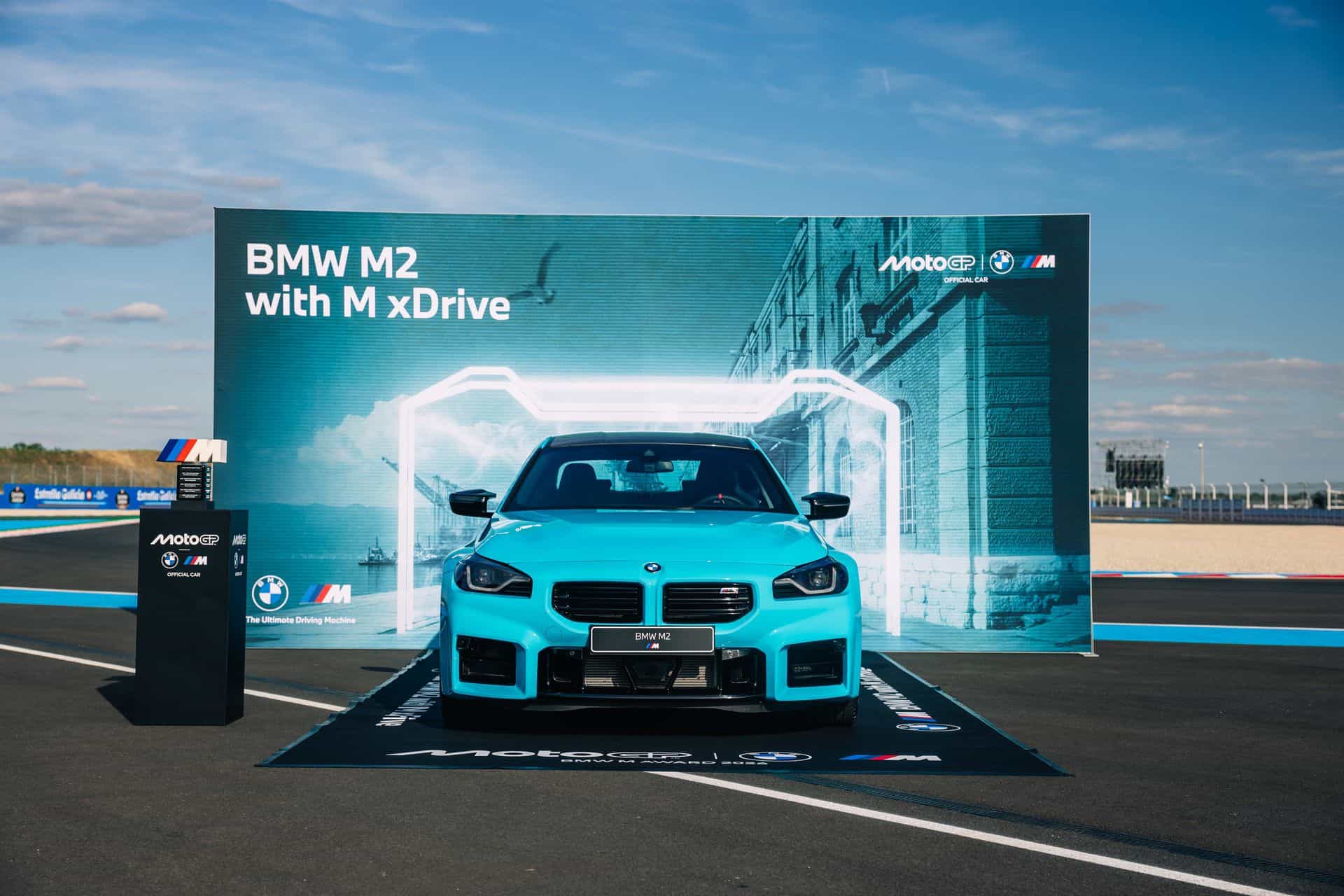
That distinction matters more than BMW might publicly admit. The M2 has occupied a peculiar space in the lineup — the last affordable, relatively small, rear-drive M car that felt like it existed for driving’s sake rather than market positioning. Adding xDrive doesn’t kill that car, but it does dilute the identity. The M2 is now a two-car family serving two very different buyer mentalities.
Alongside the drivetrain addition, the M2 is getting a revised twin-turbocharged 3.0-liter inline-six featuring BMW’s new pre-chamber ignition technology, branded “M Ignite.” The update exists to meet the Euro 7 emissions standard. Power output stays the same, but BMW claims improved fuel efficiency and a marginally better exhaust note.
American buyers won’t see that engine upgrade, at least not yet. U.S.-spec M2s will continue with the current S58 powerplant. The updated engine enters production next month at BMW’s San Luis Potosí plant in Mexico, initially for European-market cars. European M3 and M4 models built from July onward are also getting the revised six-cylinder.
So the American market was powerful enough to demand and receive an entirely new drivetrain configuration, but not powerful enough to get the latest engine technology at the same time. That’s a peculiar imbalance, though likely driven by EPA certification timelines rather than any deliberate slight.
The broader pattern is unmistakable. BMW M’s product decisions increasingly follow demand signals rather than engineering ideology. The company that once insisted the M3 would never be a wagon, never be right-hand-drive, and never be all-wheel-drive has now done all three. The M2 was the last holdout, and the Snowbelt just ended that resistance.
Frank van Meel sounds genuinely pleased about the volume potential. He should be. Every xDrive M2 sold in Buffalo or Minneapolis is one that previously went to Audi or stayed on the lot. Whether it’s the M2 that enthusiasts originally fell in love with is a different question — one BMW has clearly decided it can afford to stop asking.

Share this Story