


The 2026 Tesla Model Y is the only vehicle on the market that has cleared every one of NHTSA’s newly redesigned advanced driver assistance tests. Not a single competitor has managed it yet.
The agency announced Wednesday that Model Y units built on or after November 12, 2025, passed all eight evaluations under the revamped New Car Assessment Program — four legacy benchmarks and four brand-new ones that nobody else has touched. The new tests grade pedestrian automatic emergency braking, lane keeping assistance, blind spot warning, and blind spot intervention. They are pass/fail. No curves. No partial credit.
For years, the federal five-star rating system told buyers whether a car had certain safety features. It didn’t tell them whether those features actually worked. That distinction matters enormously when every automaker slaps a different marketing name on functionally similar technology — BlueCruise, Super Cruise, EyeSight — and consumers have no independent yardstick for comparison.
The updated NCAP, finalized in December 2024 and applied to 2026 model year vehicles, changes the game. It measures real-world performance under controlled conditions, including pedestrian detection scenarios with adults and children, day and night lighting, and active steering correction when a vehicle drifts from its lane. A car either handles the scenario or it doesn’t.
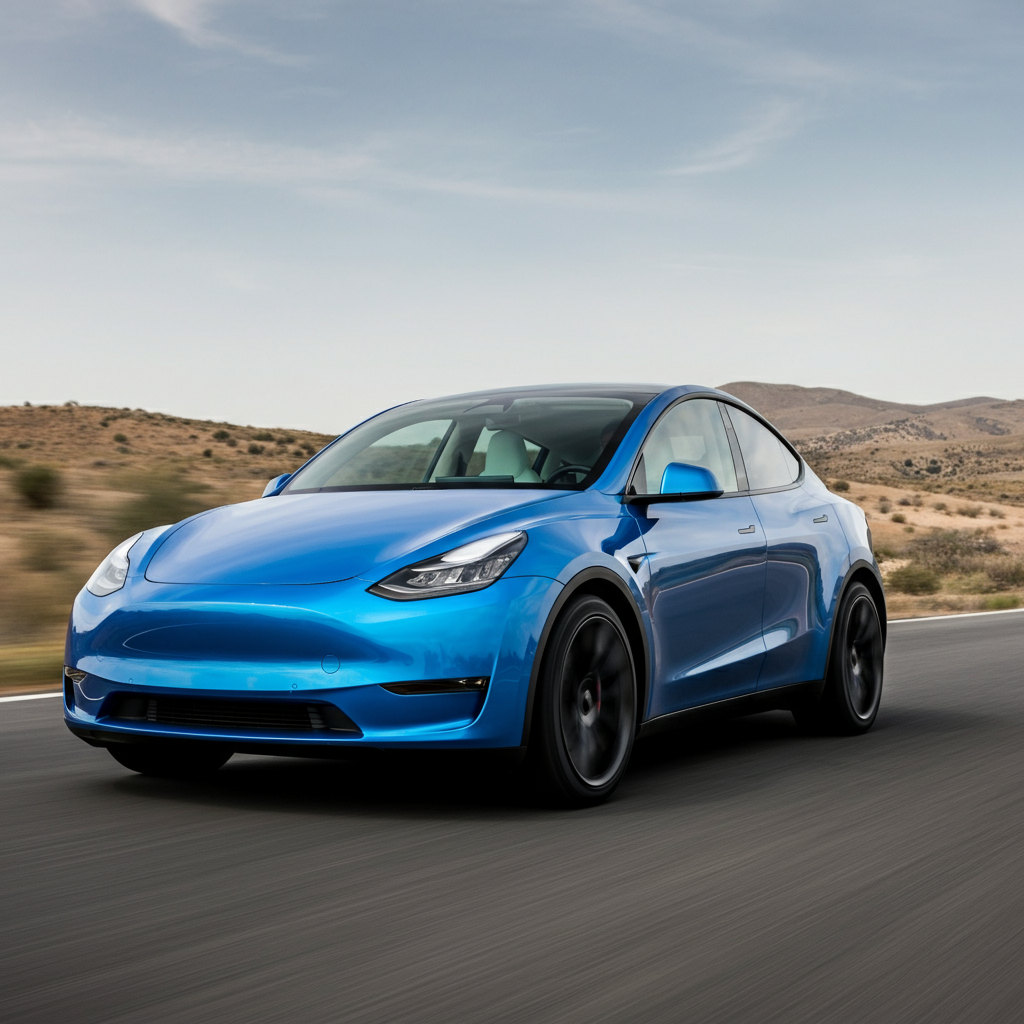
NHTSA Administrator Jonathan Morrison did not mince words. The 2026 Tesla Model Y demonstrates the lifesaving potential of driver assistance technologies and sets a high bar for the industry,” he said. “We hope to see many more manufacturers develop vehicles that can meet these requirements.”
That last sentence is the quiet part said loud. As of today, nobody else has.
Tesla’s clean sweep is particularly notable because the company has bet its entire active safety architecture on cameras alone. Its “Tesla Vision” system dropped radar from newer vehicles — a move that drew sharp criticism from engineers and competitors who argued optical-only sensing lacked the redundancy needed for safety-critical functions. Passing NHTSA’s blind spot and pedestrian braking tests without radar is a data point those critics will have to reckon with.
None of this absolves Tesla of the regulatory heat its Autopilot and Full Self-Driving software have attracted. Investigations, recalls, and public scrutiny over driver misuse remain part of the company’s safety record.
But the NCAP result is a different animal entirely. It is a standardized, government-administered, objective measurement of whether the car’s assistance systems do what they’re supposed to do in defined crash scenarios. And the Model Y aced every one.
The pressure now falls squarely on legacy automakers and EV startups alike. The NCAP roadmap extends through 2033, meaning the bar will only rise. Manufacturers who have treated driver assistance as a checkbox exercise — install the hardware, print the brochure — face a reckoning. The federal government is no longer asking whether a car has blind spot warning. It is asking whether that warning actually prevents the driver from sideswiping a minivan.
That shift from feature-checking to performance verification is the real story here. Tesla happened to be first through the door, but the door is now open for every automaker to prove — or fail to prove — that their systems work under pressure.
The industry has been selling safety technology for years. Washington is now grading the homework. So far, only one student has turned it in.
Share this Story