
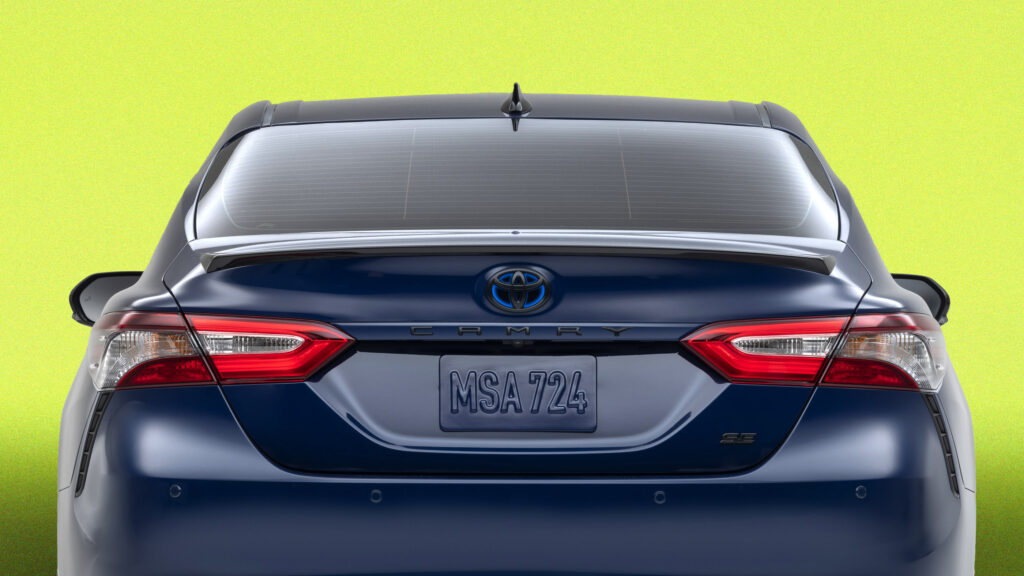


A 971-count indictment landed Thursday against 16 men accused of running a Bronx-based auto theft ring that stripped Hondas, Toyotas, and Nissans across four boroughs with the speed and choreography of a pit crew at Daytona. The haul: $1.2 million in stolen cars, tires, rims, and catalytic converters taken from 252 victims.
Not a single exotic was on the shopping list.
That detail tells you everything about the real economics of car crime in America. Forget the viral videos of Lamborghinis on flatbeds. The money is in volume, in commodity parts that fit millions of vehicles on the road, in components that can be flipped online or sold in person before the owner even notices the car sitting on cinder blocks.
The Bronx District Attorney’s office said the crew targeted some of the most common nameplates in the country. Hondas, Toyotas, Nissans — the backbone of urban daily driving, parked on streets overnight, often without garages or security cameras nearby. Their parts are interchangeable across model years, universally in demand, and nearly impossible to trace once separated from the vehicle.
Prosecutors said the group operated with rehearsed precision. Teams would descend on a parked car, strip wheels and catalytic converters in minutes, and vanish. The “pit crew” label came straight from the DA’s office, and while it sounds like a headline writer’s gift, investigators described it as operationally accurate.
Eleven complete vehicles were also stolen. But the parts game was the real profit center. Catalytic converters alone can fetch several hundred dollars each on the black market thanks to the precious metals inside — palladium, rhodium, platinum. A single Toyota Prius converter can bring north of $1,000 from a recycler who doesn’t ask questions.
The ring moved product both online and through in-person sales, according to authorities. That dual-channel approach mirrors legitimate aftermarket parts businesses, which is precisely what makes these operations so hard to disrupt. A set of OEM Honda Accord wheels listed on a marketplace app looks identical whether it came from a dealer or a 3 a.m. curbside heist in the Bronx.
The NYPD and Bronx DA linked thefts across Manhattan, Brooklyn, and Queens in addition to the Bronx, suggesting the crew ranged widely to avoid establishing a pattern in any single precinct. The 971 counts across 16 defendants point to a case built over months of surveillance and evidence gathering — not a lucky traffic stop.
This is a story that repeats itself in every major American city. The National Insurance Crime Bureau has been sounding the alarm on catalytic converter theft for years. Hyundais and Kias grabbed headlines for their TikTok-fueled ignition vulnerability, but the quieter, steadier drain on Honda and Toyota owners never stopped. It just doesn’t trend.
The defendants face charges ranging from grand larceny to criminal possession of stolen property. If convicted on the top counts, several face significant prison time. But the pipeline they fed — the network of buyers, recyclers, and online marketplaces — remains largely intact. Shutting down one crew doesn’t close the market.
For the 252 victims, many of whom likely walked out to find their cars wheelless or their exhaust systems gutted, the indictment offers some measure of accountability. But it won’t cover the deductible. And it won’t stop the next crew from studying the same playbook: skip the Ferraris, target the Civics.
The parts are always worth more than the car.

Share this Story