


A hundred people live at the base of Mount Fuji in a city built by the world’s largest automaker, and they’re being watched while they drink coffee.
Toyota’s Woven City, the planned community announced with great fanfare at CES 2020, opened to residents last September. Six months in, the population stands at roughly 100 full-timers and 200 commuting workers. The three-phase plan calls for thousands eventually, but right now, by Car and Driver’s own account, it feels like a ghost town.
That hasn’t stopped Toyota from treating the place as a living petri dish. At a recent media open house celebrating the completion of Phase 1’s residential area, Daisuke Toyoda — senior vice president of Woven by Toyota and son of chairman Akio Toyoda — framed the sparse settlement as a feature, not a bug. “I want to transform this city into a place where people say, ‘Let’s just try it,’ and a city where we can still move forward, even if we fail,” he said.
The operative buzzword is POC — Proof of Concept. Everyone in Woven City uses it like a prayer.
Some of those proofs are genuinely interesting. UCC, a major Japanese coffee chain, opened a café where cameras monitor customers with their consent, feeding video into Toyota’s Woven City AI Vision Engine. The AI tags whether you’re focused on your laptop or daydreaming over a novel. UCC wants to reformulate coffee blends for better concentration, and Toyota sees a future RAV4 that knows when a driver needs a caffeine nudge.
Daikin is testing a “pollen-less space” that could improve vehicle cabin air quality. An education company called Z-kai built a nursery school and developed a vertical tablet with projection mapping that draws directly onto a student’s notebook during remote lessons. That tech goes live outside Woven City this fall.
Then there’s the oddball stuff. An AI puppet version of Akio Toyoda, called Akio-kun, was trained on the chairman’s writings. Daisuke interacted with it publicly, and it was, by all reports, awkward.
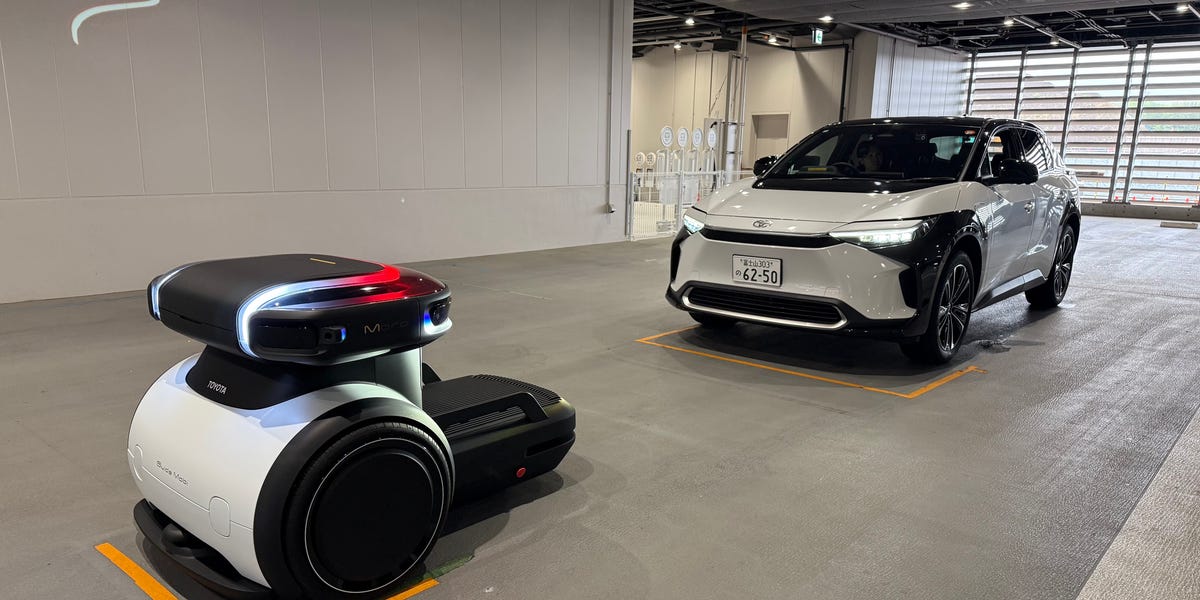
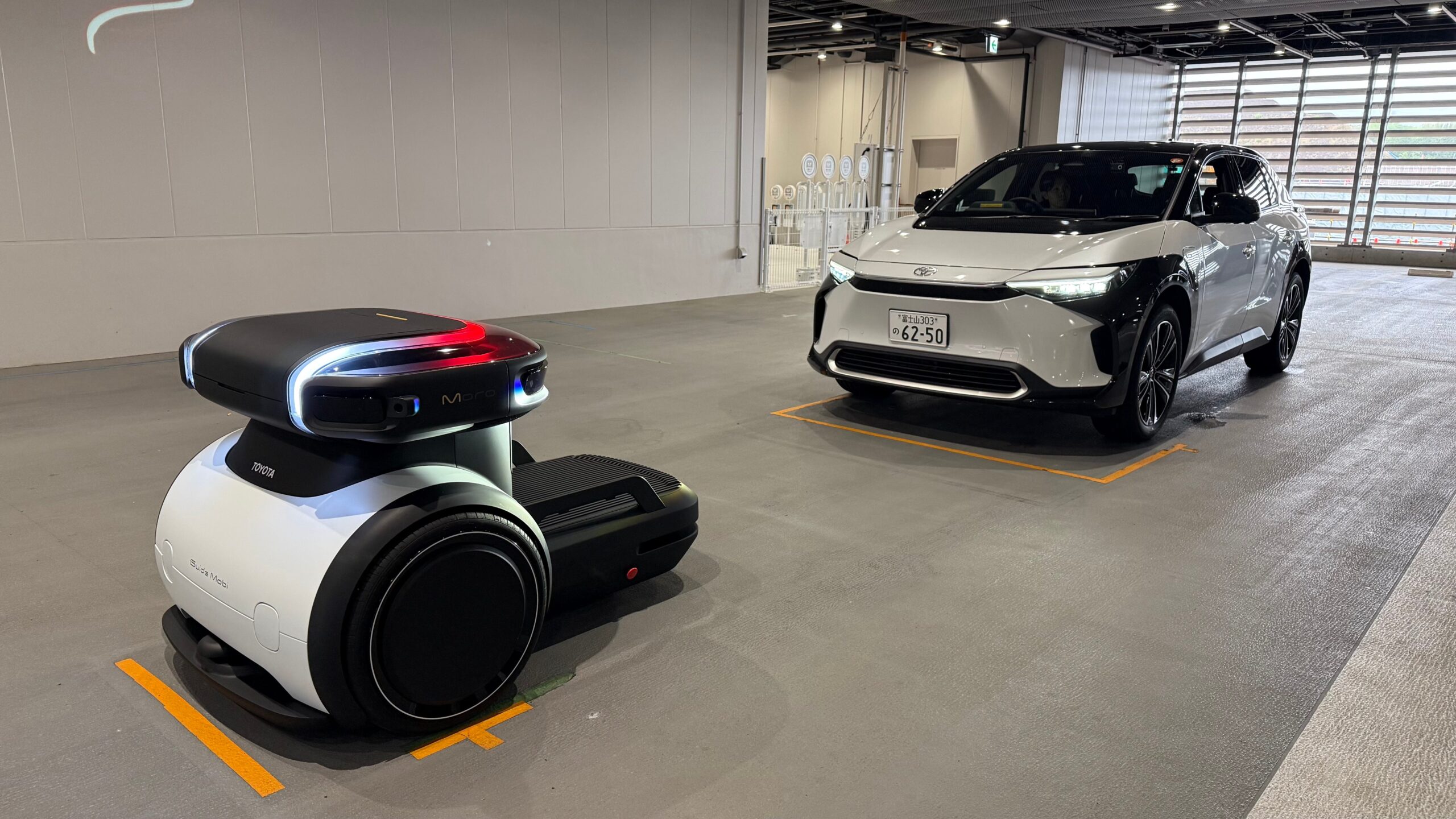
The mobility experiments are more on-brand. Toyota is running its boxy e-Palette electric shuttle, a three-wheeled standing scooter called Swake, and a squat autonomous robot called Guide Mobi that can wirelessly hijack a car’s drive-by-wire system to park it without expensive lidar. Autonomous shuttles already ferry people between Woven City and a nearby train station.
Toyota also just expanded its bench of resident companies — called Inventors — to 24. The newest additions include Joby Aviation, the eVTOL air taxi developer, and the AI Robot Association. Joby’s presence hints at a future where Toyota’s mobility plans extend vertically, not just horizontally.
Underneath all of this sits Arene, Toyota’s software development platform, which debuted on the 2026 RAV4 and will spread across the Toyota and Lexus lineup. Woven City is where Arene gets stress-tested against real human behavior before it ships in millions of vehicles.
The entire operation is built on a former factory site that produced 7.5 million Toyotas over 53 years. There’s a deliberate symbolism in repurposing a stamping plant into an “Inventor Garage” where startups prototype alongside Toyota engineers steeped in decades of manufacturing discipline. The old monozukuri spirit meets Silicon Valley’s move-fast ethos — at least in theory.
The tension is obvious. Toyota has constructed an elaborate, expensive infrastructure for innovation, but at a population of 100, the data sets are tiny and the feedback loops are narrow. A self-selecting group of residents who’ve agreed to constant surveillance doesn’t exactly replicate the chaos of real-world consumer behavior.
The coffee-shop AI works because everyone in town signed up to be studied. That consent evaporates the moment you try scaling it to a Starbucks in Nagoya.
Six months in, Woven City remains more manifesto than metropolis. Toyota is betting that filling the place with people and companies will generate compounding returns — kakezan, multiplication. For now, it’s a proof of concept still searching for its proof.
Share this Story