
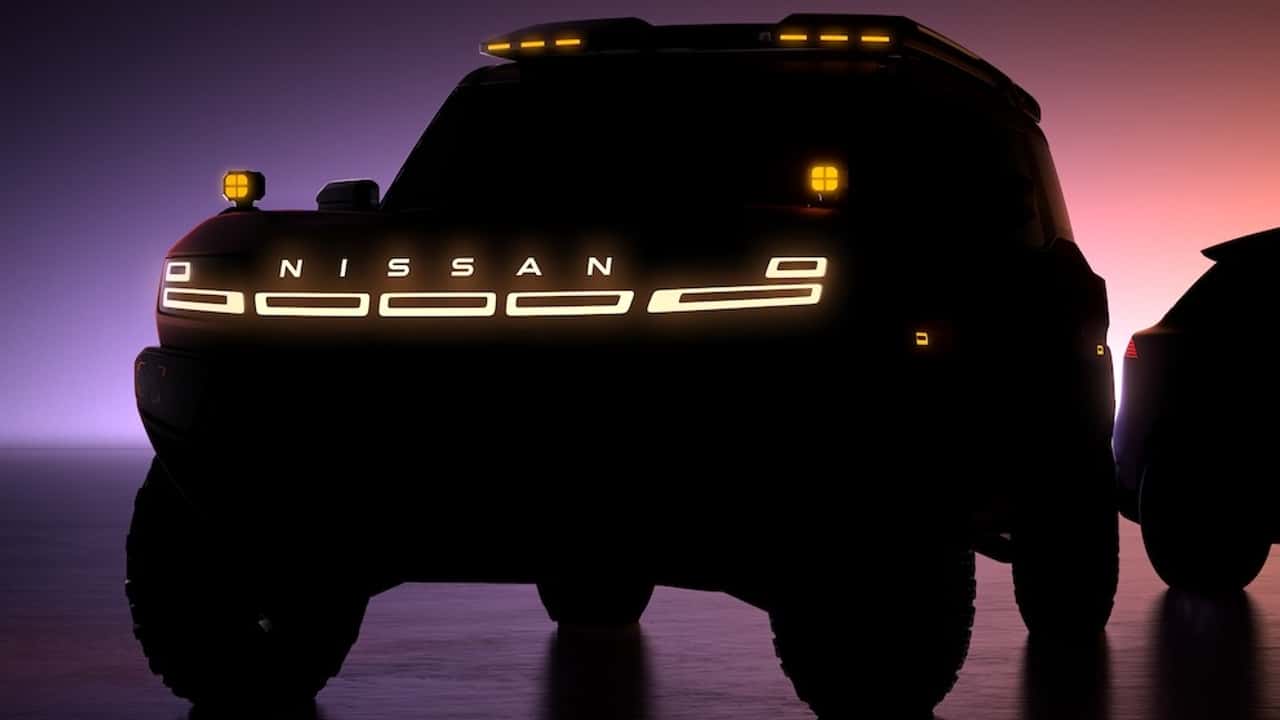


Nissan Americas Chairman Christian Meunier posted a shadowy teaser of the next-generation Xterra on LinkedIn this week and called it “badass.” Coming from a company that just announced it’s cutting 11 models to stay alive, the swagger is deliberate.
The image, never shown during the official Rogue and Juke launch event days earlier, reveals a boxy silhouette with pronounced approach and departure angles, a roof rack, and a spare tire mounted on the tailgate. That last detail is new for the nameplate. Nissan blacked out most of the finer points, but the message is unmistakable: this is not a crossover wearing a costume.
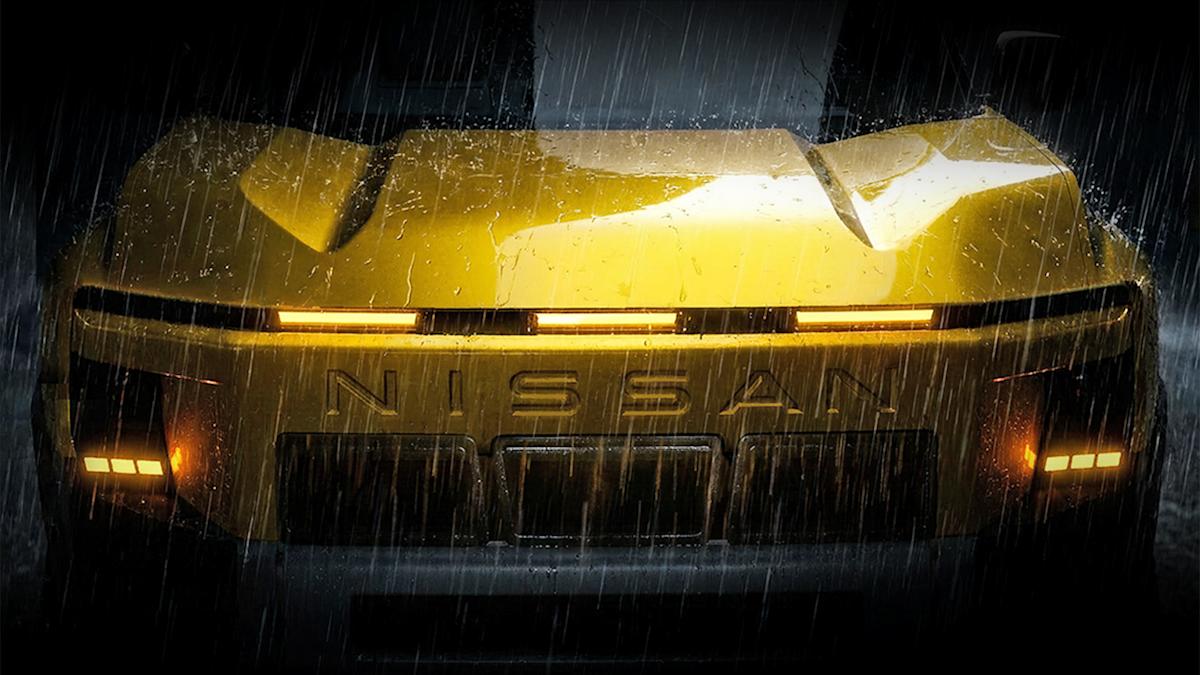
The first official teaser, dropped during the April 13 event alongside a broader Nissan strategic plan, showed the Xterra’s front end above the bumper line. Segmented light bar, big NISSAN lettering stamped across the nose, deep hood creases framing the fenders. The whole thing dipped in a yellow that had been rumored for months.
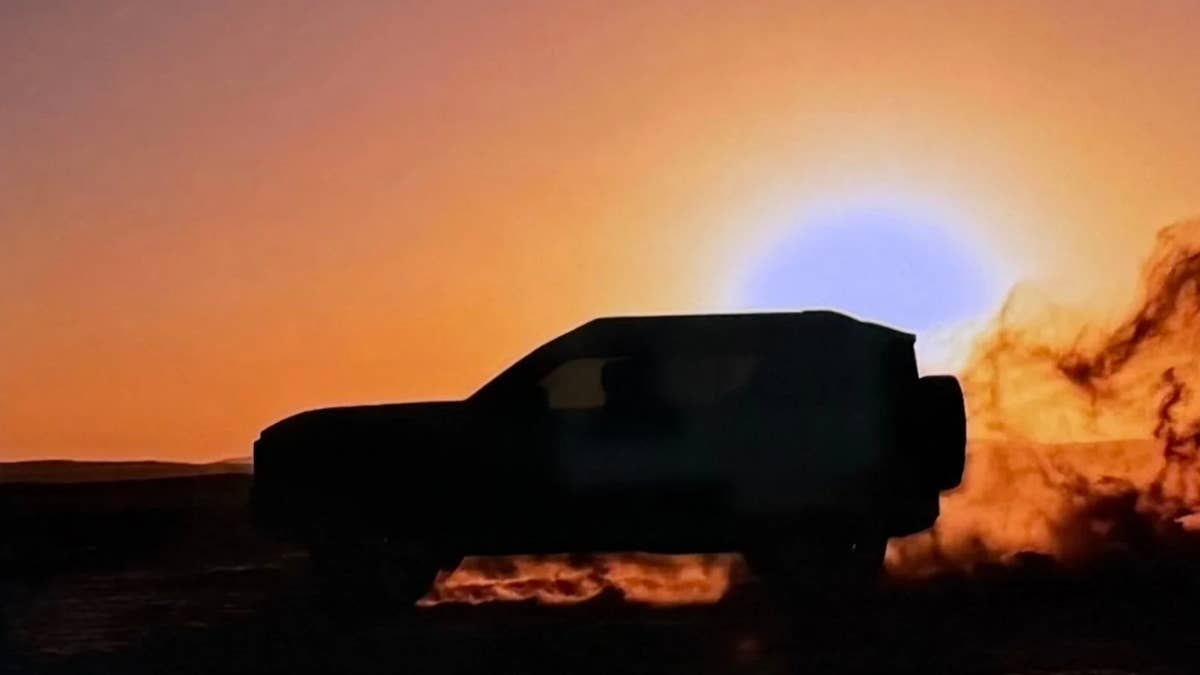
Run it through Photoshop and you get a cleaner look but not much more to chew on. The lighting signature shares DNA with the new Frontier plug-in hybrid Nissan recently revealed for China, though that truck rides on a Dongfeng platform. The actual Xterra will be built on Nissan’s own new ladder frame architecture, a distinction worth tracking.
That platform is the real story here. Nissan has committed to four body-on-frame models riding on this chassis. The Xterra arrives first, likely debuting in 2027 as a 2028 model.
A next-generation Frontier follows, then a more off-road-focused Pathfinder, then an Infiniti variant. Four vehicles from one investment, spreading the cost across segments Nissan has either abandoned or neglected for years.
Under the hood, Nissan confirmed a V6, not a downsized turbo-four. Displacement remains undisclosed. A V6 hybrid option will also be available for buyers who want electrification without giving up the mechanical character that off-road trucks demand.
Pricing is expected to start below $40,000, which plants the Xterra directly in front of the Toyota 4Runner and within striking distance of the Ford Bronco. Those two have had this segment largely to themselves, along with the Jeep Wrangler, while Nissan spent the better part of a decade wandering the crossover wilderness. The original Xterra died in 2015, and nothing in Nissan’s lineup since has scratched the same itch.
CEO Ivan Espinosa declared “Nissan is back” last year. The jury is still very much out on that claim. The company is bleeding models, restructuring globally, and trying to convince dealers and buyers that a turnaround is underway rather than just another cycle of promises.
The Xterra has to be more than a hype vehicle. It has to sell.
Nissan itself calls the Xterra “a heartbeat model for the U.S., offering an adventurous spirit, body-on-frame strength, and purpose-driven design.” That’s marketing language, but the underlying bet is real. Nissan is wagering that Americans still want a mid-size, truck-based SUV with a V6 and real off-road bones, priced aggressively enough to pull conquest buyers out of Toyota and Ford showrooms.
The appetite is clearly there. The 4Runner just got a full redesign and is selling as fast as Toyota can build them. The Bronco continues to move in serious volume despite Ford’s quality headaches.
Nissan sees a lane. Whether a company in the middle of a painful restructuring can execute a flawless launch on an all-new platform with an all-new vehicle in a segment it hasn’t competed in for over a decade, that’s the question nobody at Nissan is answering yet.
Two teaser images and a LinkedIn post do not make a comeback. But they do confirm that the Xterra is no longer a rumor, a render, or a wish. It’s a vehicle on a timeline, with an engine confirmed, a platform committed, and a price target set. Now Nissan has to build the thing.

Share this Story