
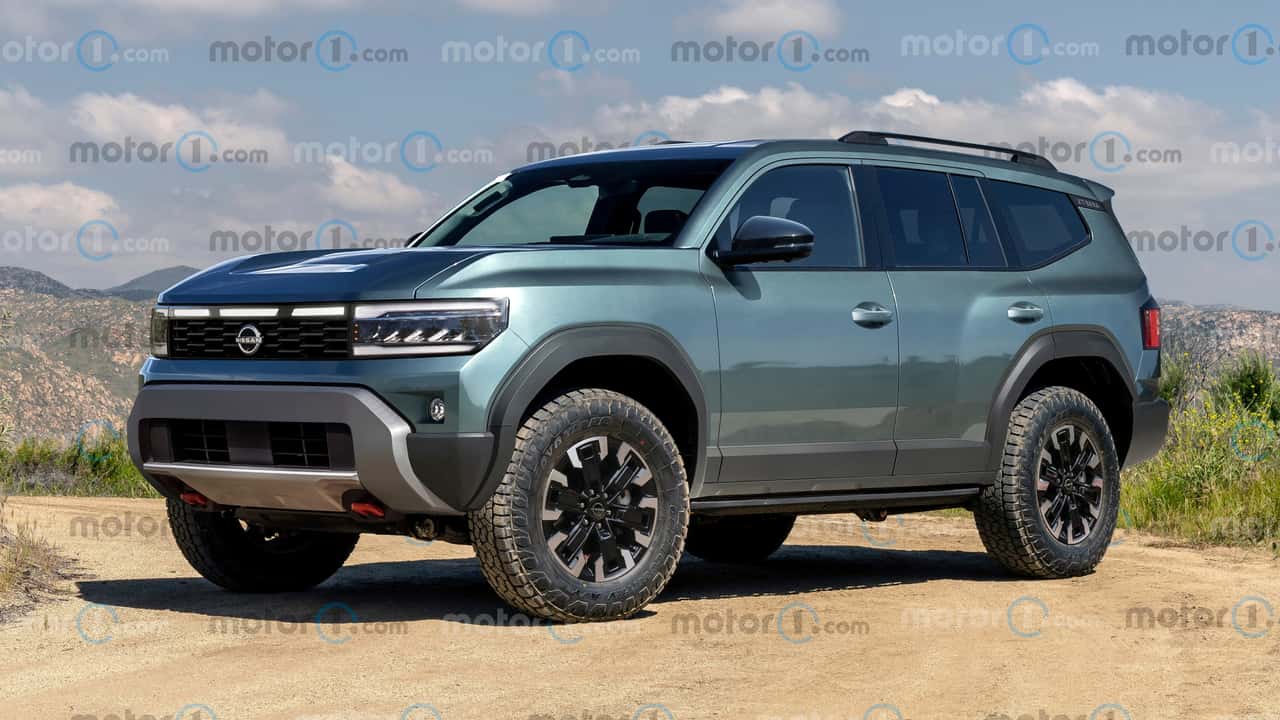


Nissan killed the Xterra in 2015 and spent a decade watching the off-road SUV market explode without it. Now the company is clawing its way back in, and the playbook looks nothing like what was originally promised.
At the New York auto show, Ponz Pandikuthira, Nissan Americas’ chief product and planning officer, confirmed the 2028 Xterra will launch with a pure gasoline V-6. No turbo four, no electrification required. A V-6 hybrid will follow, though Pandikuthira admitted the timing and exact configuration are “still a work in progress.”
That’s a sharp reversal. Early plans had the Xterra pegged as an EV, rolling off the line at Nissan’s Canton, Mississippi plant alongside other battery-electric models. Those plans are dead.
Then came reports it would be hybrid-only on a body-on-frame platform. That’s half-dead now too. The lead powertrain will be a naturally aspirated V-6 burning nothing but gasoline.
The smart money says Nissan will lean on an evolution of the 3.8-liter V-6 currently doing duty in the Frontier pickup. It’s a proven, uncomplicated engine, exactly the kind of thing the original Xterra crowd would expect. The hybrid version will build off that same architecture, though Pandikuthira offered no specifics on motor placement, battery size, or whether it would meaningfully change the truck’s capability.
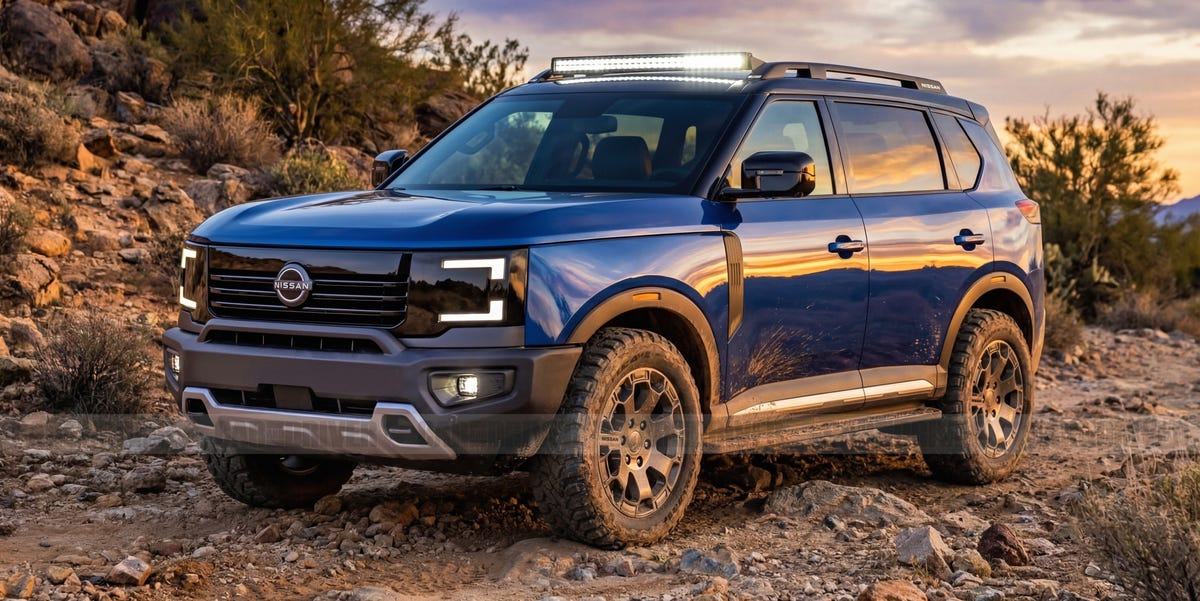
On design, he was considerably less restrained. Pandikuthira said he saw the full-size foam mock-up in Japan two weeks before the show and described it as “super imposing” with “tough, in-your-face design cues.” While competitors have rounded off their sheet metal for aerodynamic efficiency, Nissan claims it found other ways to hit fuel economy targets without softening the Xterra’s stance.
One thing it won’t have is a manual transmission. Pandikuthira shut that door firmly, arguing that three pedals belong in sports cars, not trucks. He pointed to the center console real estate a shifter consumes and said the driving excitement in a truck comes from suspension tuning, tire selection, and powertrain calibration, not rowing your own gears.
Nissan is saving its manual-transmission energy for the Z Nismo, which finally gets a stick for 2027. It’s a defensible position, even if Ford proved with the Bronco that a surprising number of buyers will check the manual box when you give them the chance.
The broader picture here is a company in triage mode making calculated bets. Nissan’s finances have been brutal. Its partnership with Honda collapsed, and EV plans across the lineup have been slashed or delayed.
The Xterra resurrection is less a victory lap than a survival strategy. Get a recognizable nameplate onto a body-on-frame platform, build it in a factory that needs product, and give the loyalists something concrete to wait for.
Starting with a pure combustion powertrain is the lowest-risk move Nissan can make. Development costs stay down, the supply chain stays simple, and buyers in the mid-size off-road segment have shown zero reluctance to buy gas-powered trucks. The hybrid follow-up buys Nissan time to gauge the market without betting the whole program on electrification that customers in this segment haven’t demanded.
Whether the Xterra can recapture the scrappy, affordable identity that made the original a cult favorite is the real question. The segment has moved upmarket dramatically since 2015. A base 4Runner now starts above $41,000 and the Bronco isn’t far behind.
If Nissan prices the Xterra aggressively and delivers on the rugged promise, it has a lane. If it shows up north of $45,000 with the usual Nissan interior compromises, the nostalgia won’t be enough.
Two years is a long time to wait. But at least now we know what’s actually coming, and more importantly, what isn’t.

Share this Story