
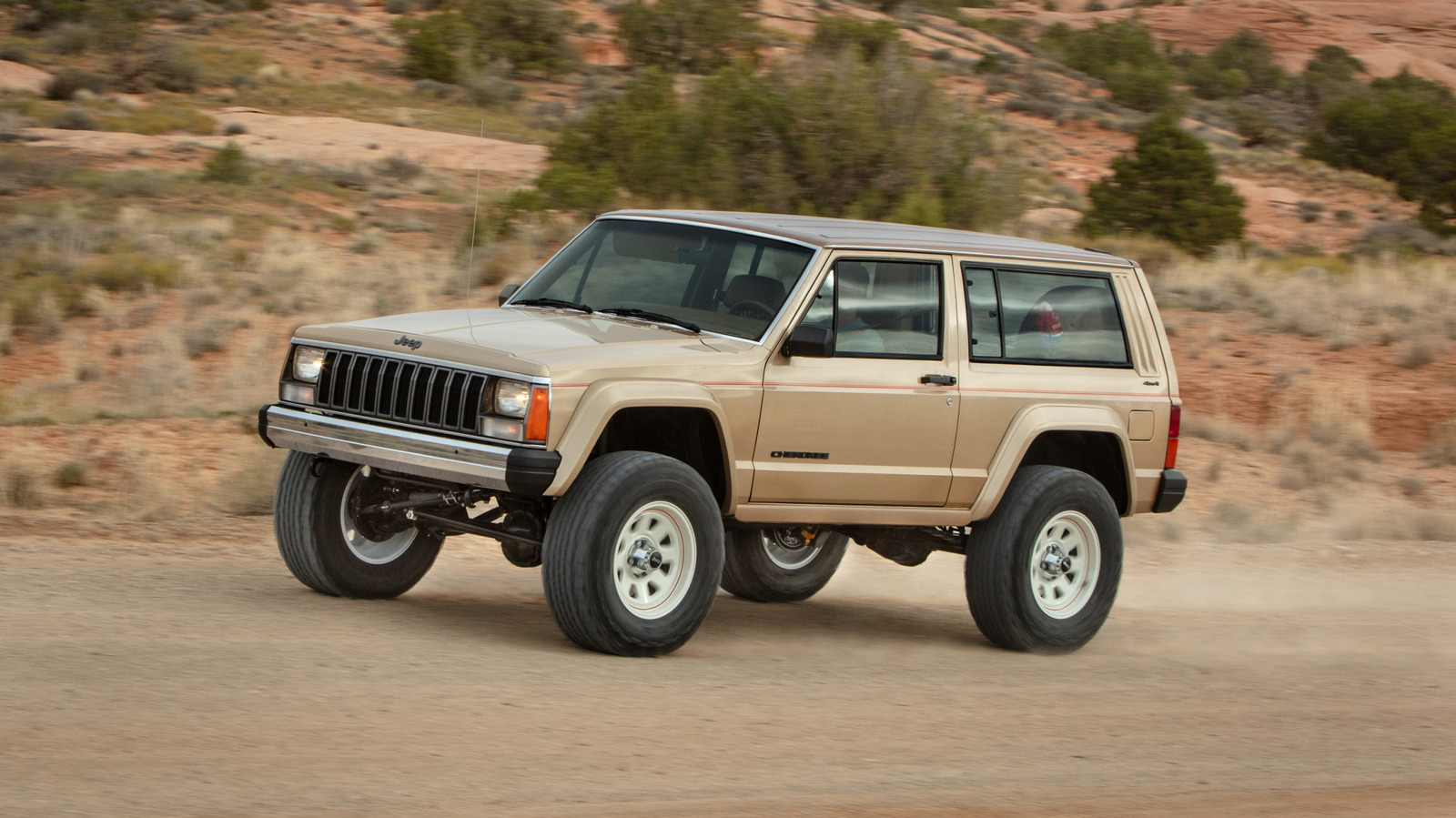


A one-owner 1986 Cherokee with 80,000 miles and a full service history turned up in Nevada, and it wrecked Jeep’s plans in the best possible way.
The design team had intended to build a wild XJ for the 60th Easter Jeep Safari in Moab — the kind of slammed, hopped-up, V8-swapped showpiece that generates Instagram likes and vanishes from memory a week later. Instead, they found a time capsule. And they had the rare good sense to leave it mostly alone.
The result is the Cherokee Pioneer concept, and it quietly stole the show from every gonzo Wrangler build and HEMI-powered military beast Jeep dragged into the Utah desert this year.
Lead Wrangler and Gladiator design manager Chris Piscatelli told Road & Track what anyone who grew up in the 1980s or ’90s already knows: everybody has an XJ story. It was someone’s first car, someone’s mom’s car, someone’s budget trail rig when a Wrangler was out of reach. The Cherokee XJ, launched in 1984 as the first unibody 4×4 of its kind, didn’t just change Jeep. It rewired what Americans expected an SUV to be — compact, capable, livable.
That significance is exactly why Jeep’s restraint matters. They kept the original 2.8-liter GM V6 under the hood — an engine so unloved it’s been openly called garbage — purely to maintain the truck’s authenticity. No crate motor. No modern EFI swap. Just 115 horsepower and a carburetor, the same drivetrain shared with the Chevy S-10 Blazer it competed against four decades ago.
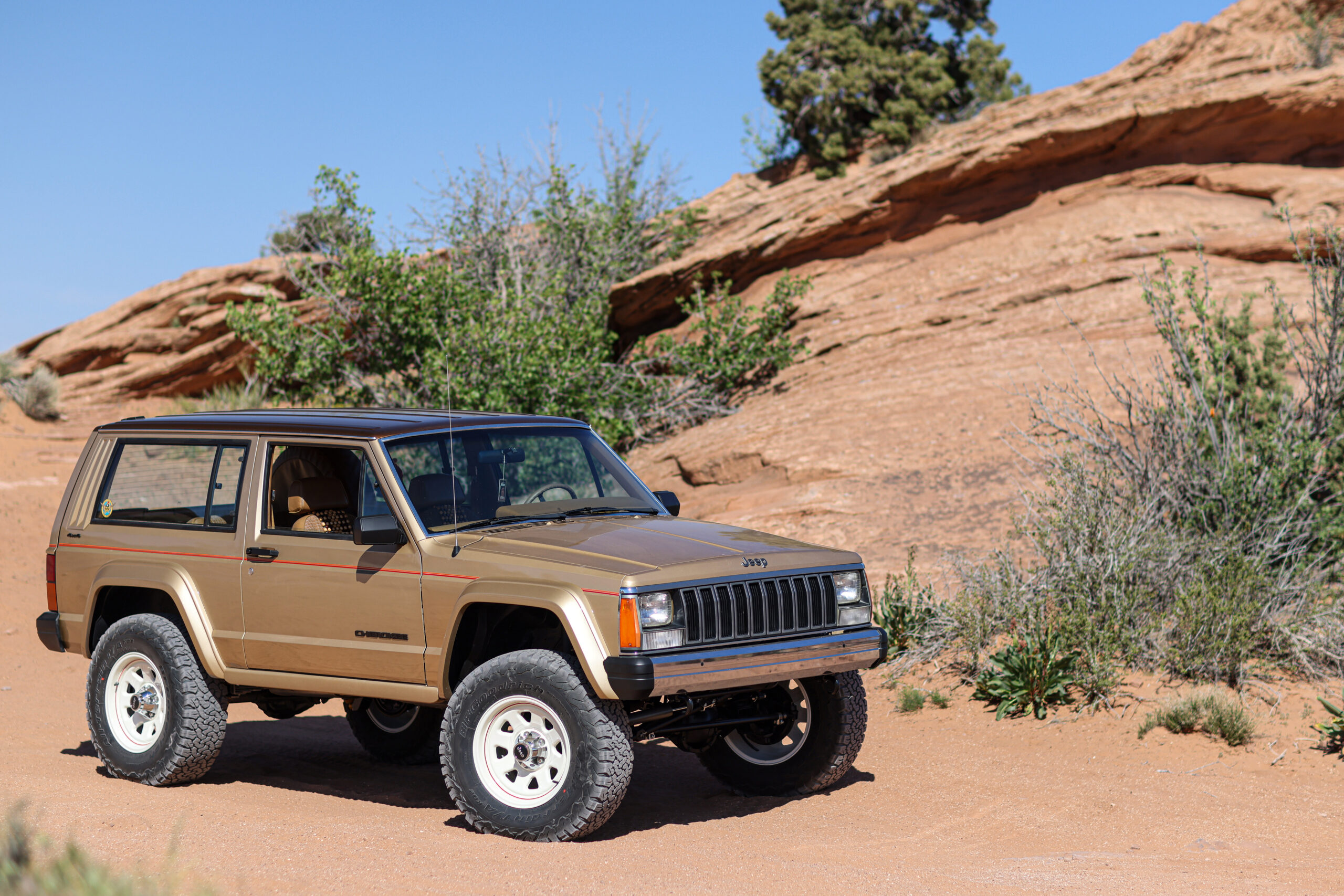
The modifications that were made solve real problems without creating new ones. Custom carbon-fiber fender flares — nearly invisible unless you know where the factory body crease falls — open up the wheel wells for 33-inch tires. A modest two-inch lift on new springs and shocks provides clearance and articulation without destroying driveshaft angles or ride quality. No slip yoke eliminator, no transfer case drop, no exotic joints that squeak and bang over every bump.
Hagerty’s Brandan Gillogly drove it on Fins and Things and came back impressed. The suspension was quiet and the trail manners were composed. The XJ clawed up steep slickrock with its stock solid axles and no lockers, requiring careful line selection and more throttle than the modern Jeeps around it, but getting the job done. That’s exactly how a real XJ works in the wild.
Inside, the cabin is a pristine 1980s artifact. Carpet intact, seat upholstery unscathed. Beaded seat covers draped over the chairs and a cooler disguised as a vintage Apple computer box tucked in back, alongside a Labyrinth lunchbox holding a recovery kit and a Thundercats decal. Easter eggs nodded to The Goonies, where an XJ played a memorable role. The details are playful, but the preservation is dead serious.
The timing isn’t accidental. Jeep’s press materials tie the Pioneer to “the Cherokee nameplate’s 2026 return,” confirming the compact SUV is coming back to the lineup. Building a pristine, lightly enhanced XJ is as much a brand exercise as a mechanical one — a reminder of what made people fall in love with the nameplate before Jeep can ask them to do it again.
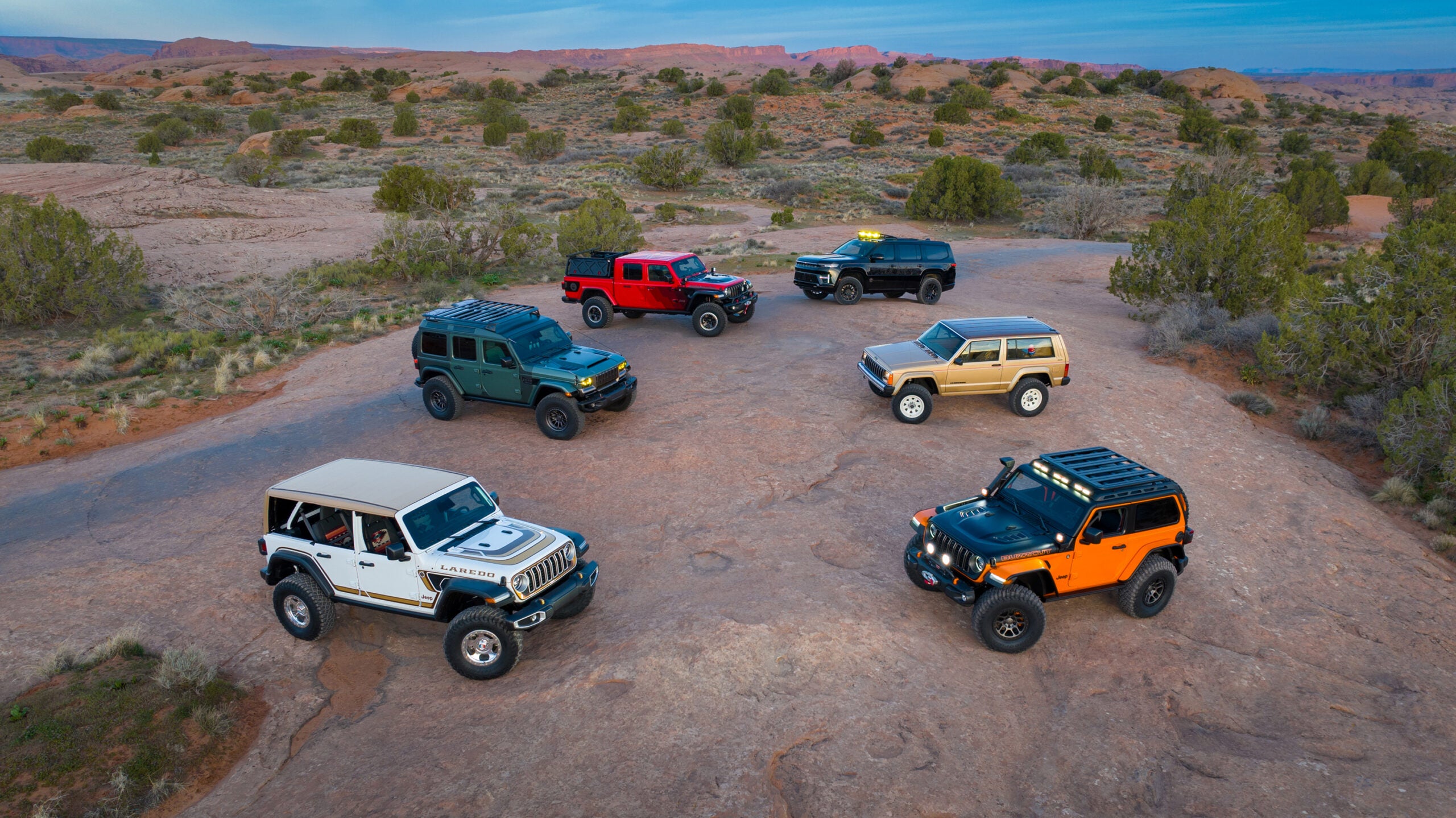
XJs haven’t been sold new in North America for 25 years. Clean examples are vanishing into project builds, rust, and neglect. New aftermarket parts still debut at SEMA for a truck that went out of production in 2001, which tells you everything about the platform’s staying power.
Jeep builds concepts to generate noise. The Cherokee Pioneer generates something harder to manufacture: genuine respect for what was already there.

Share this Story