
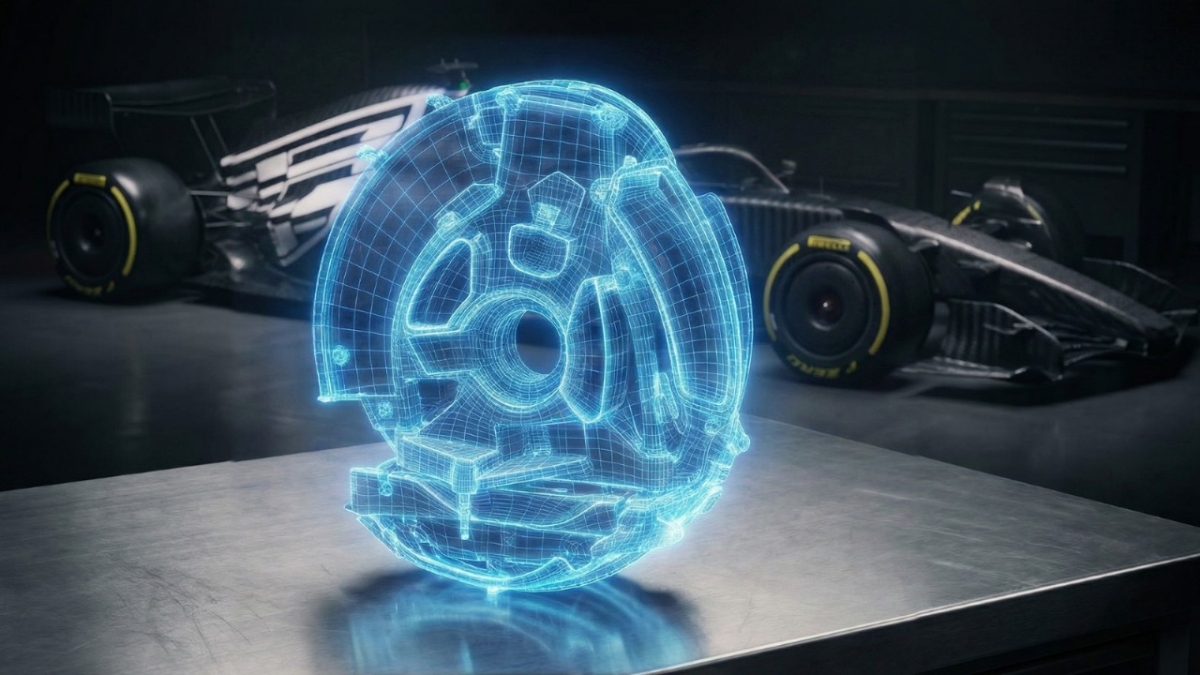


A single front brake duct. One component among thousands. That’s what GM chose to spotlight in the fifth episode of its “What Makes Fast” docuseries, and the choice says more about where the Cadillac Formula 1 team stands than any hype reel ever could.
The part itself is unglamorous. Its job is to channel cooling air to brakes that routinely hit 1,300 degrees Fahrenheit under deceleration forces exceeding 4G. “We want to make sure it doesn’t melt itself, and that it doesn’t melt all the things adjacent to it,” says Chad Vermeulen, GM Motorsports aerodynamics surface designer.
Getting there requires aerodynamicists to thread a needle between FIA regulations and thermal requirements, then hand off to design engineers who translate computer models into physical parts via 3D-printed prototypes. All of that effort produces just one version of one brake duct for one corner of the car.
“We are operating in a space that has a lot of restraints and constrictions,” says Nick Schaut, a GM Motorsports design engineer. He’s talking about FIA rules, but he might as well be describing the entire Cadillac F1 project.
This is a team building a Formula 1 chassis from scratch. Not adapting one. Not evolving a predecessor. Starting from zero.
Every squad that’s attempted this in the modern era has faced years of pain before finding competitiveness. The last truly new constructor to enter F1, Haas in 2016, leaned heavily on Ferrari’s infrastructure and still took seasons to become a consistent points scorer. Cadillac doesn’t have that luxury of low expectations — not with GM’s name on the entry and over 500 people on the payroll.
The docuseries is a calculated transparency play. By walking fans through the granular misery of designing a brake duct, GM is quietly setting expectations. This is hard. Every piece matters. We’re doing the work. The implicit message: don’t judge us on Melbourne alone.
And Melbourne is coming fast. The Australian Grand Prix in March will be the first time this car faces the grid, and the physics won’t care about GM’s brand equity or Cadillac’s heritage. The car will either manage its temperatures, hit its downforce targets, and survive the curbs, or it won’t.
Schaut offered the most honest line in the entire episode: “If you hear anything about brake ducts, it’s probably because there’s an issue.” That’s the reality of F1 engineering. Thousands of components must function in silent harmony. The ones you notice are the ones that failed.
There’s something both admirable and nerve-wracking about a team willing to show you the sausage being made at this stage. Every established constructor has decades of institutional knowledge baked into parts like these. Ferrari’s brake duct philosophy has been refined across hundreds of races.
Mercedes, McLaren, Red Bull — they iterate on proven foundations. Cadillac is building that foundation in real time, in public, with cameras rolling.
The 500-plus engineers working in the team’s facilities represent genuine investment. GM isn’t dabbling. But investment and results operate on very different timelines in Formula 1, a sport that punishes newcomers with almost sadistic consistency.
When the lights go out in Melbourne, the brake ducts will either do their invisible job or announce themselves in the worst possible way. That’s the tension running beneath GM’s polished docuseries. They’re showing you a brake duct because they want you to understand the scale of what they’ve undertaken — and perhaps to appreciate that simply finishing races with everything intact would be its own kind of victory in year one.






Share this Story