
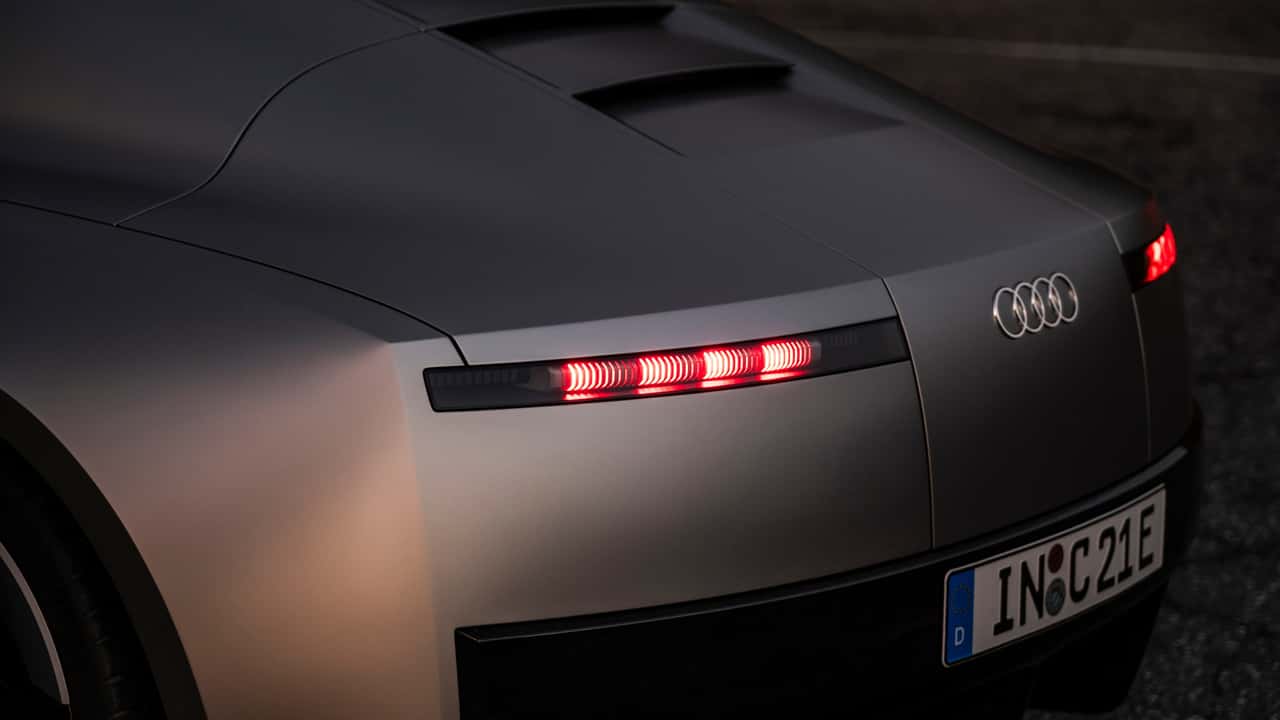


Audi CEO Gernot Döllner has confirmed the Concept C sports car will enter production by late 2027, giving the struggling four-ring brand a halo car it desperately needs. The two-door hardtop convertible will slot between the dead TT and the dead R8, filling a void Audi created when it killed both without a succession plan.
The timeline is aggressive: three years from initial idea to start of production. That’s Chinese speed, and Döllner isn’t shy about where he learned the trick. Audi’s partnership with SAIC taught project management lessons the company is now applying in Ingolstadt.
“To deliver in that time, you need some sort of a platform to build on,” Döllner told carsales. “That is also doable in Europe.”
The platform in question is PPE Sport, an adapted version of the Volkswagen Group’s Premium Platform Electric architecture, co-developed with Porsche for its planned electric 718 Boxster and Cayman replacements. Porsche, however, is still publicly debating the commercial viability and timing of its own twins. Döllner addressed that uncertainty directly in an internal letter, insisting “the delivery of the platform by Porsche is not in doubt.”
Audi, apparently, is past the point of no return. Porsche may still be hedging — British outlet Autocar reported in December that Porsche was reworking the architecture to accommodate petrol power — but Audi’s version is electric, full stop.
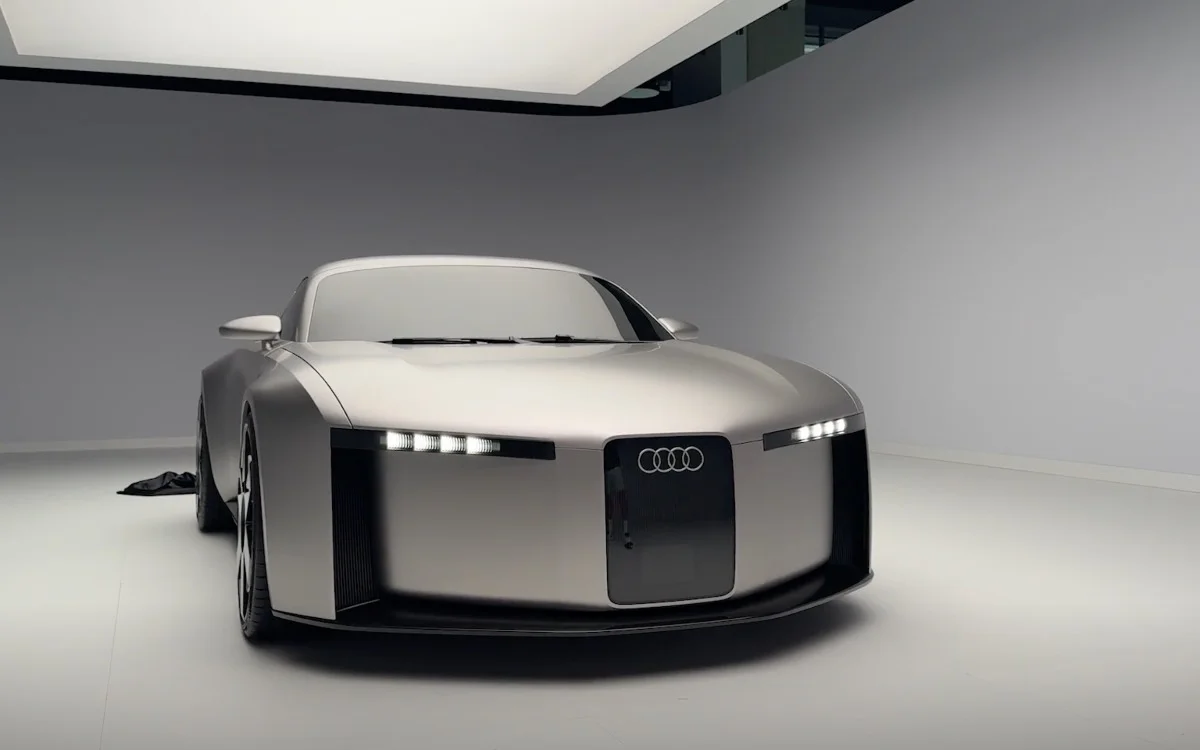
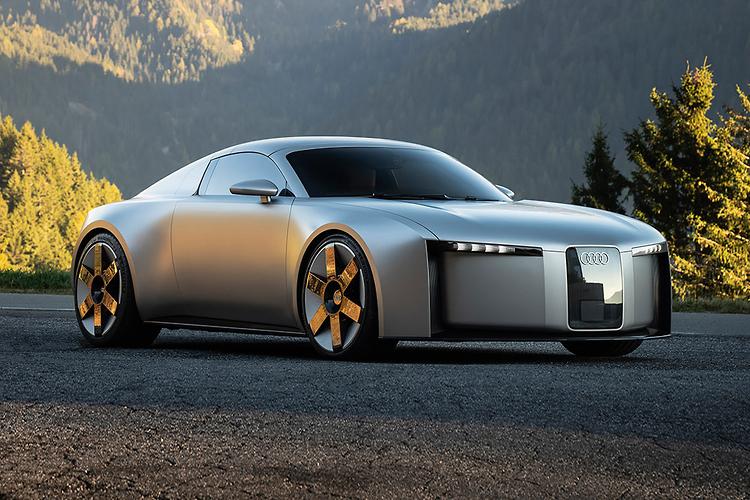
The production car will look remarkably close to the concept unveiled in Milan last September. Chief Creative Officer Massimo Frascella said the concept represents roughly 87 percent of the final design. That’s a number worth remembering, because the Concept C is genuinely striking — clean Bauhaus surfaces, a vertical front frame nodding to the 1930s Auto Union Type C, and a rear deck with no window, just a digital camera handling rearview duty like the Polestar 4.
Dimensionally, it’s no TT. At 4520mm long and 1970mm wide on a 2568mm wheelbase, it’s a substantially bigger car. Audi quotes a weight of 1690kg, which the company considers a point of pride for an EV sports car.
The battery sits behind the seats and along the central spine — what Audi calls a “mid-energy” layout — rather than in the flat skateboard arrangement that has made most electric cars feel like they’re built around a coffee table. The seats sit lower. The dynamics, Audi claims, benefit accordingly.
Expect north of 400 to 500 horsepower from an electric powertrain driving the rear wheels. The concept was fully drivable when shown, and the production car will run a similar setup.
Inside, Audi is retreating from the touchscreen addiction that infected its recent interiors. The Concept C features physical rotary dials, tactile controls, and a 10.4-inch central display that folds away at the press of a button — what the brand calls “shy tech.” After years of burying every function behind a glass panel, this feels like a quiet admission that the industry went too far.
The backdrop here is a company in transformation. Döllner has flattened management, restructured vehicle programs into focused “project houses,” and is using the Concept C as a proving ground for the entire new process. This car isn’t just a sports car. It’s a test of whether Audi can move fast enough to matter again.
Pricing remains unconfirmed, though Audi has signaled a range somewhere between the TT’s former $84,000 AUD entry point and the R8’s roughly $300,000 ceiling. European deliveries should follow shortly after the late-2027 production start. Australia and other markets would trail into 2028, assuming the EV appetite holds.
Audi once owned the enthusiast conversation with the original TT and the first-generation R8. It then let both die with nothing to replace them. The Concept C is the belated answer — electric, fast-tracked, and built on a platform its partner may not even fully commit to. Whether that foundation holds will determine if this is a genuine comeback or just another concept that got too far down the road to cancel.
Share this Story