
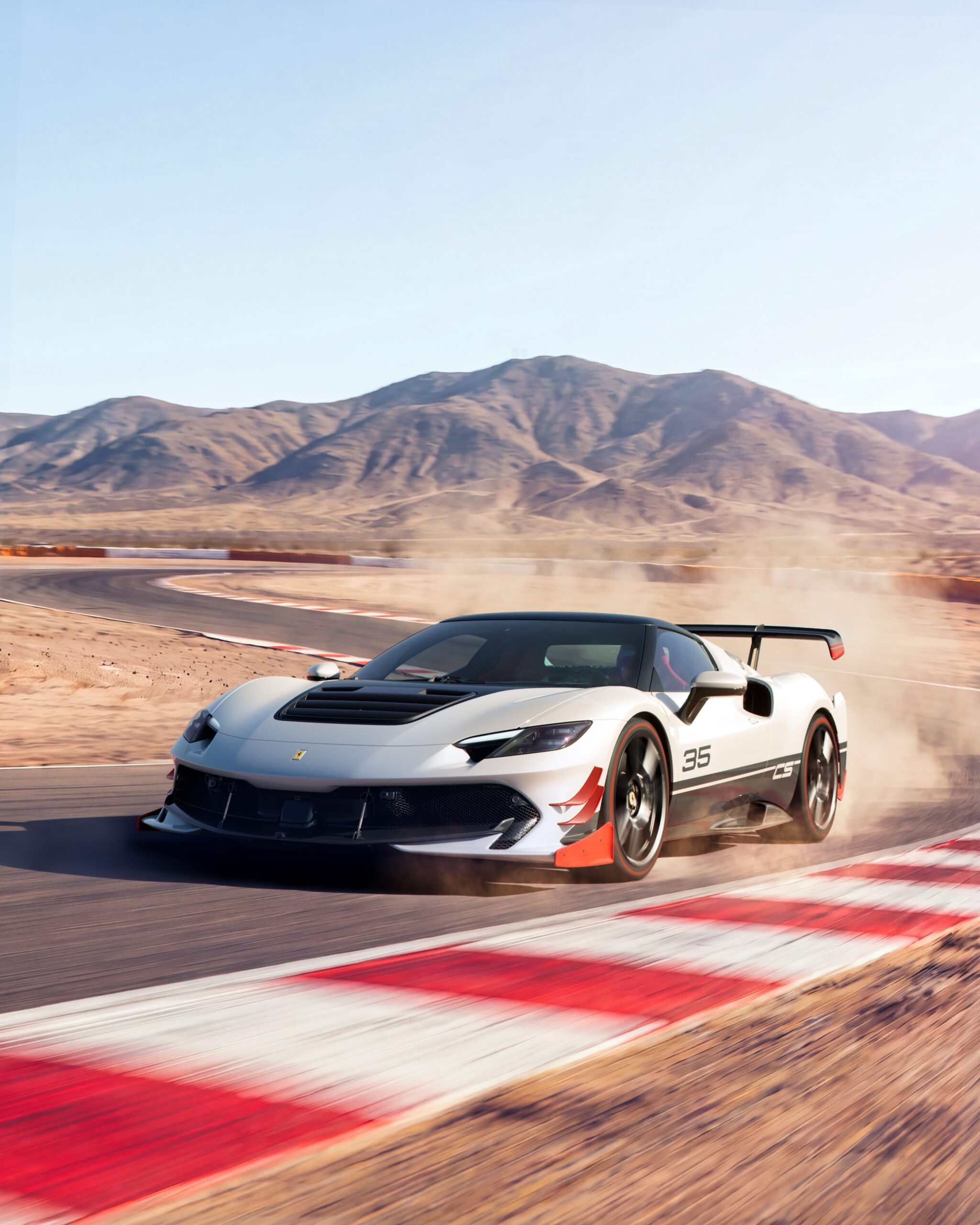


Ferrari just built a 296 with 149 fewer horsepower than the regular one. In Italy, it will charge you 291,000 euros for the privilege.
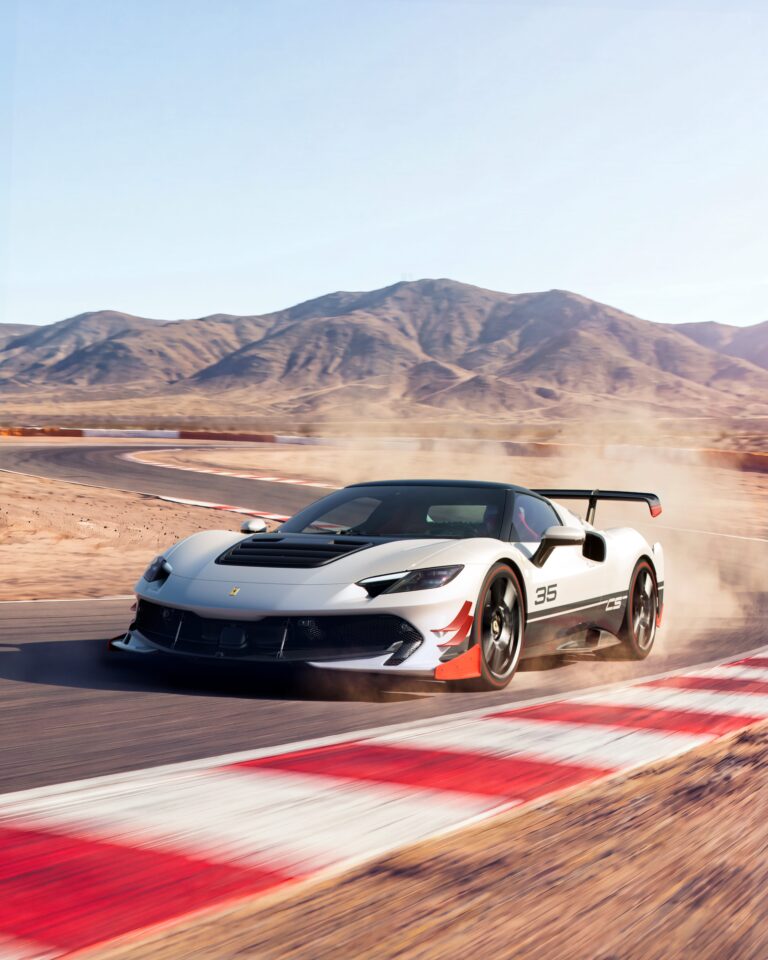
The 296 Challenge Stradale was revealed at the Circuit de Barcelona-Catalunya, parked beside the new 296 Challenge Evo race car. The resemblance is deliberate. The wing, dive planes, adjustable splitter and vented hood come almost straight off the racer, trimmed only enough to stay street legal.
The badge has been dormant since the 360 Challenge Stradale went out of production in 2004. The F430 Scuderia, 458 Speciale and 488 Pista filled the gap, but none of them wore their track ambitions this openly.
The big change is what’s missing. Ferrari pulled the 5-kWh battery pack and the rear axial-flux electric motor entirely. The twin-turbo 3.0-liter V-6 now works alone, breathing through a reworked twin-exit exhaust.
Output drops to 670 horsepower. The 296GTB makes 819.
The payoff is weight. Ferrari says ditching the plug-in hardware accounts for most of the 328 pounds cut from the GTB’s dry weight, with a lighter flex plate, driveshaft and timing cover doing the rest.
Taking parts out has consequences, and Ferrari had to chase them through the whole car. With no regenerative braking, the rear carbon-ceramic discs and their cooling ducts had to grow. With less mass over the rear axle, weight distribution shifted 1.5 percent forward, which meant new suspension geometry.
The engine needed work too. Without a motor to cover turbo lag, the V-6 was retuned for sharper low-end response, though Ferrari quotes the same 546 pound-feet of peak torque.
Then there’s the aero. A smoothed underbody feeds the rear diffuser, working with three pairs of vortex generators up front and two at the rear. Twin hood vents push radiator heat over the windshield to keep airflow steady as ride height changes.
The result is 1360 pounds of downforce at 155 mph. That’s 72 percent more than the GTB’s peak.
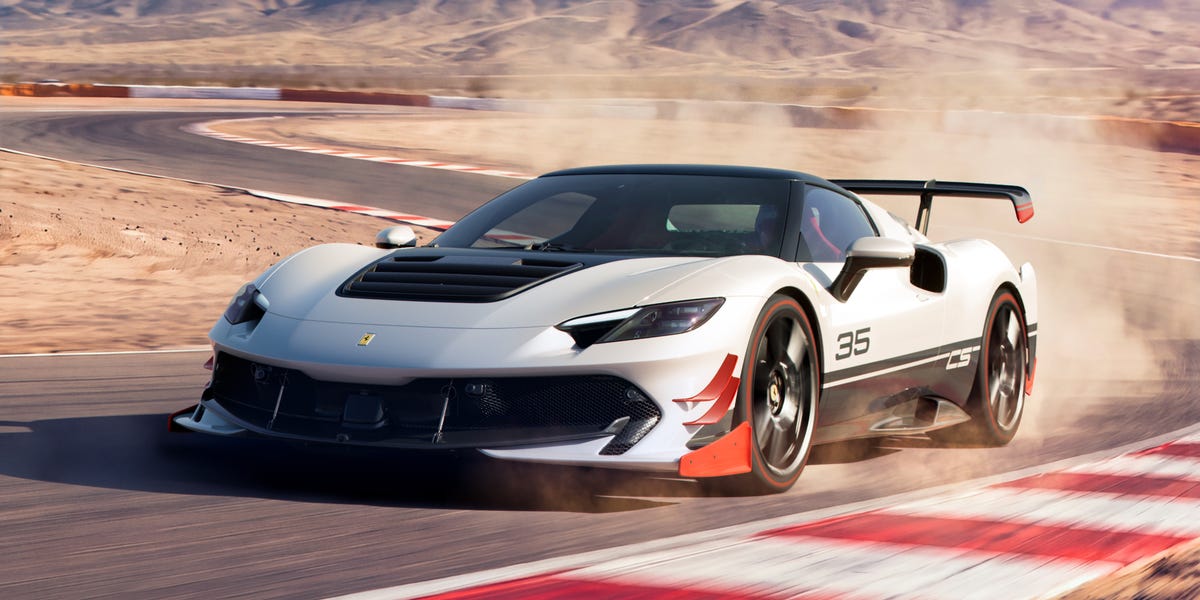
The suspension comes straight from the Challenge Evo, with semi-active dampers and a dual-spring setup aimed at rebound control. It rides on bespoke Pirelli P Zero R tires, 245/35R20 front and 305/35R20 rear, on forged 20-inch wheels.
Inside, it borrows the 296 Speciale’s cockpit and then starts throwing things out. Carbon door panels replace the trimmed ones, and the armrests and storage pockets are gone. Climate control and a stereo survive.
Buyers who want more punishment can spec an interior that strips the carpet under the console and the trim beneath the seats. What’s left is bare chassis.
This is where the story shifts from engineering to business.
The 296 Speciale is a special series car. Getting one requires an “existing relationship” with Ferrari, which in practice means a purchase history.
The Challenge Stradale is a standard range model with no production cap. Anyone can walk into a dealer and order one.
Ferrari insists the two cars won’t steal sales from each other, pitching the CS as a track tool for a different buyer. It also says plainly that the CS is meant to bring in new customers, and calls it a first step.
That’s a real change for a company whose most desirable cars have long been rewards for loyalty. The purist’s Ferrari, the one with race car bodywork and no battery, is now the one with the open order book.
It follows the 12Cilindri Manuale, which brought back a simulated six-speed purely for driver involvement. Maranello is selling feel again, and it’s selling it to more people.
U.S. pricing hasn’t been announced. American sales are expected to start in the third quarter of 2027.
Share this Story