
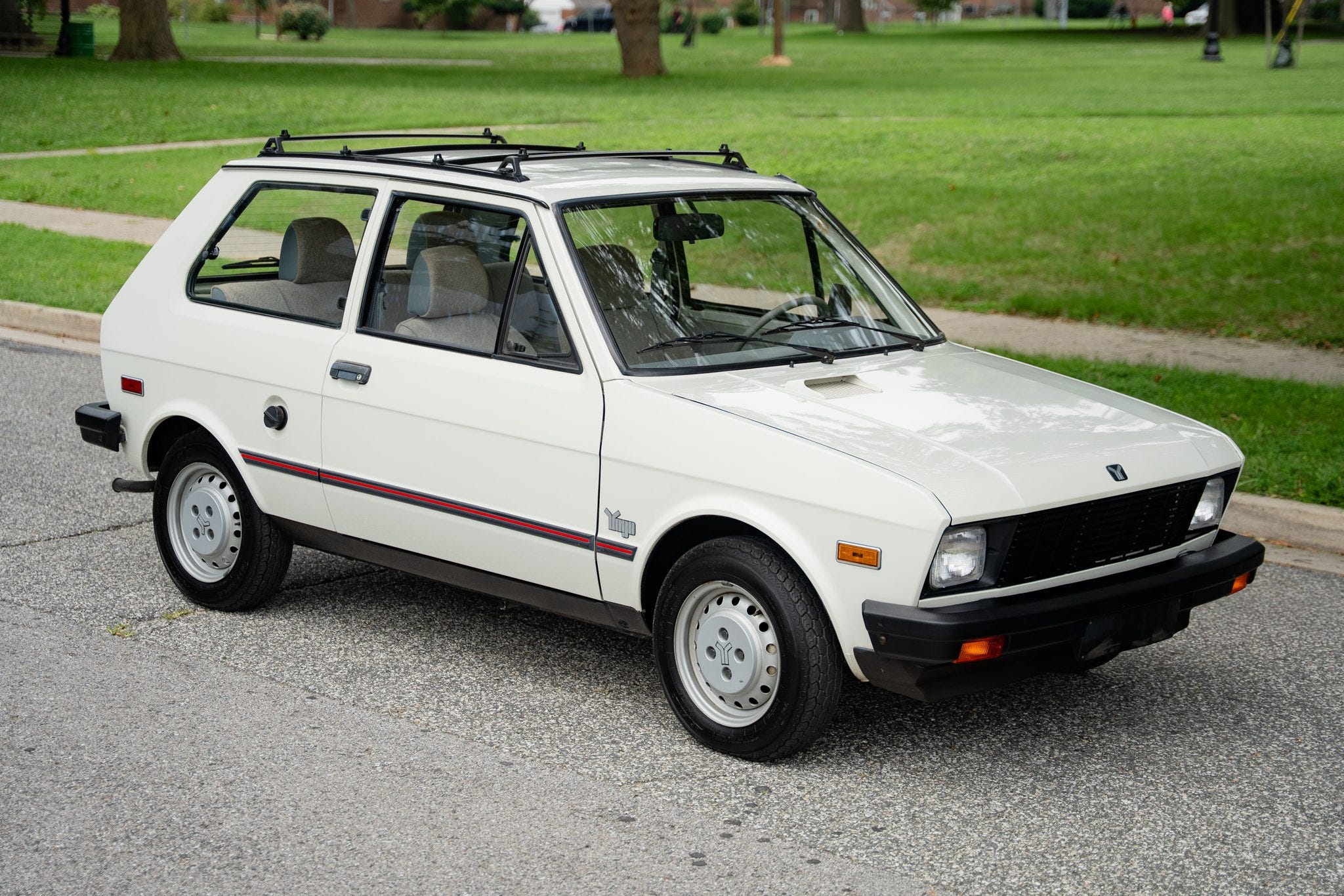


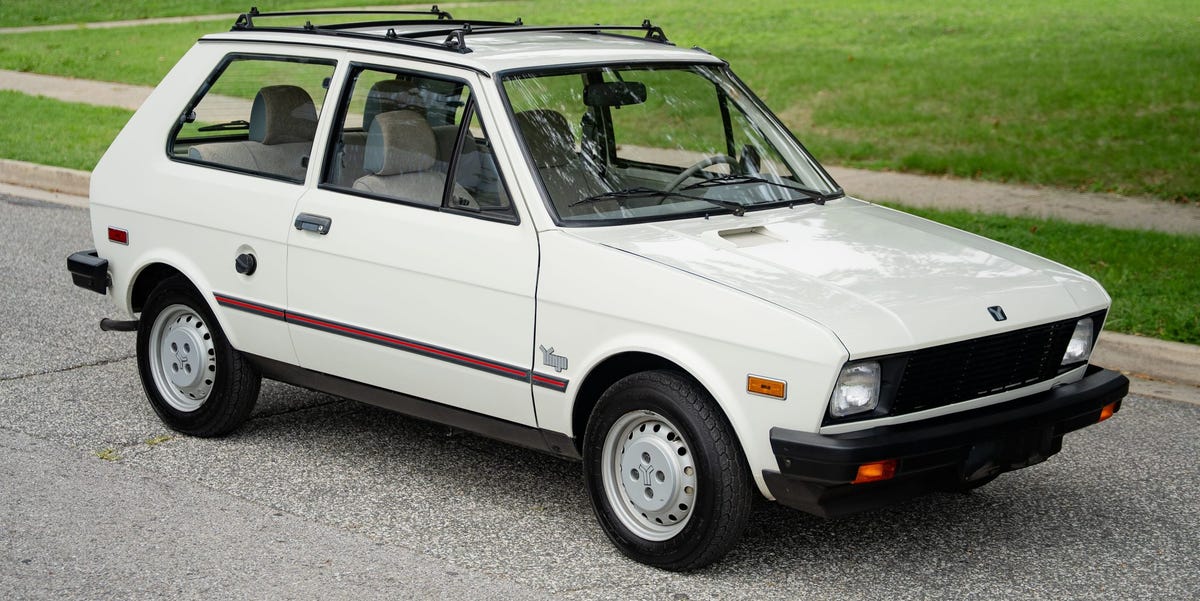
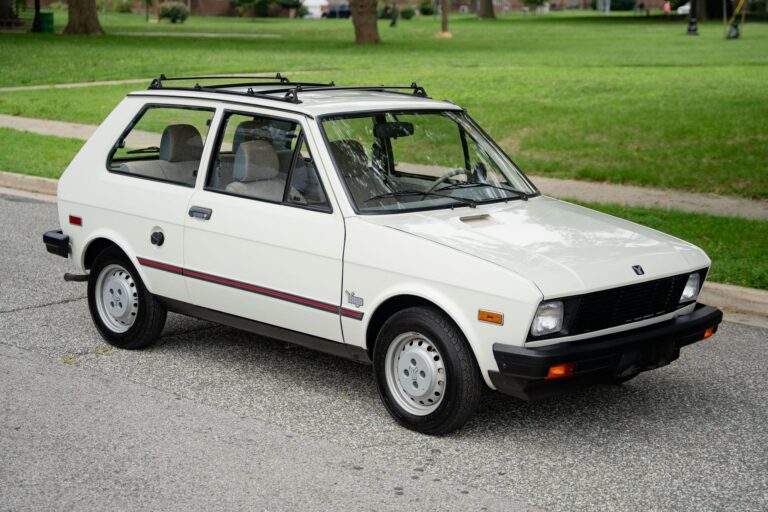
A 1986 Yugo with 121 miles on the odometer is up for sale on Bring a Trailer. That is not a typo, and it is not a joke, though the car spent most of its life being one.
The hatchback comes from the collection of James G. Robinson, the Baltimore-born founder of Morgan Creek Entertainment. Robinson died earlier this year with more than 100 cars to his name.
Some of those cars were the obvious kind. A Mercedes 300SL roadster shared garage space with this little Zastava, which tells you plenty about the man who kept both.
Robinson produced Major League II and the second Ace Ventura film. He also backed Robin Hood: Prince of Thieves, a movie critics carved up and audiences turned into the second-highest-grossing release of 1991.
The Yugo lived the same split life. Reviewers mocked it. Buyers kept signing for it.
Robinson’s connection to the car runs deeper than taste. Before and alongside Hollywood, he ran a business prepping imported cars as they came off ships from Europe, including fitting U.S.-grade air conditioning.
His company processed many of the Yugos that landed here. He was friends with Malcolm Bricklin, the man who brought the car to America in 1985 and who had earlier introduced Subaru to the same market.
So this is not some random survivor pulled from a barn. It is a Yugo that sat at the source, owned by the guy who handled the cars before dealers ever saw them.
Strip away the punchlines and the hardware is plain. The car rides on Fiat 128 bones, built in Yugoslavia by Zastava, a former arms maker.
Power comes from a 1.1-liter four-cylinder making 55 horsepower. There are front disc brakes, 13-inch wheels, a roof rack, a cassette deck, and factory air.
The advertised starting price was $3,990. That number did more for the Yugo’s reputation, good and bad, than anything under the hood.
Car and Driver’s own archive has a story titled “A Quick Look at the Yugo, the Worst Car in History.” The same magazine is now pointing readers toward a pristine example on an auction site owned by its parent company, Hearst Autos.
That is the Yugo’s entire life story in two sentences. Derided when new, collected once nobody else bothered to keep one.
The sales figures never matched the jokes. More than 140,000 Yugos found U.S. buyers, and global production reached nearly 800,000.
Those are not the numbers of a failure. They are the numbers of a car people needed, bought, used up, and threw away.
That last part is why this one matters. The roads of the 1980s were full of cars like this, and almost none of them survived. Concours lawns are crowded with machines that were rare to begin with, while the cars that defined daily traffic quietly rusted into scrap.
A 121-mile Yugo is, in its own odd way, scarcer than plenty of what rolls across Pebble Beach. It will never get past that velvet rope. It does not need to.
Nobody expects the bidding to reach 300SL territory. The likely buyer is someone with a sense of humor and a spare corner in the garage, the same kind of person as the man who kept it.
Robinson made a career betting on crowd pleasers the critics hated. His Yugo is the last one going to market.
Bidding closes November 17.
Share this Story