
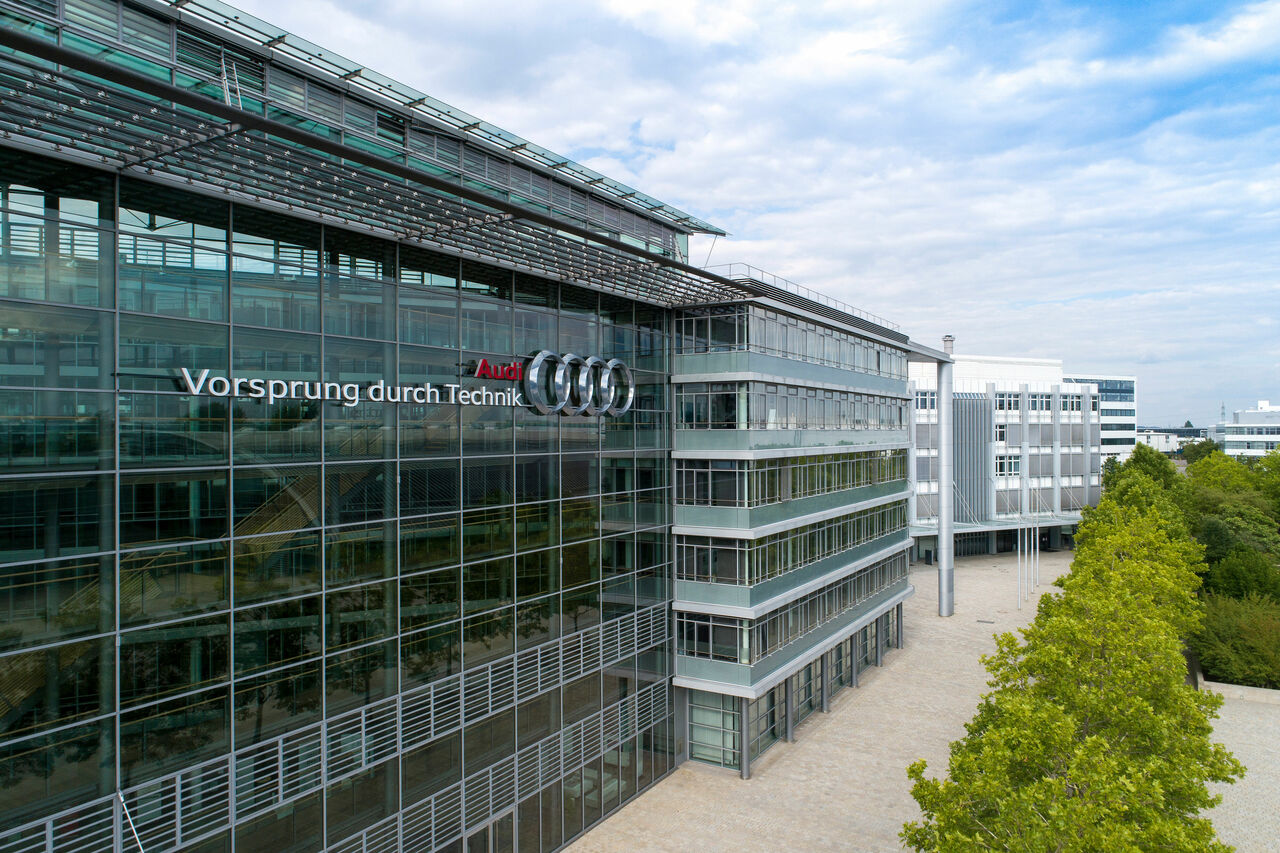


Audi is doing damage control after a weekend announcement about a new U.S. factory turned into something the company clearly didn’t anticipate: a political lightning rod.
The German automaker issued a carefully worded statement from Ingolstadt acknowledging that its “public appearance with the President of the United States has raised questions and caused some concern.” The company said it traveled to Georgia to advance negotiations on a planned production site and was then asked to present its plans publicly alongside the president. Audi accepted.
Now it’s trying to walk that back without actually walking it back.
The statement reads like it was drafted by a committee of lawyers and communications strategists who spent days arguing over every comma. Audi says it accepted the invitation “solely with Audi’s best interests in mind,” while simultaneously conceding that “the circumstances surrounding the announcement may have been perceived as a political signal.”
Perceived as a political signal. That’s doing a lot of heavy lifting.
The underlying business case is straightforward and hard to argue with. The U.S. is the world’s second-largest premium car market. Audi admits its American operations are currently unprofitable.
BMW has been building cars in Spartanburg, South Carolina since 1994. Mercedes has had its Alabama plant running since 1997. Audi showing up to the local production party three decades late is the real story here, not the photo-op.
But the photo-op is what everyone’s talking about, and Audi knows it. The company felt compelled to stress that building in the U.S. is “not a decision against Germany.” That line tells you exactly what the conversation sounds like in Ingolstadt, in Berlin, and on the factory floors where German workers are watching their employer cozy up to an American president while European auto jobs face an uncertain future.
Audi didn’t specify the scale of the Georgia facility, what models it would build, or when production might begin. Those details were conspicuously absent from a statement that was otherwise meticulous in its language. The company wanted to address the optics without adding any new fuel.
The tension here is real and it extends well beyond Audi. European automakers are caught between two forces that pull in opposite directions. Tariffs, currency exposure, and logistics costs make local U.S. production a financial imperative, but standing on a stage with an American president while your home country grapples with deindustrialization fears carries a cost that doesn’t show up on a balance sheet.
Volkswagen Group, Audi’s parent company, has been slashing costs and restructuring its European operations. Late last year, the company reached a painful agreement with German unions to cut thousands of jobs. Against that backdrop, announcing a shiny new American factory with presidential fanfare was never going to land softly at home.
Audi says its values and its economic responsibilities “go hand in hand and together guide our actions.” That’s the kind of sentence that sounds reassuring until you realize it doesn’t actually resolve anything. Values and economic survival do go hand in hand, right up until the moment they don’t.
The factory will almost certainly get built. Georgia wants it. Audi needs it. The math works.
But the company just learned that where you build cars is an engineering decision, and how you announce it is a political one. Audi got the first part right and fumbled the second.
No timeline, no product plans, no investment figure. Just a statement about a statement, and a promise to do better next time without saying so explicitly.


Share this Story