
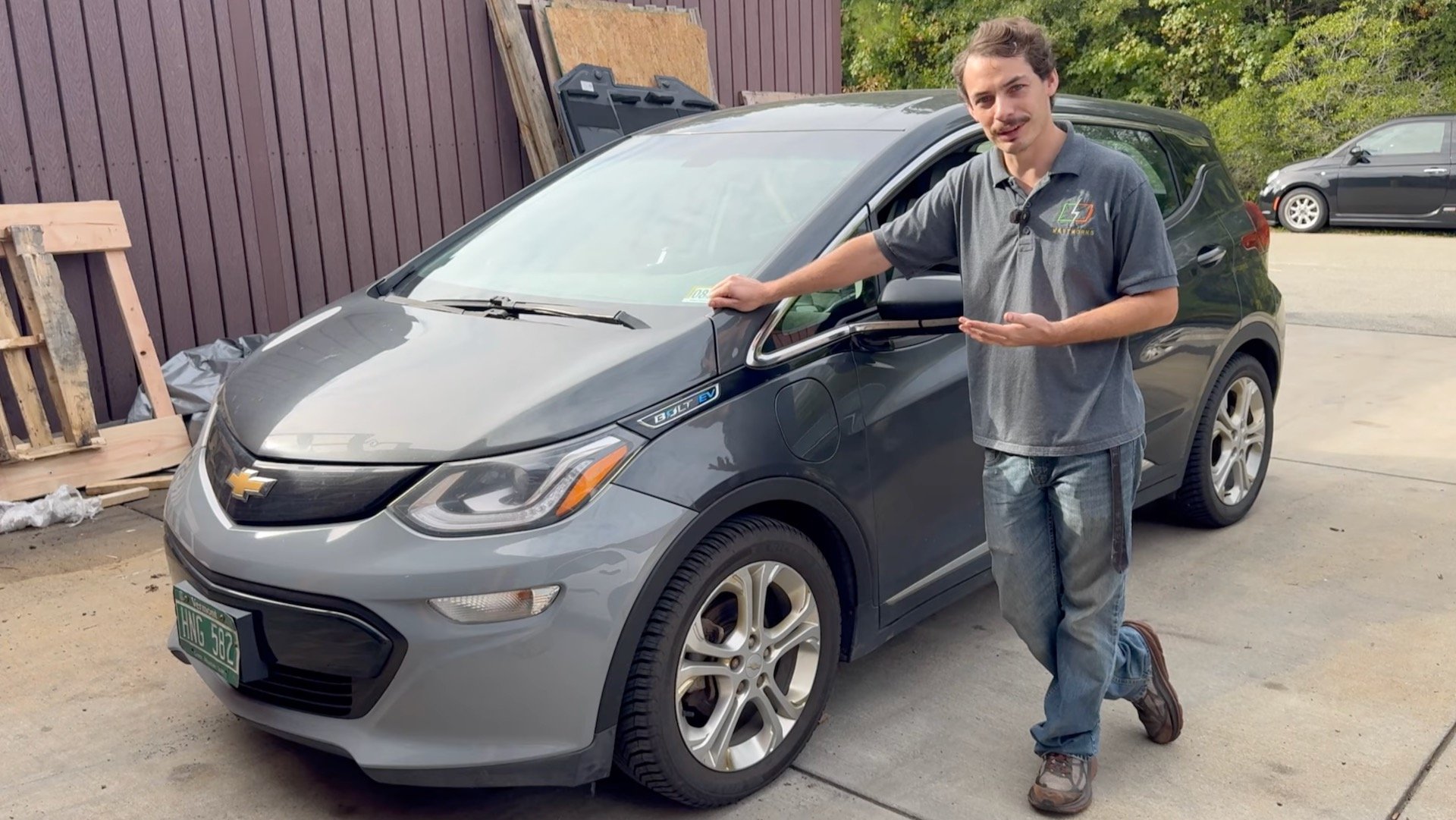


A 2019 Chevrolet Bolt EV rolled into the Out of Spec Renew garage with 471,616 miles on its odometer. That figure alone dismantles the tired argument that electric vehicle batteries are ticking time bombs with expiration dates.
The car arrived unable to shift into drive, throwing a battery fault code on the dash. But context matters here. The pack that failed wasn’t the original.
It was a recall replacement installed in 2022 that had already survived over 330,000 miles of use on its own. The original pack was swapped out as part of GM’s massive 2021 recall covering roughly 140,000 Bolt EV and EUV models in North America. Manufacturing defects at supplier LG Energy Solution had created a fire risk.
So the battery didn’t die young. It died old.

The replacement pack going into this car came from a 2017 Bolt EV, installed in 2023 as part of the same recall program, with only an estimated 10,000 to 15,000 miles of use. Same recall-spec chemistry. The swap itself, documented in an hour-long video, was relatively straightforward, though some parts had to be transferred from the old pack to the new one due to possible damage during transport.
Beyond the battery, the car showed the kind of wear you’d expect from anything that has traveled nearly half a million miles. Scrapes on the rear bumper, a mismatched front bumper, suspension work, wheel bearings, and a steering rack replacement. All routine maintenance items for any vehicle at that mileage, gas or electric.
This isn’t the first high-mileage EV to pass through Out of Spec Renew’s shop. The channel previously did a battery replacement on a 2022 Ford F-150 Lightning with just under 234,000 miles. A pattern is forming.
The Bolt’s story carries an uncomfortable irony for General Motors. The car was killed off, then brought back for 2027 as a temporary measure because GM recognized what buyers had been saying all along: people want a reasonably priced EV with decent range. The Bolt delivered both, and its popularity never really waned despite the recall cloud hanging over it.
That 330,000-mile figure on the replacement pack appears to represent the upper boundary for these units before a major overhaul becomes necessary. The average American drives about 13,500 miles per year. At that rate, 330,000 miles translates to roughly 24 years of driving on a single battery pack.
Most internal combustion engines would need significant work well before reaching that kind of mileage. That’s a comparison worth sitting with.
The recall itself was real, and the fire risk was serious. No one should minimize that. But the recall also resulted in some 2017-2019 owners receiving new packs with improved chemistry and increased range, essentially getting a better car back.
Half a million miles on a compact EV that originally stickered under $40,000. The car is now on its third battery pack and still running. GM stopped building it, started again, and already set an end date for its return. The Bolt keeps outlasting the decisions made about it.






Share this Story