
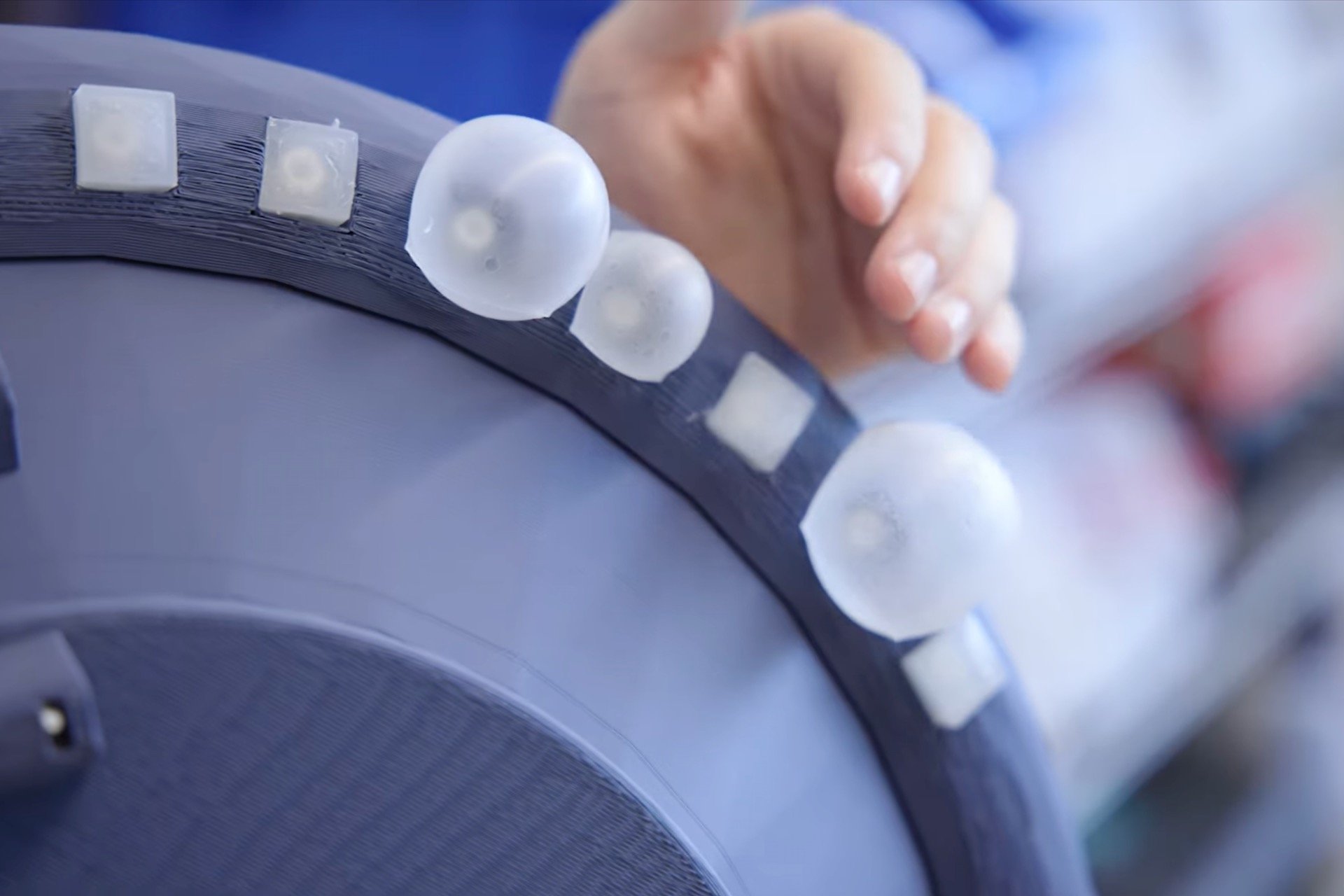


A steering wheel lined with inflatable air sacs that pulse and expand like a living organism. That’s what University of Michigan researchers built, and yes, it looks exactly as unsettling as it sounds.
The project, funded and developed in partnership with Toyota Research Institute, tackles a real and persistent problem: the murky handoff zone between human drivers and semi-autonomous systems. When a car’s driver-assistance tech wants to do one thing and the driver wants to do another, the result can range from annoying to fatal. Current systems rely on warning chimes and flashing lights, blunt instruments that offer no dialogue.
Michigan’s prototype tries something different. Air sacs positioned at the 10 o’clock and 2 o’clock positions on the steering wheel inflate or deflate to signal the system’s intentions. If the car wants to steer left, the left-side sacs puff up.
If the driver disagrees, they squeeze the sacs flat. If the system still thinks a left turn is the right call, it sends pulsing bursts of air the driver can physically feel through their grip.
It’s two-way haptic communication, and the researchers believe it solves a fundamental flaw in today’s driver-assist architecture. Right now, most systems operate as all-or-nothing propositions. Tap the brakes, and the whole system shuts off.
Yank the wheel, and the car assumes you’ve taken over completely. There’s no middle ground, no negotiation.
Simulator testing showed promise. Drivers navigating turns with unexpected obstacles spent less time wrestling with the system, braked less frequently, and displayed more confidence. They reported lower frustration and physical demand.
Trust recovery after the system made an error improved too, which matters when the goal is keeping humans engaged rather than checked out.
But the researchers also flagged a less comfortable finding. Some drivers became too trusting after positive interactions with the haptic system, potentially letting their guard down when they shouldn’t have. The very feedback loop designed to keep humans in the game may also lull them into complacency.
And then there’s the question of whether dedicated hardware is even the right path. Mercedes is already shipping its MB.Drive Assist Pro system, which accepts partial inputs like a gentle tug on the steering wheel or a light brake tap without fully disengaging. No air bladders, no pulsing sacs, no hardware that looks like it belongs in a David Cronenberg film.
Just software smart enough to interpret the driver’s intent without forcing a binary choice.
The Michigan approach is clever engineering applied to a genuine gap in human-machine interaction. But clever engineering has a habit of solving yesterday’s problem. Automakers are already moving toward software-defined driving systems that can share control without bolting pneumatic bladders onto the steering column.
Toyota funded this research, which suggests the company sees value in exploring haptic communication as a concept, even if the breathing wheel prototype never makes it to a production vehicle. The underlying idea, that cars and drivers need a richer language than beeps and warning lights, is sound.
Whether that language needs to feel like holding something alive is another question entirely. The simulator data looks good. The path from simulator to showroom floor, where cost, durability, and consumer acceptance all have veto power, is where concepts like this one typically go quiet.



Share this Story