
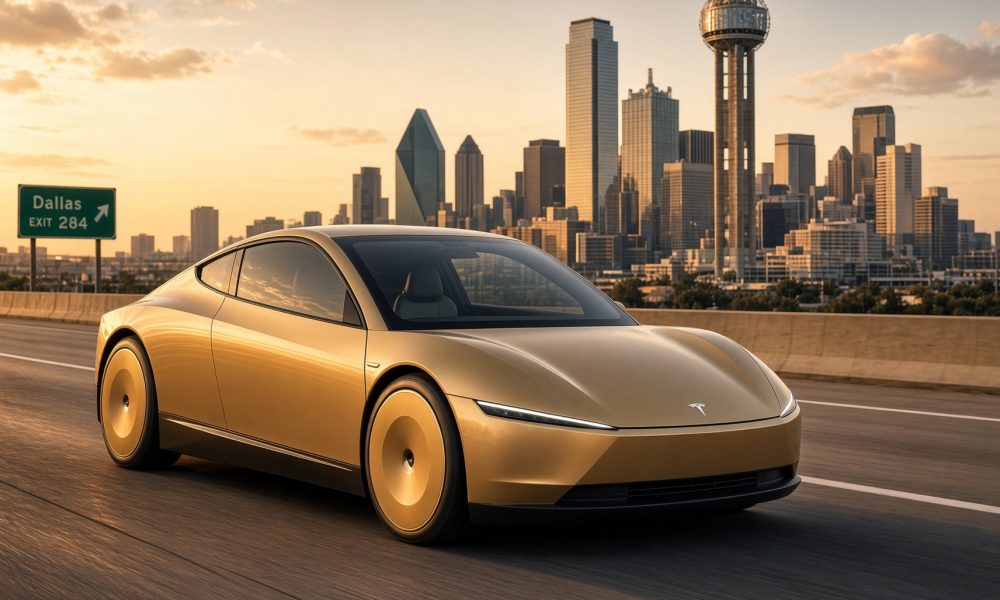


Tesla put a number on its autonomous taxi operation for the first time on Saturday. More than 300 Cybercabs are now serving Austin, an eightfold increase in the 30 days since the service opened to the public on September 4.
The figure came from Tesla’s Robotaxi account on X, but the real news rode in on a quote from Ashok Elluswamy, the company’s head of AI software. “Two years since the 10/10 Cybercab WeRobot event, the cabs are everywhere in Austin now. Dallas soon,” he wrote. That is the first time anyone at Tesla has named the next city.
The ramp has been aggressive by any measure. The first seven Cybercabs appeared on the Texas automated vehicle registry on August 31. By late September, the fleet had climbed past 125.
Last Thursday, Tesla added 150 vehicles to the registry in a single batch, pushing the registered total to 319.
Community tracking site RobotaxiTracker, which counts vehicles from sightings and state filings, listed 275 in unsupervised service on Saturday, with 105 of those being Cybercabs. That trails Tesla’s official claim, though tracker data tends to lag state records. The gap also raises a question about how Tesla defines “serving Austin,” whether that includes vehicles registered but not yet deployed on public roads.
Timing here is no accident. More than 2,000 Tesla fans descended on Austin over the weekend for X Takeover at Giga Texas. Sawyer Merritt noted that Cybercab wait times stayed short even with the surge in demand. That is the kind of real-world stress test that matters more than any registry filing.
Two years ago, Tesla unveiled the Cybercab at its WeRobot event in Burbank, a choreographed spectacle with no steering wheel and a lot of promises. Skeptics had plenty of reasons to doubt the timeline. Tesla’s autonomous driving targets had slipped so many times that “next year” had become a punchline.
The fact that 300 of these things are now picking up actual passengers on public streets in a major metro, without safety drivers, is a concrete shift from aspirational to operational.
But the federal government is paying attention. NHTSA has opened an audit query into Tesla’s self-certification that the Cybercab meets federal motor vehicle safety standards. Sworn answers are due October 30.
That is not a recall investigation, not yet. It is a request for documentation. How Tesla responds will determine whether regulators treat the Cybercab as a novel but compliant vehicle or something that needs a harder look.
Tesla reports third-quarter earnings on October 21, nine days before that NHTSA deadline. The call gives CEO Elon Musk a natural stage to define fleet targets, talk unit economics, and potentially put a date on Dallas. Wall Street has been waiting for specifics on robotaxi revenue contribution, and 300 vehicles in one city is a start, but it is not yet a business.
Dallas would be a different animal. Austin has been friendly territory for Tesla, a tech-saturated city with a relatively simple road grid and a permissive state regulatory framework. Dallas brings denser traffic, more complex highway interchanges, and a sprawl that tests range and routing in ways Austin does not.
Elluswamy did not say when. He said “soon.” At Tesla, that word has meant anything from weeks to years.
The 319 vehicles already on the Texas registry suggest the hardware pipeline is moving. Whether Dallas gets its first Cybercab before the end of 2026 or sometime in 2027 is a question Tesla has so far declined to answer directly.
The fleet is growing faster than most observers expected. The regulatory clock is ticking just as fast.
Share this Story