
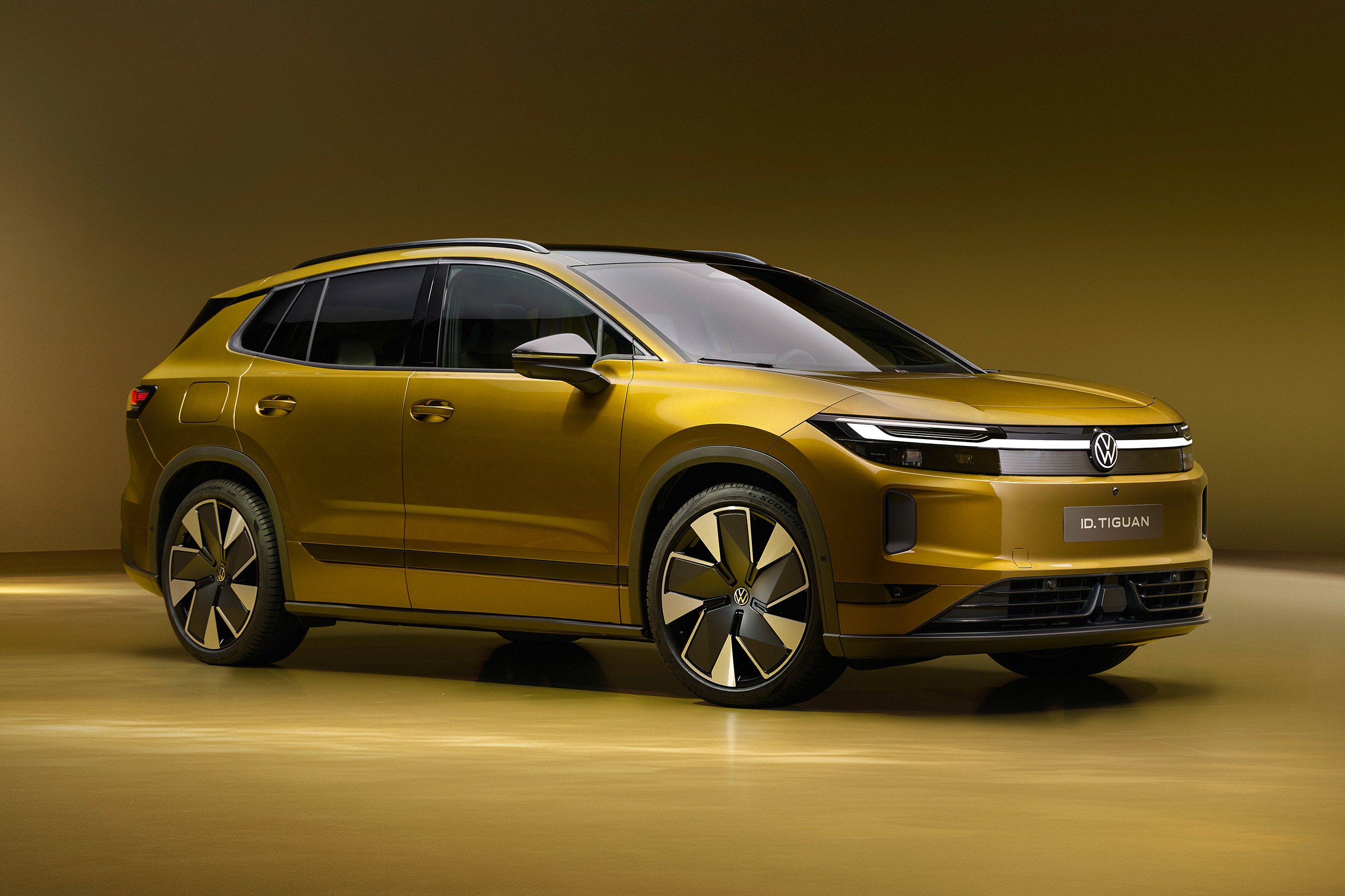


Volkswagen just revealed the ID.Tiguan, and the most telling detail isn’t the 300 horsepower or the 300-plus miles of range. It’s the buttons. Physical, tactile, old-fashioned buttons on the center stack and steering wheel, a quiet admission that the touch-everything interior philosophy of the ID.4 was a mistake customers wouldn’t forgive.
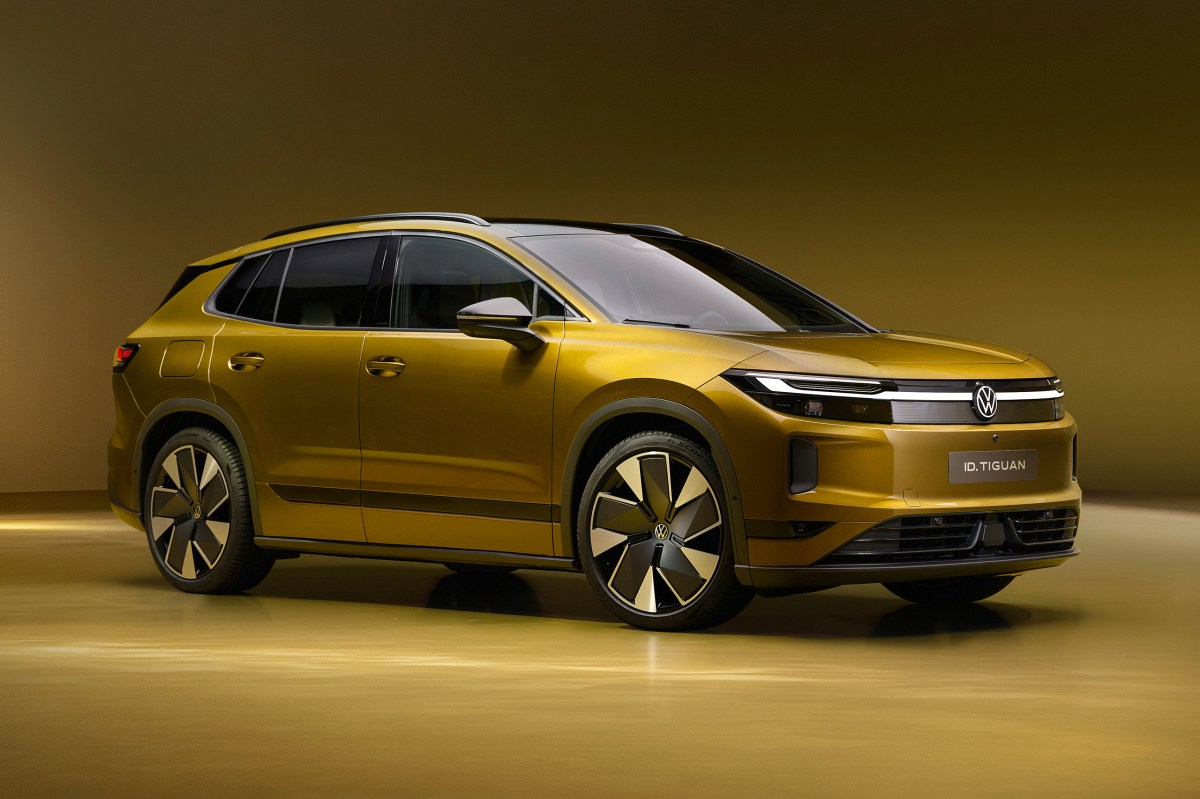
The ID.Tiguan replaces the ID.4 outright, and VW is clearly trying to course-correct more than just the control layout. The design leans harder into conventional SUV proportions, shedding the egg-shaped anonymity that made the ID.4 blend into parking lots like appliance-grade furniture. The top trim packs a 77-kWh battery feeding front and rear motors, targeting a range somewhere in the low-to-mid 300-mile window.
Europe gets it first in early 2027. The U.S. date remains unannounced.
That range target aligns almost perfectly with a BMW-commissioned study released the same week, which found 42% of American buyers won’t even consider an EV unless it delivers at least 300 miles per charge. More than half said super-fast charging, enough to add 150 miles in 10 minutes, would push them closer to buying. VW appears to have read the same data.
The timing of the ID.Tiguan’s debut also lands in a market that’s thinning out in unexpected ways. Polestar has nearly sold through its remaining 2026 inventory in the U.S., and once it’s gone, the brand exits the American market entirely. One fewer competitor should theoretically help VW, but it also underscores how brutal the EV landscape has become for anyone not named Tesla or Hyundai.
VW’s pivot to physical controls isn’t just a design choice. It’s a survival strategy. The ID.3 and ID.4 suffered relentless criticism for burying basic climate and volume functions behind capacitive touch sliders that were slow to respond and dangerous to operate while driving. European safety testers flagged the issue. Owners loathed it. Rivals like Hyundai and even BMW moved faster to bring knobs and switches back, leaving VW looking stubborn until now.
The ID.Tiguan’s interior overhaul suggests the company’s new leadership, under CEO Oliver Blume, has internalized what his predecessor’s team refused to accept: drivers want to adjust the temperature without looking at a screen. That this qualifies as a selling point in 2026 says everything about how far the pendulum swung toward minimalism before customers dragged it back.
On the performance side, nearly 300 horsepower from a dual-motor setup is competitive but not exceptional. The Hyundai Ioniq 5 and Tesla Model Y both play in this space with similar or better numbers. VW’s real pitch here is the badge, the packaging, and the promise that the cabin won’t fight you every time you want to change the fan speed.
Pricing hasn’t been disclosed, and the lack of a U.S. timeline is conspicuous. VW’s Chattanooga plant currently builds the ID.4, and retooling for the ID.Tiguan will dictate how quickly American buyers can get one. The European launch in early 2027 gives VW time to build momentum overseas, but every month of delay in the States is a month where the Model Y and Ioniq 5 keep racking up sales unchallenged.
VW has spent the better part of five years learning that good electric powertrains aren’t enough if the interior makes people miserable. The ID.Tiguan looks like the first product where that lesson actually made it from the boardroom to the production line.
Share this Story