
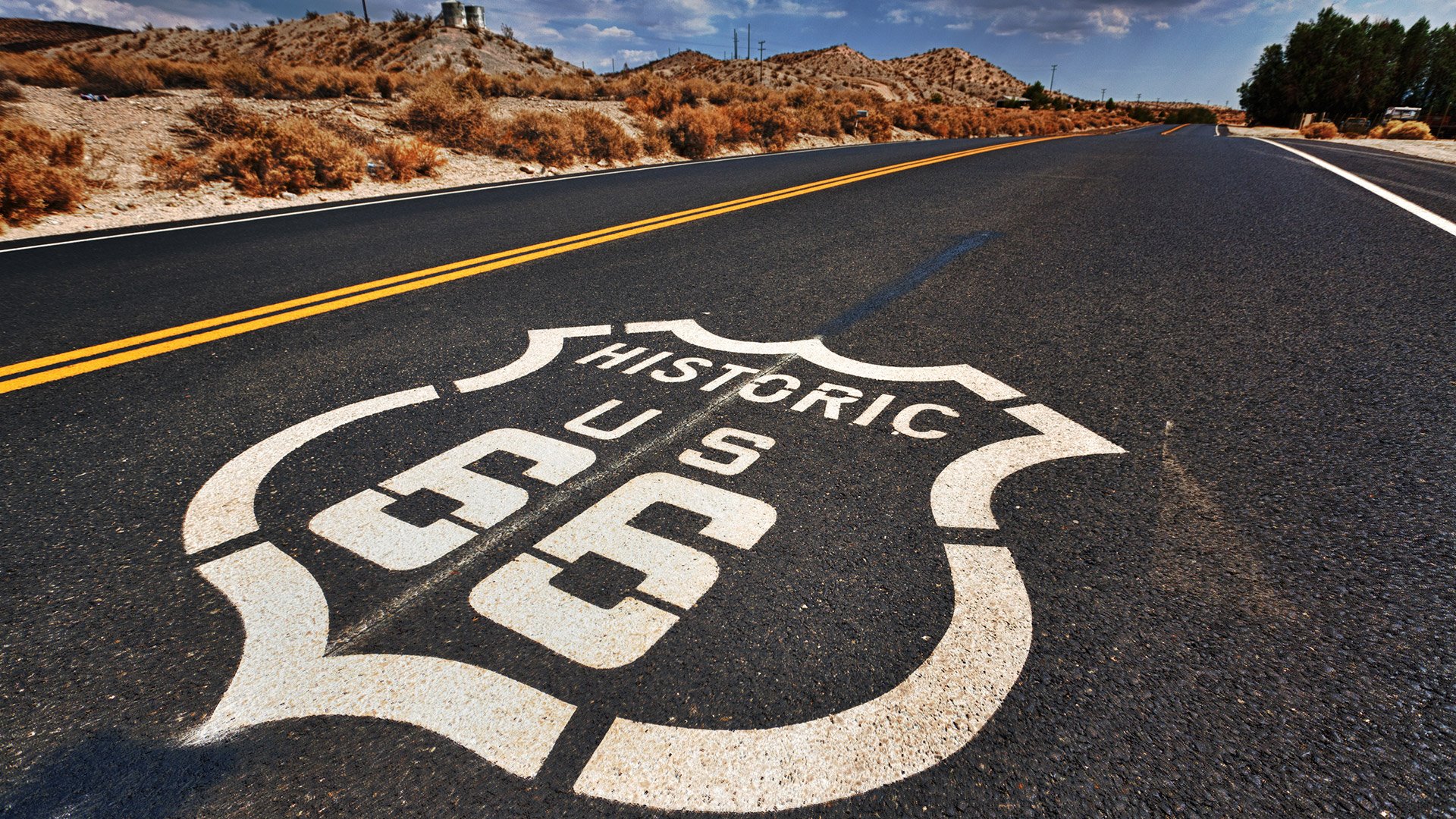


Route 66 turns 100 this year, and most of it is barely drivable. Stretches have crumbled into dirt trails. Gas stations and diners vanished decades ago.
The federal government pulled the road’s designation in 1985 and never looked back. So a single developer decided to catalog every surviving mile himself.
Jake Boyles, creator of the Pit Stop: Road Trip Exit Guide app, spent last summer driving and documenting the entire route from downtown Chicago to the Santa Monica Pier. The result is a dedicated Route 66 version of his app that lets users scroll through all 2,199 miles, complete with elevation profiles, points of interest, and the location of every gas station, restaurant, and motel still operating along the way.
That last part matters more than it might sound. This is not an Interstate. There are no travel plazas anchored by Starbucks and Chick-fil-A every 30 miles.
Some stretches are genuinely remote, and running low on fuel out there is not a charming adventure.
Boyles mapped roughly 2,400 places to eat and 1,300 motels across 280 towns. He posted the project on Reddit, where it quickly gained traction among the road trip crowd. The app even lets you pick your virtual car: a turquoise number straight out of 1955 or a white roadster nodding to the Corvettes from the 1960s Route 66 TV series.
The route itself remains a strange time capsule. You can stand on a corner in Winslow, Arizona, if the Eagles are your thing. Meteor Crater, where Apollo astronauts trained before heading to the moon, sits just a few miles off the highway.
Kitschy roadside attractions still dot the landscape between long, empty expanses of nothing.
Route 66 was born on November 11, 1926, part of America’s first attempt at a real highway system. John Steinbeck called it the “Mother Road” in The Grapes of Wrath. For a generation, it was the artery connecting the Midwest to California, the physical embodiment of westward ambition.
Then Eisenhower built the Interstates, and Route 66 became redundant almost overnight. Towns that had thrived on passing motorists dried up. The road that once symbolized possibility became a monument to obsolescence.
And yet people keep coming back to it. Forty years after its official death, Route 66 still pulls in road trippers from around the world. The centennial will only amplify that pull.
There is something deeply American about a road that no longer serves any practical purpose but refuses to be forgotten.
What Boyles built is an infrastructure layer for a highway the government abandoned. The fact that one person had to do this work, cataloging what is open, what is closed, where you can actually get fuel, tells you everything about the gap between Route 66’s cultural status and its physical reality.
Nostalgia has kept the Mother Road alive. Whether it can survive another hundred years depends on people like Boyles who bother to document what’s still standing before it isn’t.


Share this Story