
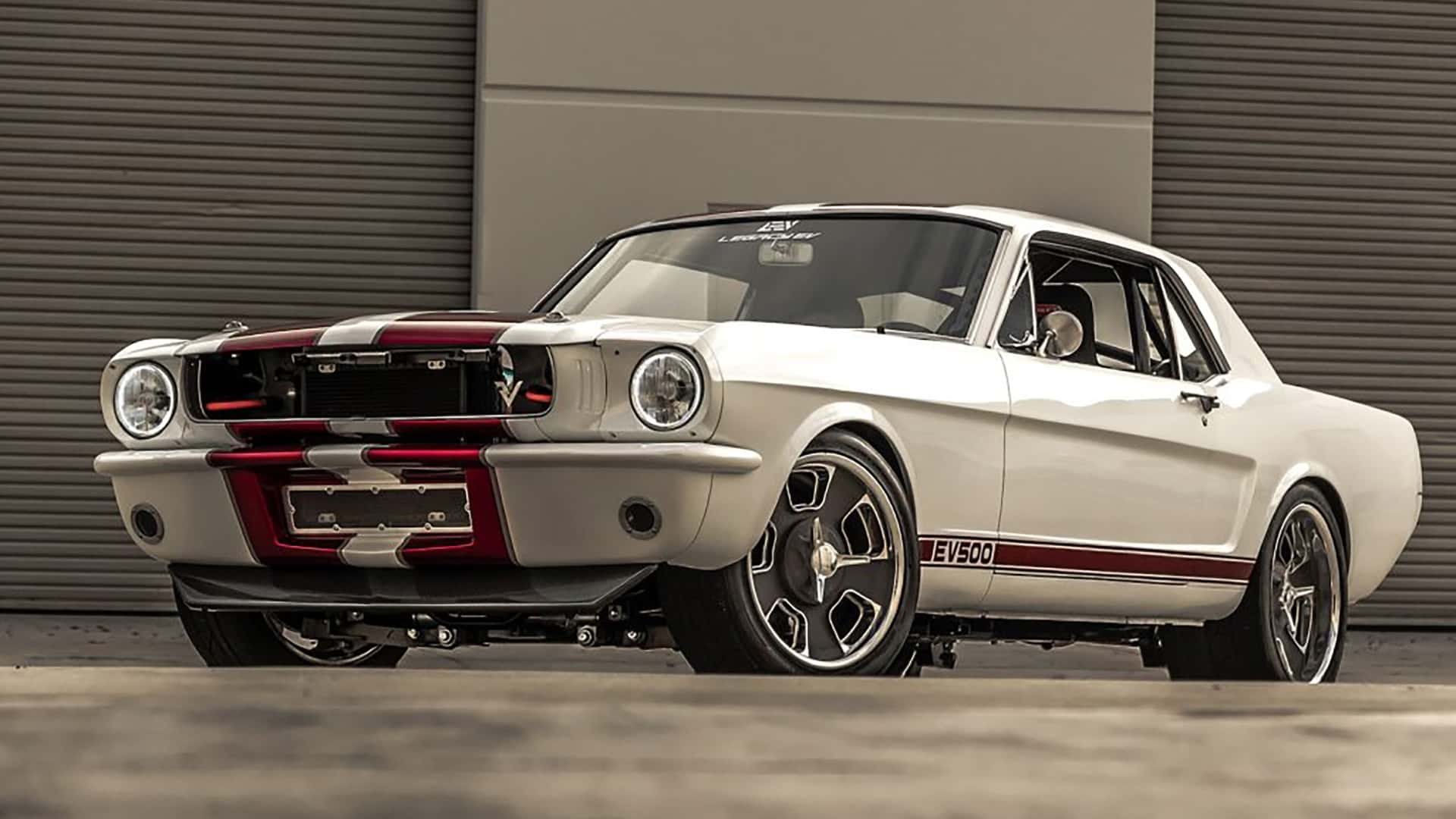


A two-tone 1965 Ford Mustang rolling out of a California garage with 600 horsepower and zero exhaust note sounds like heresy to some. To Revolt Systems, it sounds like a business plan.
The Camarillo-based shop stuffed a modified Tesla Model S Large Drive Unit under the hood of a first-generation Mustang, paired it with a Tesla-sourced high-voltage battery pack spread beneath the floor and in the trunk, and turned one of America’s most iconic pony cars into a corner-carving EV that would embarrass its original inline-six self. The build debuted at SEMA back in 2021, but Revolt has been quietly iterating on it ever since. The car serves as a rolling laboratory for its broader conversion business.
The engineering is clever and messy in equal measure. The Mustang already wore a Roadster Shop chassis designed to accept a GM LS V8, so the Tesla drive unit had to be shoehorned onto LS motor mounts — a marriage of convenience that required serious fabrication. Below, the floor pan and transmission tunnel were hacked up to accommodate battery modules that were never designed for a 60-year-old unibody.
QA1 coilovers replace whatever passed for suspension geometry in 1965. A Baer brake package with 12-inch rotors and four-piston calipers, supplemented by regenerative braking, handles the stopping. A Torque Trends 1.9:1 reduction box doubles the torque at the wheels, giving the lightweight Mustang body more shove than it has any right to absorb.
And that’s where things get interesting — and honest.
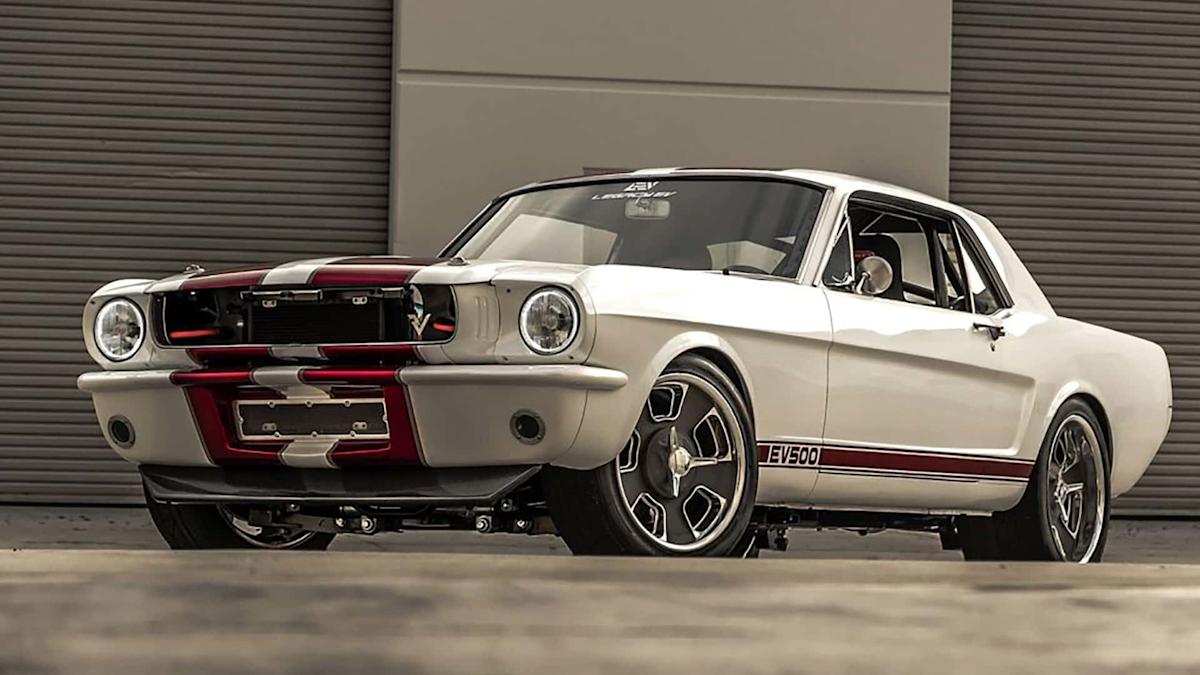
With a full battery, the car delivers its rated 600 horsepower and 442 pound-feet of torque. But at half charge, voltage sag under heavy acceleration drops as much as 100 volts, according to founder Eddy Borysewicz. That’s not a minor inconvenience.
It means the car’s performance window is a moving target, shrinking with every hard pull. On a track day, you’d feel the car going soft before you’re halfway through your session.
This is the tension at the core of every serious EV conversion: repurposed Tesla battery packs were never designed for sustained high-discharge abuse in a lightweight track car. They were engineered to move a 4,800-pound sedan through freeway traffic with occasional bursts. Revolt knows this, which is why the company is now developing its own battery setup intended to sustain higher voltages longer in a smaller package.
The car has already chewed through hardware. A clutchless 6XD sequential transmission was tried and abandoned after it destroyed the Tesla-sourced half-shafts. There’s literally a hole in the center tunnel where the shifter used to be — a scar from an experiment that didn’t survive contact with reality.
That kind of candor is rare in an industry saturated with breathless SEMA reveals that never get driven hard enough to break. Revolt is actually tracking this thing, finding the failure points, and engineering around them. The 1965 Mustang isn’t a showpiece. It’s a mule with good looks.
The broader EV conversion market is growing, fueled by cheap salvage components from aging Teslas and Nissan Leafs and a generation of enthusiasts who see electric torque as an upgrade rather than a betrayal. Companies like Revolt Systems, EV West, and a constellation of smaller shops are proving that the swap works — mechanically, at least.
The harder question is whether repurposed EV components can deliver the durability and consistency that serious drivers demand. Revolt’s Mustang suggests the answer is not yet, but getting closer. A 600-horsepower classic pony car that handles like a modern sports car and looks like it rolled off a 1965 Dearborn assembly line is a compelling proposition. It just needs a battery that can keep up with the motor — and the ambition.
Share this Story