
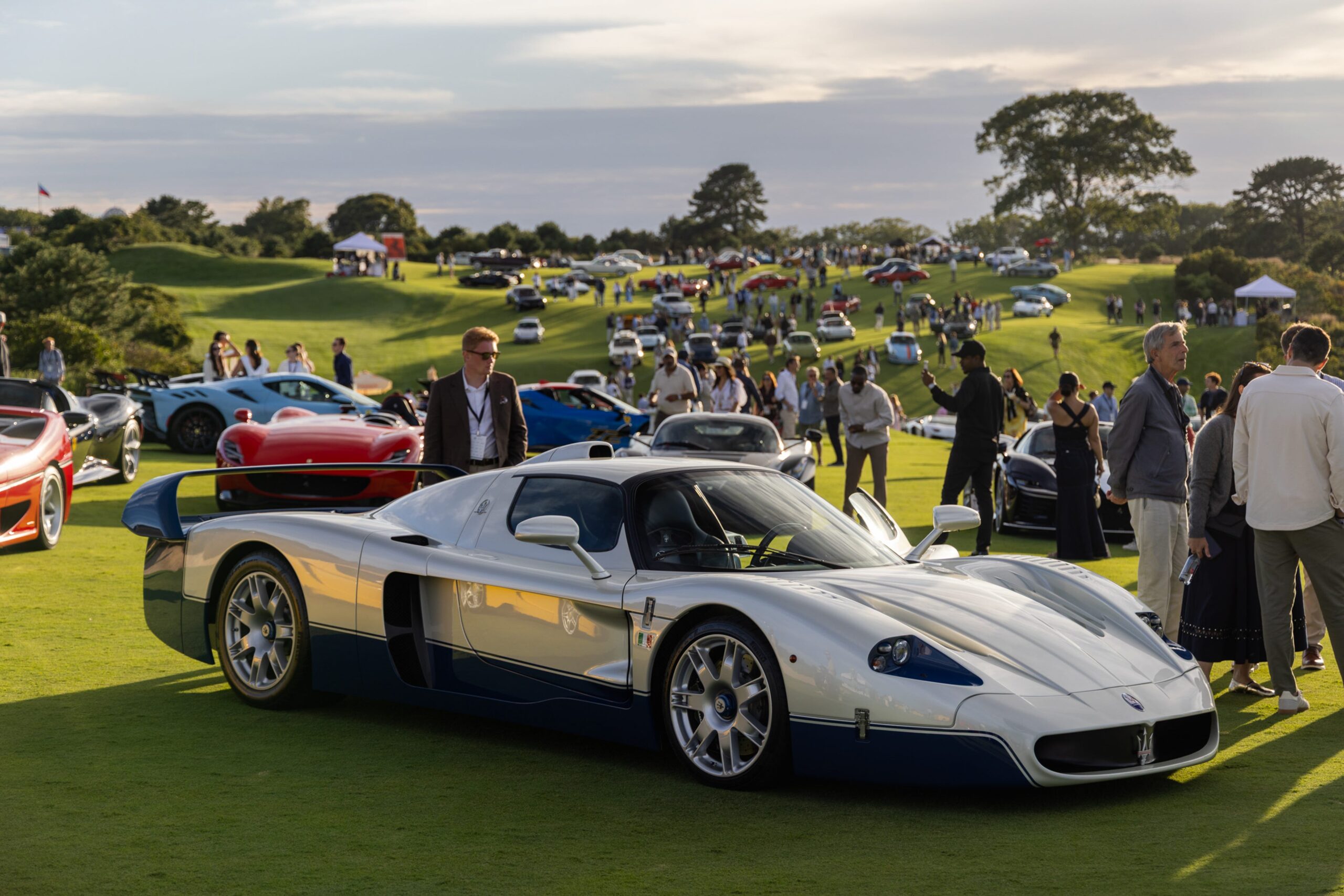


The Chevron bridge still stands. That single structural relic of the old Bridgehampton Race Circuit, where original gullwing Mercedes once screamed through corners in anger, now serves as the most expensive photo backdrop on Long Island. Every September, it draws a crowd that treats automotive history less like nostalgia and more like religion.
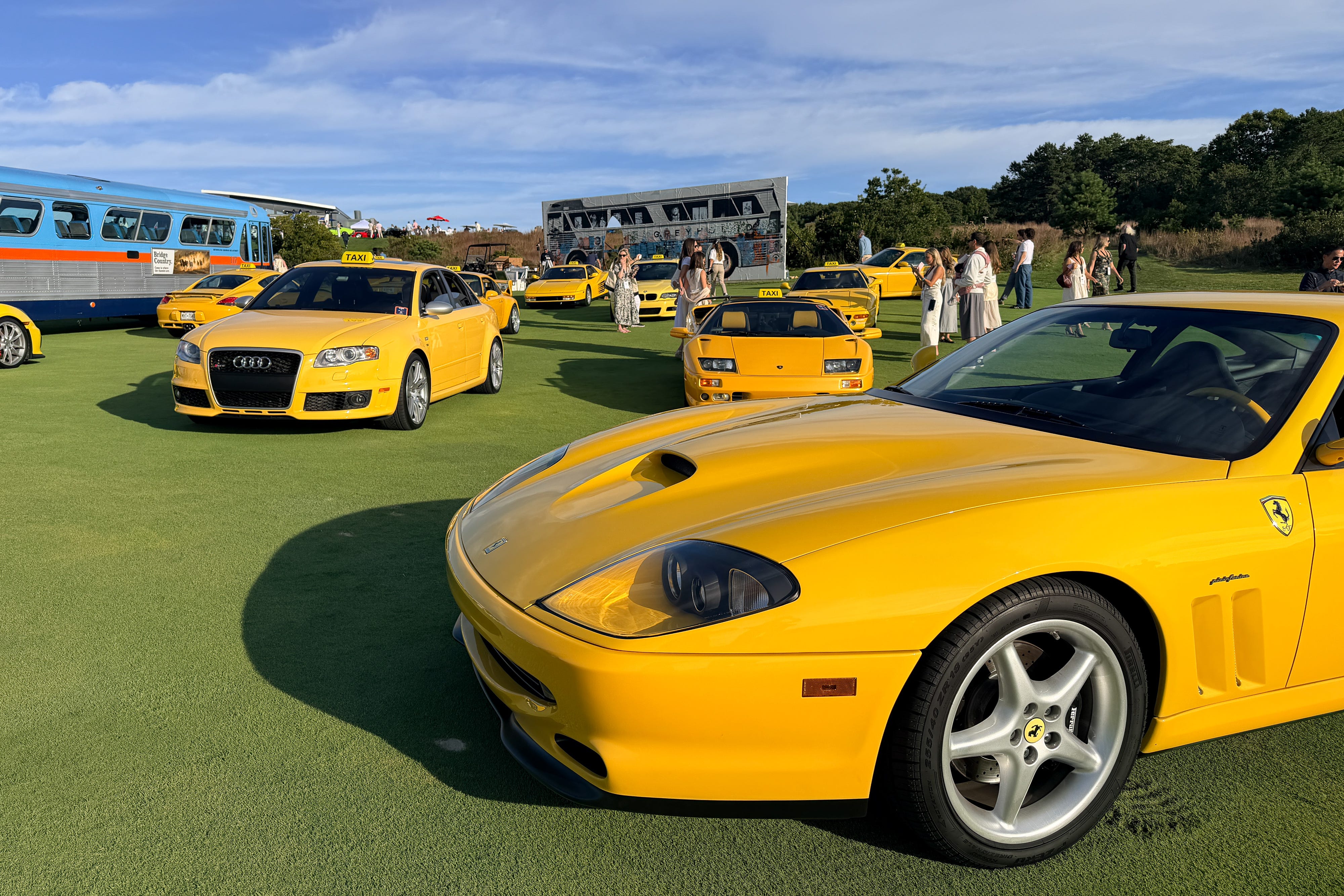
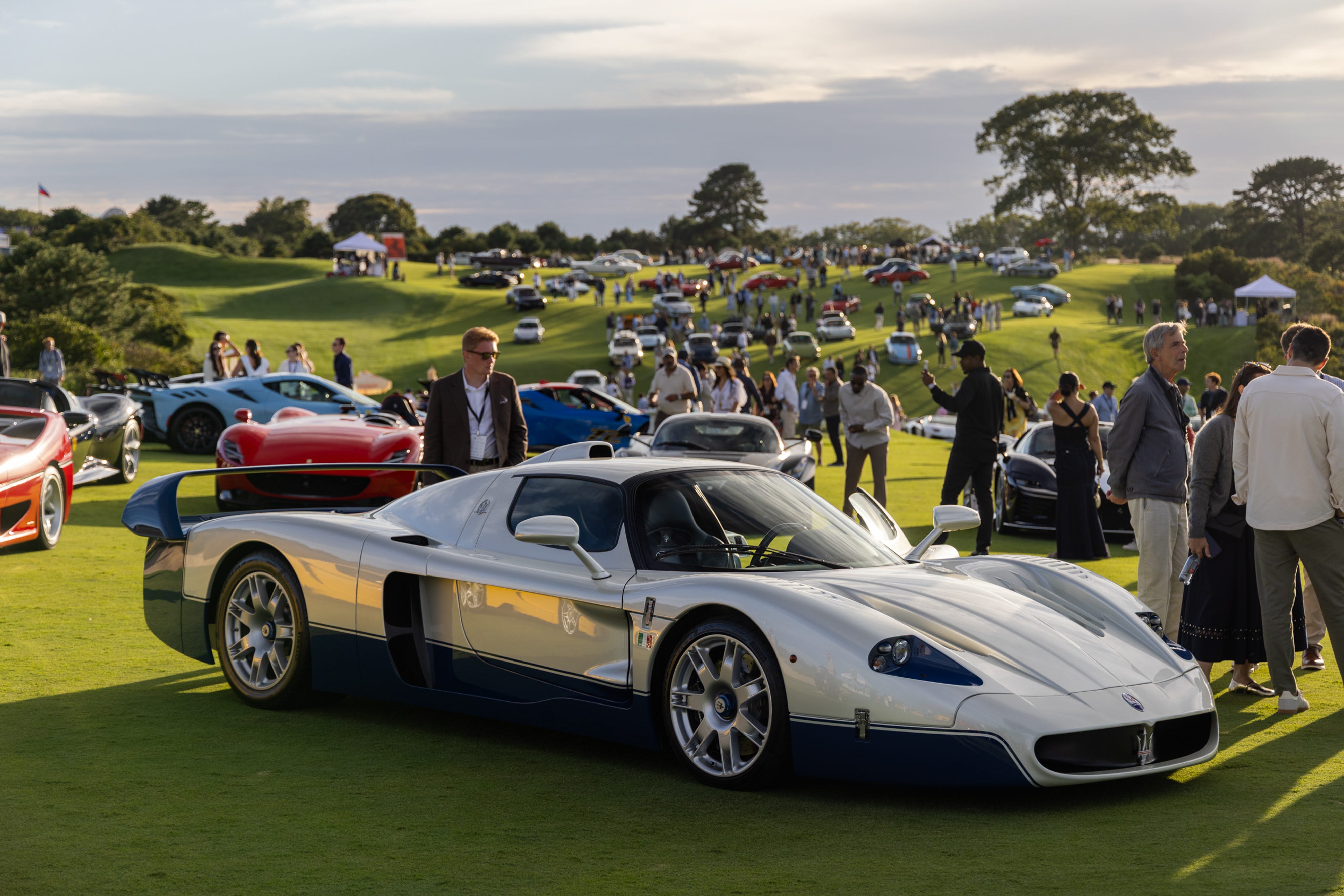
The Bridge 2026, held on its usual Saturday in late September, again filled the former circuit grounds with an invitation-only collection of machines that no public concours could assemble. Lamborghini Countachs parked within eyeshot of McLaren F1s. Tucker sedans shared grass with muscle cars.
A Mercedes contingent showed up in blues so coordinated it looked orchestrated. Someone brought a car in a shade of green that can only be described as Kermit, bolted to a grille that suggested very different intentions.
This is the Hamptons, so the helicopters were not a surprise. Fly in, see the cars, fly out to the yacht. That’s the clientele.
But The Bridge has always been more than a wealthy person’s lawn party, and co-founder Bob Rubin’s obsession with car culture, particularly the 1971 film Vanishing Point, keeps the event tethered to something rawer than polo-field concours elegance. Rubin literally wrote the book on that movie. His taste runs toward machines that were built to be used, not just displayed.
The day before the Saturday show, participants ran the 24 Heures du Montauk, a rally from nearby Sag Harbor out to the tip of Long Island. This is where the event earns its credibility. These aren’t trailer queens rolling off flatbeds.
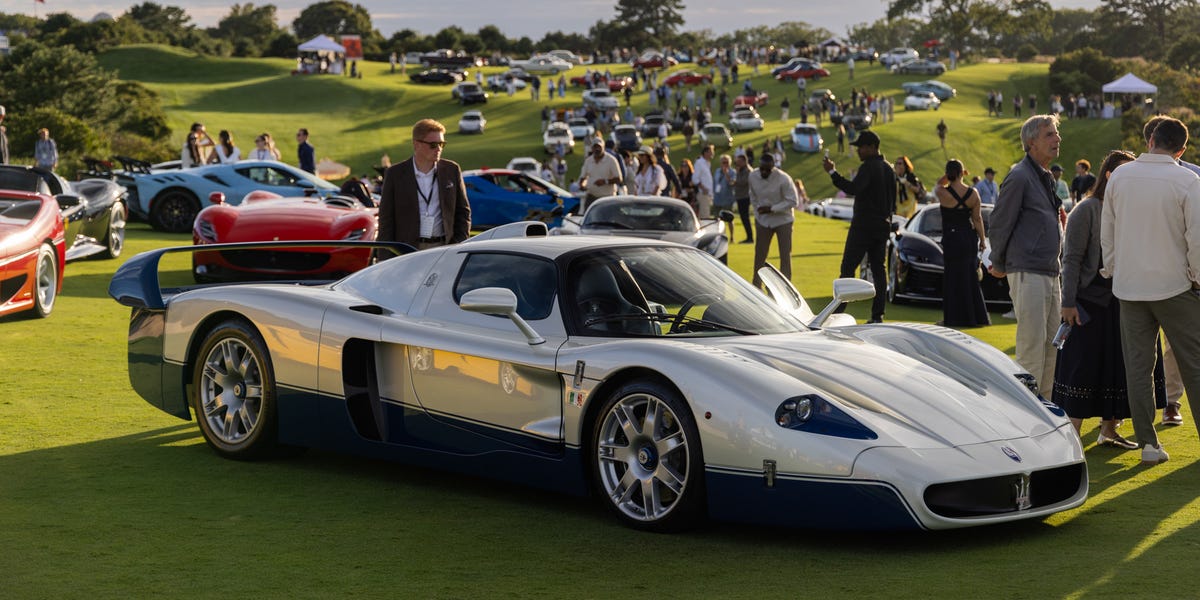
Owners drove Countachs and McLarens and low-slung exotics over raised train tracks and through small-town intersections, risking front splitters and oil pans for the simple pleasure of hearing each other’s machines in motion. A Porsche Carrera competed with the sunset for best color combination. Somebody apparently rode shotgun in a McLaren F1’s famous center seat, peering out through that narrow windshield at a world most people only see in auction catalogs.
The rally doubles as a shakedown and a social event, and it separates The Bridge from the white-glove concours circuit where touching a fender gets you escorted out.
The setting itself does heavy lifting. Bridgehampton’s racing history dates to the 1950s, when the circuit hosted real competition on real roads. The track closed decades ago, swallowed by real estate development, but the Chevron bridge remains, lending every photograph a layer of authenticity that no event organizer could manufacture.
Stand under it and you are standing where racing actually happened.
There is no judging at The Bridge. No trophies, no Best in Class, no roped-off display areas. Cars park on grass and owners mingle.
The formula has not changed much since the event’s founding, and the organizers seem determined to keep it that way. In a concours landscape increasingly dominated by corporate sponsorship and ticketed VIP tiers, The Bridge operates on a handshake and an invitation.
The 2026 edition drew its usual mix of pre-war elegance, mid-century muscle, and modern exotica. Poodles were spotted near the Countach. A Tucker appeared, looking as futuristic and doomed as it did in 1948.
The sun dropped low over the old circuit grounds, and the cars just sat there, waiting for someone to turn a key.
Share this Story