
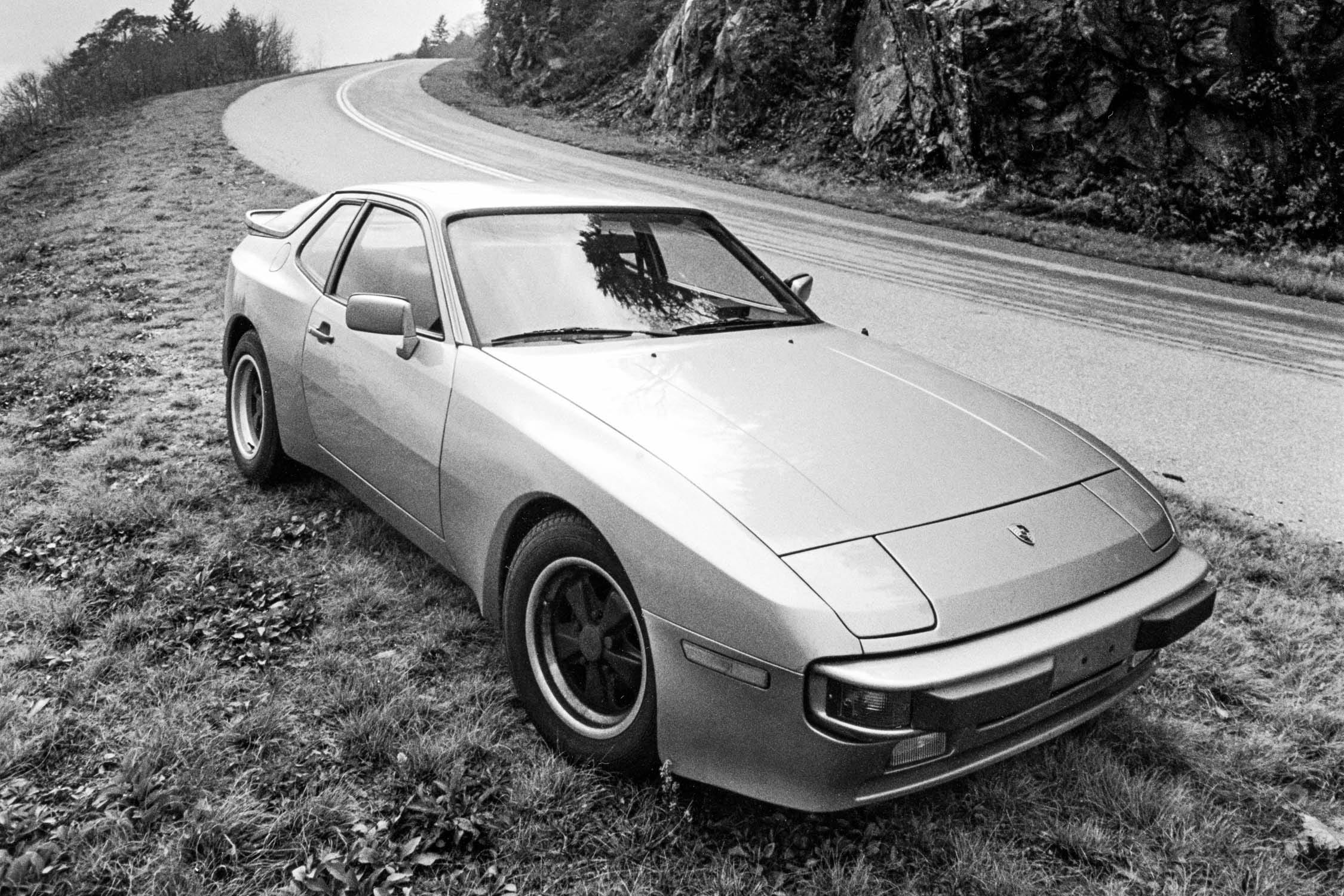


Car and Driver just resurfaced its 30,000-mile long-term test of a 1983 Porsche 944, originally published in November 1984, and the report reads like a love letter written by people who didn’t want to admit they were smitten. The editors loved the car. They also broke it in ways that say as much about the machine as about the people thrashing it.
The 944 arrived at a moment when Porsche desperately needed a volume hit. The 924 it replaced had been a tough sell — underpowered, underequipped, and saddled with a reputation as a parts-bin Audi in a Porsche suit. Swapping in a 2.5-liter four-cylinder derived from the 928’s V-8, bolting on fender flares over fatter Pirelli P6 rubber, and loading the car with air conditioning, electric windows, and four-wheel discs turned the 924’s commercial problem into a waiting-list phenomenon.
Base price: $18,900. By the time C/D actually got its test car in March 1983, the sticker had crept to $19,485 and the options pushed the total to $23,155.
The numbers were solid for the era. Zero to 60 in 7.4 seconds, a 129-mph top speed, 0.83 g on the skidpad with the optional anti-sway-bar package and wider rear wheels. More important, the car felt composed — the editors praised the engine’s willingness to spin to redline, the transaxle’s crisp shifts, and brakes perfectly matched to the chassis.
Then, at barely 3,000 miles, an elderly man in a Chevrolet Chevette pulled out of a driveway directly into the 944’s path. The Porsche T-boned the Chevette’s rear fender. The Chevette went to the junkyard, and the 944 went to the body shop for five months and $6,550.48 in structural repairs — roughly a third of the car’s original base price.
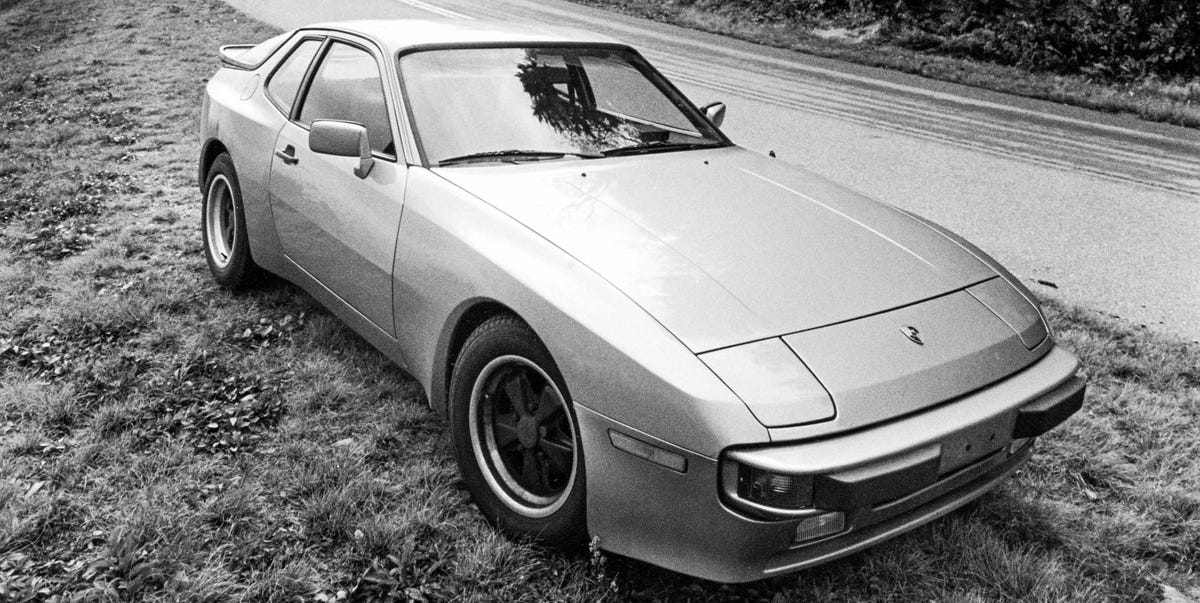
What followed the rebuild was a surprisingly honest catalog of small failures. The power antenna died twice. The driver’s mirror quit, the door catch broke, and a steering-rack boot split and leaked.
The clutch slave cylinder failed at 15,000 miles, the only breakdown that actually stranded anyone. A windshield wiper wandered off its mount. The air conditioning needed a recharge at 30,000 miles, and a seatbelt recall hit every 1982–84 Porsche.
That list looks damning on paper. But nearly every repair fell under warranty, and nothing besides the clutch failure stopped the car from running. Porsche dealer labor rates were steep even then — each 15,000-mile service ran about $170 — but the intervals themselves were remarkably long.
Oil changes every 15,000 miles. Spark plugs and air filter every 30,000. The 944 asked very little of its owners between those appointments and returned 21 mpg in exchange for regular redline visits.
After 30,000 miles, the engine’s low-rpm smoothness had faded, likely from a failing hydraulic engine mount. But the car had lost almost no measurable power. Acceleration to 60 mph slipped by just a tenth of a second, and braking actually improved after the original Pirellis gave way to Goodyear Eagle GTs at 26,000 miles — a respectable tire life given how the staff drove.
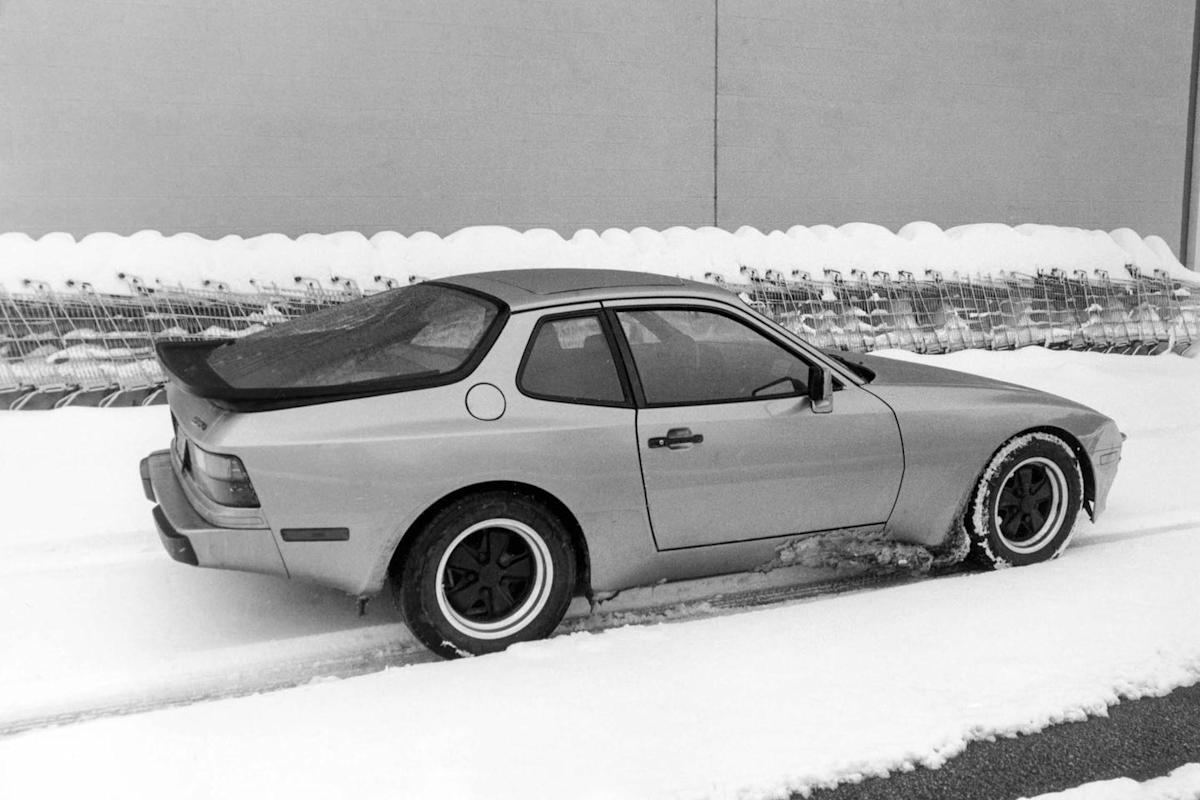
The logbook the editors kept in the glove box was, by their own admission, loaded with superlatives. Every staff member found a way to fit into the tight cockpit. Everyone accepted the power steering after initially preferring the manual rack’s feedback.
The ride was firm enough to smack over expansion joints, but controlled enough to glide over real-world broken pavement. It was a car that rewarded skill without punishing daily use.
By 1984, the 944’s base price had risen to $21,440 and the dealer waiting lists were longer than ever. Porsche had done something rare: built a car that was genuinely cheaper than its predecessor in terms of what you got for the money, and genuinely better in every measurable way. The 911 purists never fully accepted it, but the market didn’t care.
Four decades later, clean 944s command serious money from collectors who recognize what C/D figured out in 30,000 hard miles: this was one of the most intelligently engineered sports cars of its decade, and it didn’t need six cylinders to prove it.
Share this Story