
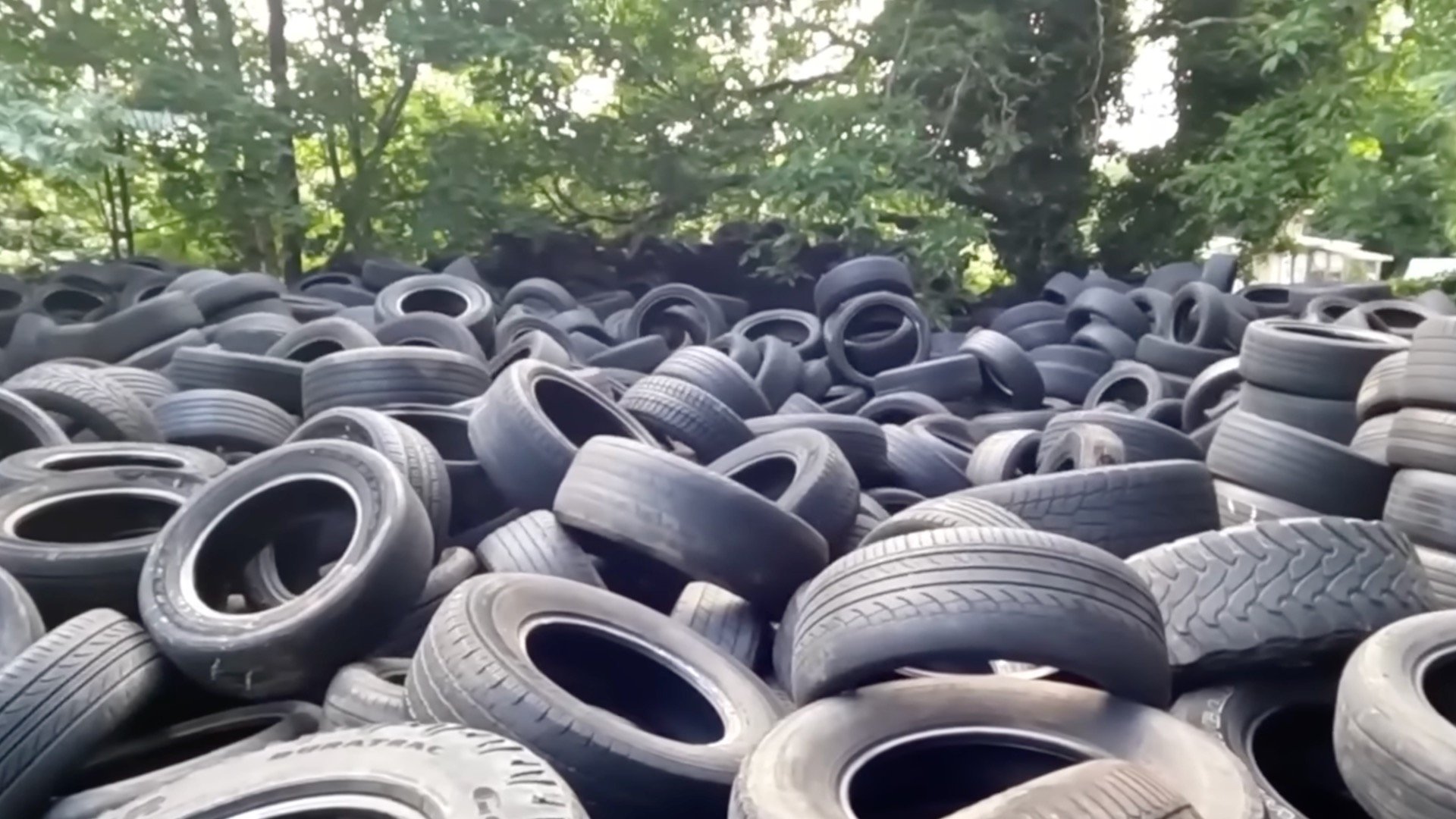


Khanh Tran bought a 1.2-acre lot in Portland, Oregon in April because he thought it was a beautiful location. He came back on June 6 to start fixing it up. What he found instead were hundreds of tires stacked six feet high, blocking most of the property, with some arranged into a makeshift room complete with a table and chairs.
In February, the lot had fewer than 40 tires in a single pile. Tran arranged with the seller to have them removed before closing. By March, they were still there. Ninety days later, the property was buried.
Someone, or multiple someones, has been systematically dumping tires on Tran’s land, and nobody has been caught doing it.
His neighbor Heather Harmon hasn’t seen anyone in the act either, which is remarkable given the sheer volume of rubber involved. She and Tran suspect someone is posing as a tire recycling service, collecting tires from local businesses, and then offloading them on private property with possible help from squatters. “I don’t know if they’re doing it overnight, or while I’m at work,” Harmon told Portland ABC affiliate KATU. “I’m worried about something catching on fire and spreading across into my yard.”
That fire concern is not paranoia. Tire fires are notoriously difficult to extinguish, produce toxic smoke, and can burn for days or weeks. A property packed with hundreds of tires in a residential area is a genuine hazard.
The Multnomah County Sheriff’s Office is investigating the situation as trespassing and “offensive littering,” which might be the understatement of the year. Local environmental agencies are also looking into it, since the dump violates Oregon’s tire disposal regulations.
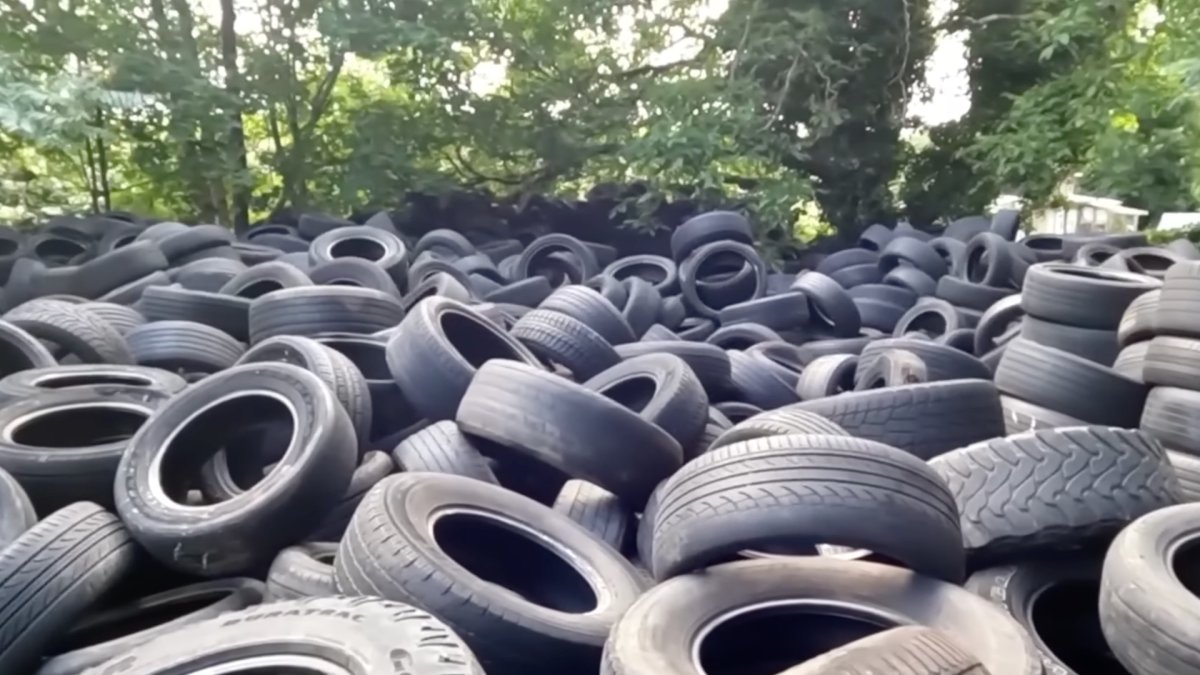
Here’s where it gets worse for Tran. The city can’t help him clean it up. A Portland government spokesperson told KATU that trash removal services are prohibited from removing items on private property.
Even if they could, they don’t have the resources for a job this size. The county says it will “revisit the issue” if the culprits aren’t found and Tran can’t handle it himself.
Under Oregon law, property owners are legally responsible for what’s on their land, regardless of how it got there. The county is at least waiving fines, which is generous of them considering they’re offering essentially nothing else. Tran has started a GoFundMe to pay for the cleanup he never created.
The tire dumping epidemic in Portland is not a one-off story. City officials acknowledged that illegal tire dumping is “a growing issue,” with 14,000 tires collected from public property in the past year. In May alone, crews picked up 5,600 tires from public land. That’s the tires the city is willing to deal with, the ones on its own turf.
Private landowners like Tran are on their own. He bought a piece of land with plans and optimism. Now he’s crowdfunding to remove someone else’s waste from property he’s legally liable for, waiting on a sheriff’s investigation that may never identify the dumpers, and watching a county government punt the problem back to him with a shrug.
The whole episode is a clean illustration of how illegal dumping works as a business model. Someone charges shops to haul away their old tires, skips the disposal fees, and drops the load on the nearest unoccupied lot. The profit margin is the difference between what they charge and what they’d owe at a legitimate recycling facility. The victim is whoever owns the dirt.
Tran’s 1.2-acre dream lot is now a landfill with a mortgage attached. Portland’s response amounts to sympathy, an investigation, and a waived fine. That’s not a solution. That’s a receipt.






Share this Story