
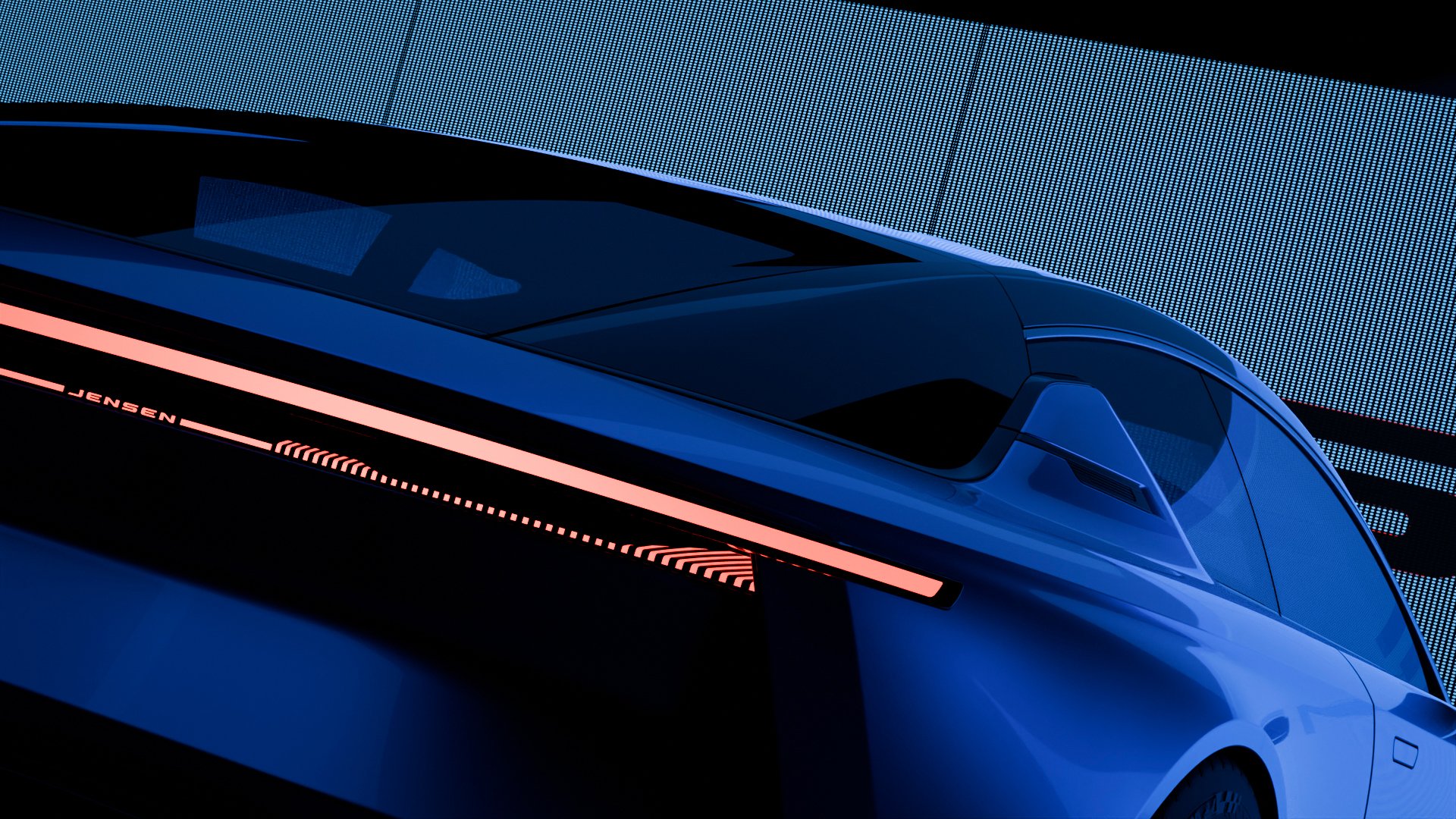


Jensen just revealed a bit more of its Interceptor comeback, and the picture is getting both clearer and stranger. The company is calling its first product the Interceptor GTX — a hand-built, supercharged V8, aluminum-bodied machine with an analog drivetrain. There’s just one catch: it’s track-only.
Let that settle for a second. The Jensen Interceptor, one of the most elegant grand tourers Britain ever produced, is returning as a car you can’t drive on the road.
Jensen’s press release frames the GTX as “an enhanced prototype build” that will “establish the foundations for several future Interceptor variants, including roadgoing models and track-focused cars.” Translation: this is a proof of concept wearing a price tag. The company says it was designed, engineered, and hand-built in the UK, with an entirely new aluminum chassis and body. No restomod. No continuation car. New from the ground up.
That distinction matters because it also makes the path to production enormously harder. A restomod or continuation car can lean on an existing vehicle identification number, an existing type approval, an existing structure. Building something genuinely new means confronting every modern crash standard, every emissions regulation, every pedestrian impact requirement. For a small startup trying to resurrect a dormant British marque, that’s a mountain of engineering and certification expense before a single car reaches a customer’s driveway.
A track car sidesteps all of it. No airbag requirements. No emissions compliance. No pedestrian safety mandates. You build it, bolt a roll cage in, and sell it to someone with a helmet and a membership at Goodwood. It’s the fastest way to get metal moving and revenue flowing while you figure out the brutal regulatory puzzle of road homologation.
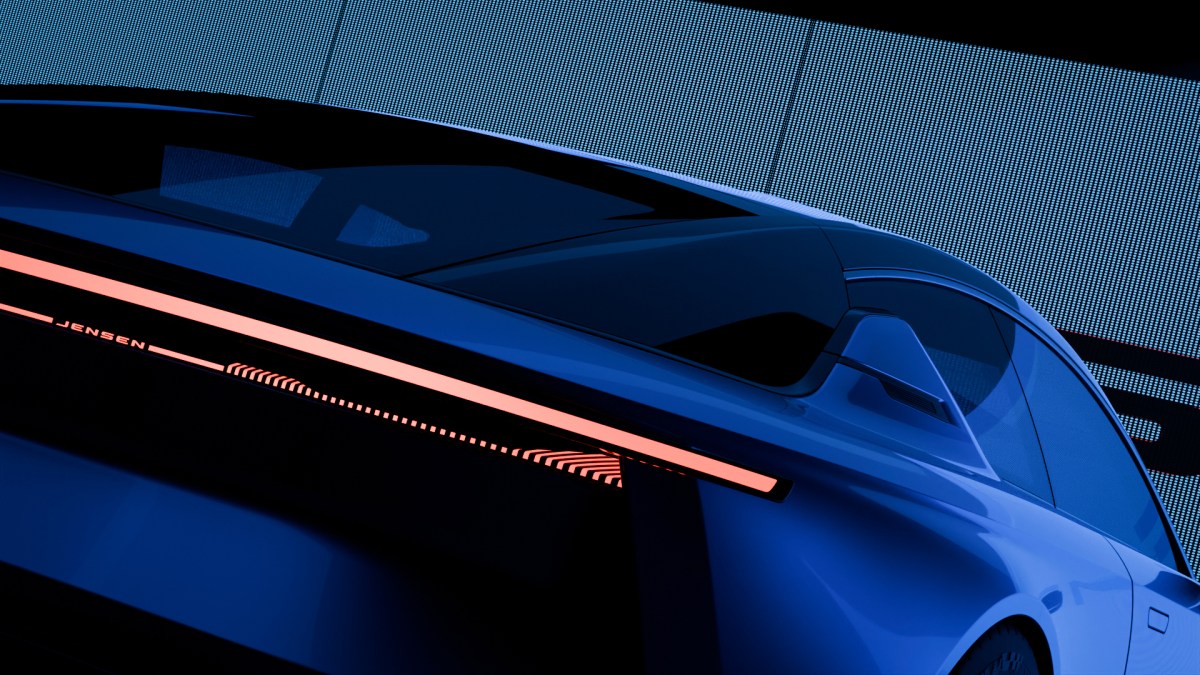
Jensen’s management hasn’t announced pricing or production numbers. The silhouette teasers released so far suggest something long, low, and more touring car than track weapon. That only reinforces the sense that the GTX exists not because Jensen’s engineers dreamed of building a circuit-day special, but because it was the only viable first step. The original Interceptor, whether in its 1950s form or its iconic shooting-brake shape from the Sixties and Seventies, was never about lap times. It was about devouring motorway miles in leather-trimmed comfort with a big American V8 rumbling up front.
Nobody at Jensen would frame the GTX as a regulatory shortcut. But the logic is transparent, and honestly, it’s not a bad strategy. The graveyard of announced automotive revivals — from De Tomaso to Borgward to TVR’s latest attempt — is littered with companies that promised road cars, burned through capital chasing homologation, and never delivered anything at all. At least Jensen is putting something tangible into the world.
The real question is whether the GTX generates enough revenue and credibility to fund the road car that everyone actually wants. A supercharged V8 grand tourer with a manual gearbox, built in small numbers by hand in Britain, would be a genuinely compelling machine in a market drowning in turbocharged SUVs and electric crossovers. But that car is still theoretical.
What’s real today is a track-only machine from a company that barely exists yet, wearing one of the most storied names in British automotive history. It’s a bet — that enthusiasts will pay for the promise of what comes next. Jensen needs them to. Because the GTX isn’t really the product. It’s the funding round.


Share this Story