
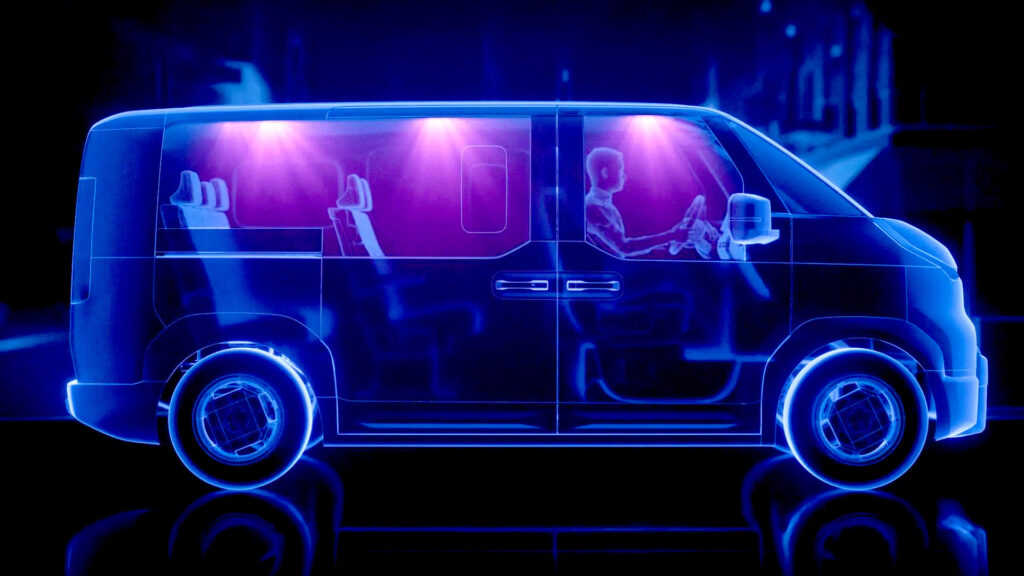


Hyundai’s latest cabin trick isn’t a bigger screen or a fancier speaker. It’s a set of ultraviolet lights embedded in the headliner that can wipe out 99.9 percent of pneumonia-causing bacteria in 30 seconds flat.
The system, called Plasma Care UVC, uses far-ultraviolet C lights operating in the 200-230 nanometer range. That wavelength distinction matters. The UV-C compartments already found in the Santa Fe and Palisade — small cubbies that sanitize phones — use a harsher wavelength that can damage skin and eyes with direct exposure.
Far-UVC only penetrates the outer keratin layer. It can’t reach living tissue, but it shreds the DNA of bacteria and viruses on contact.
Hyundai and Kia co-developed the technology, and the test numbers are striking. Airborne viruses dropped by 96.8 percent within 30 minutes. Pneumonia bacteria hit zero — total eradication — in 60 seconds, while E. coli required 40 minutes to reach 99.9 percent elimination.
Those are hospital-grade results, which makes sense. Far-UVC lights already see duty in medical settings. The engineering challenge was making them survive the back of a moving vehicle — vibration, temperature swings, power constraints, and packaging small enough to hide in a headliner without turning it into a laboratory ceiling.
The first application won’t be a luxury SUV or a flagship sedan. Hyundai is targeting its purpose-built vehicles — the utilitarian platforms it sees as the future of commercial mobility. The Kia PV5, a modular van designed to serve as everything from a delivery truck to a ride-share shuttle, is the natural candidate.
School buses and produce haulers are also on the shortlist, vehicles where shared air and perishable cargo make sanitation more than a marketing bullet point.
There’s also a practical vanity angle. The lights break down volatile organic compounds responsible for persistent cabin odors. Anyone who has ridden in the back of a well-used ride-share vehicle understands the appeal.
Plasma Care UVC was developed for use in open vehicle cabin environments with passengers, moving beyond conventional sanitization methods that are limited to enclosed areas,” said Han Joo Jang, a senior research engineer at Hyundai and Kia.
Neither company has committed to a production timeline. No model year, no launch market, no pricing. That’s the gap between a promising lab demo and a feature you can actually buy.
The pandemic accelerated consumer awareness of airborne pathogens, and automakers responded with ionizers, HEPA filters, and those UV phone cubbies. Most of it felt like hygiene theater — reassuring gestures without measurable outcomes. Plasma Care UVC, at least on paper, produces numbers that stand up to scrutiny.
The question is whether Hyundai treats this as a real product commitment or lets it languish in the concept pipeline. Purpose-built vehicles are the right proving ground. Fleet operators care about measurable cleanliness, and parents putting kids on school shuttles care even more.
If the system works as advertised at production scale, it becomes a genuine differentiator in a segment where most competitors are still arguing about battery range and cargo volume. Hyundai has a habit of showing ambitious technology early and deploying it selectively. The science here is sound, but the execution calendar remains conspicuously empty.


Share this Story