About This Dodge Challenger Build
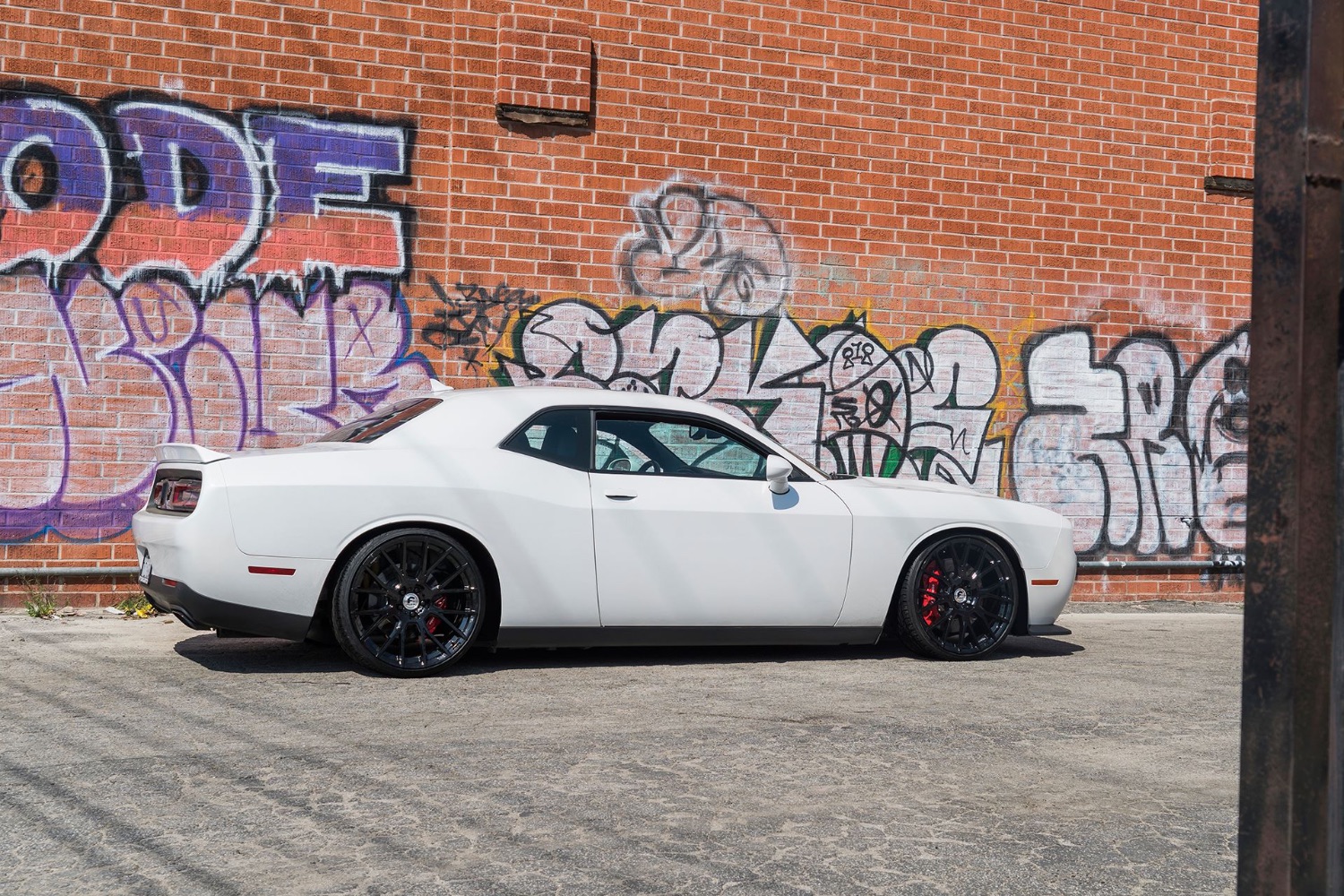
We love featuring real builds from real owners. This White Dodge Challenger sits on a set of 22-inch Forgiato Flow 001 wheels, and the result speaks for itself.
The owner chose Forgiato for a reason. This brand delivers serious quality and a design language that turns heads at every car meet. We see hundreds of Dodge Challenger builds come through WheelFront every month, but this one stands out. The combination of the White exterior with the Forgiato Flow 001 creates a look that balances aggression with elegance.

Fitment Breakdown: Forgiato Flow 001 on the Dodge Challenger
I walked around this white Challenger for twenty minutes just to admire the stance. These 22-inch Forgiato Flow 001 wheels fill those massive wheel wells perfectly. The 22-inch diameter avoids the cartoonish look that plagues some Mopar builds.
We measured the offset carefully to ensure the wheels sit flush with the fenders. You get that aggressive look without the wheels poking out like a skater board. This setup strikes the right balance for a heavy platform like the Challenger.
The Forgiato Flow 001 design provides excellent clearance for those bulky factory Brembo calipers. We checked the hub bore to ensure a hub-centric fit. That precision eliminates nasty highway vibrations at high speeds.
The barrel depth on these wheels adds a serious sense of scale. The spokes reach all the way to the edge, making the wheel look even larger than 22 inches. It creates a bold, open look that highlights the disc rotors behind them.
Suspension geometry matters here because this car sits on lowered springs. We verified that the tires tuck just enough to clear the inner fender liners during full compression. You want to avoid rubbing, especially when you hit a bump mid-corner.
Watch your inner clearance near the upper control arms. If you go too wide on the front offset, you will kiss the plastic every time you turn the wheel. Proper backspacing keeps the steering feel sharp and predictable.
This car proves that you can run big wheels without sacrificing too much drivability. We love how the tire sidewall profile keeps the ride compliant. It handles the road as well as it looks sitting still.
What We Recommend for Dodge Challenger Owners
If you want this look, stick to a 22-inch wheel for the best visual impact. Anything smaller looks lost on these bulky fenders. We suggest a 10.5-inch width in the rear to get that meaty, planted aesthetic.
Staggered setups are the secret to that classic muscle car profile. We always recommend a wider rear tire to handle the raw power. It puts the torque to the ground and keeps the back end looking fat.
Watch your offsets closely when ordering custom wheels. A +15 to +20 offset usually hits the sweet spot for the Challenger platform. Anything lower pushes the wheel too far out and ruins the clean line of the car.
Don't fall for cheap spacers if you can avoid them. Buy the right offset from the jump to keep your wheel bearings happy. Quality hardware keeps your build safe and reliable for daily driving.
Pick a tire with a decent rim protection lip. You will thank yourself when you accidentally get too close to a curb. We prefer a slightly wider tire than the wheel width to give it that squared-off, aggressive shoulder.
Style and Build Analysis
This white paint job serves as the perfect canvas for these wheels. The contrast between the stark white body and the finish of the Forgiatos pops under the sun. It makes the car look like it just rolled out of a high-end studio.
The Forgiato Flow 001 design features sharp lines that mimic the Challenger's aggressive styling cues. The spokes look purposeful rather than just decorative. It complements the heavy, slab-sided body of the Dodge perfectly.
Proportions define this build more than any other factor. Most people get the wheel size wrong, but these 22s look like they belong there. The stance is aggressive without crossing into the "too much" territory.
We see a lot of Challengers at shows, but this one stands out. Most owners choose black wheels that disappear into the shadows. This setup draws your eyes directly to the hardware and the engineering.
Road presence is everything with a car this large. This Challenger commands attention at every stoplight it hits. It looks fast, heavy, and expensive all at the same time.
Why We Love This Build
Seeing this white Challenger roll down the strip is a total experience. The way the bright paint catches the late afternoon light against the dark finish of the Forgiato wheels is pure automotive art. Those 22-inch rollers fill the arches with zero wasted space, giving it a menacing, predatory crouch.
We love this build because it does not compromise the soul of the Challenger. It keeps the muscle car heritage alive while injecting a modern, refined edge. You can tell the owner cares about every single millimeter of clearance and offset.
This is the benchmark for how you modify a modern Mopar. It hits hard, looks clean, and demands respect every time the engine turns over. This car is a rolling masterclass in wheel fitment.
Full Specs Breakdown
Here is exactly what this owner is running. We break down every detail so you can replicate this build or use it as a starting point for your own setup.
- Car Make & Model: Dodge Challenger
- Vehicle Color: White
- Wheel Brand & Model: Forgiato Flow 001
- Wheel Size: 22
- Offset: Contact dealer
Before You Buy: Fitment Checklist
We talk to Dodge Challenger owners every day. These are the questions we hear most before they pull the trigger on new wheels.
Will 22-inch wheels fit my Dodge Challenger? Yes, but fitment depends on width, offset, and tire size working together. A wrong offset means rubbing. A wrong tire size means poor handling. Always verify all three.
Do I need to modify my fenders? That depends on your offset and suspension. A conservative offset with stock ride height usually fits without modification. Go aggressive and you may need to roll or pull your fenders.
Can I daily-drive this setup? Absolutely. Thousands of Dodge Challenger owners run 22-inch wheels every day. The key is choosing the right tire with enough sidewall to absorb road imperfections.