
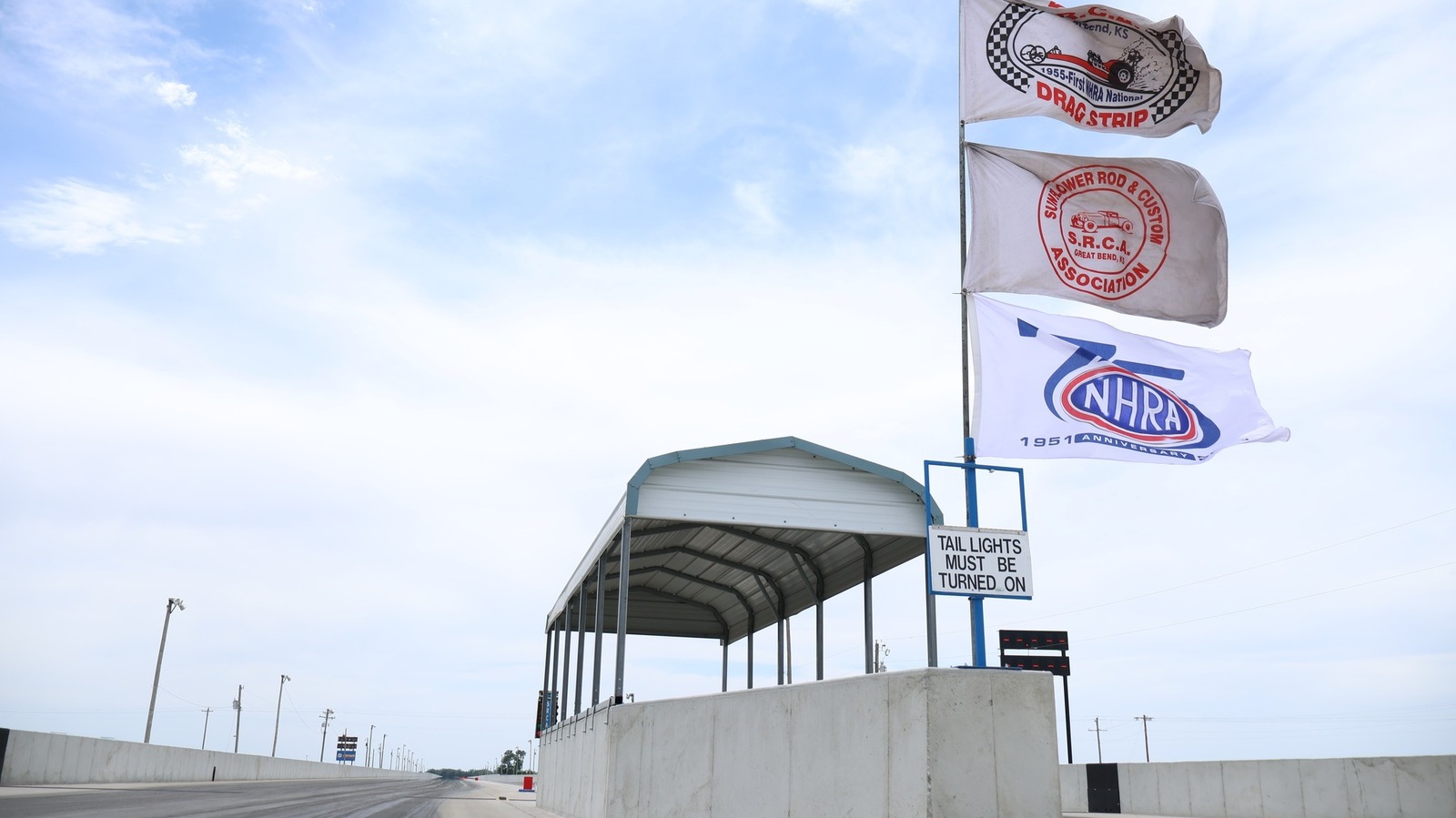


The first-ever NHRA Nationals were held there in 1955. By 2023, a routine track inspection shut the place down. Now, after a $5.9 million renovation, SRCA Dragstrip in Great Bend, Kansas, is back in business — one of the few historic strips in America that can say it survived.
SRCA opened in 1953, making it one of the oldest purpose-built drag strips in the country. When inspectors flagged the surface two years ago, requiring a complete rebuild, it could have easily gone the way of dozens of other tracks that simply padlocked the gates and walked away. Instead, the City of Great Bend stepped up.
The renovation included a fully resurfaced strip and a new timing tower, and the track reopened just weeks ago. That kind of civic commitment is vanishingly rare.
For every SRCA, there are a dozen cautionary tales. The forces conspiring against American race tracks are relentless: noise complaints from encroaching subdivisions, chronic underfunding, and the raw land value that makes every aging facility a target for developers.
Onondaga Raceway in Michigan is a textbook case. The small 1/8-mile strip opened in the early 1960s and has been fighting neighbors over noise since at least 2013. Residents who moved near an operating drag strip filed nuisance complaints. The track won some rounds, lost others, opened, closed, and remains shut as another appeal winds through the courts.
The Onondaga saga did produce one tangible result. Michigan passed a “Right to Race” law earlier this year, shielding established tracks from nuisance claims filed by people who showed up after the engines were already running. Kansas, Iowa, and North Carolina have enacted similar protections. Whether those laws arrive in time to save tracks already bleeding out is another question entirely.
Milan Dragway, also in Michigan, found a different lifeline. The IHRA purchased it as part of a seven-track acquisition in 2025, rebranding it Darana Dragway and gutting the place down to the studs — new surface, new stands, new amenities. Milan had become the Detroit area’s last drag strip after Detroit Dragway closed, which gave it leverage most small tracks simply don’t have.
Lose the only strip serving a major metro area and you lose a customer base nobody can replace. The pattern is clear enough. Tracks that survive either have deep institutional backing — a city government, a sanctioning body with money to spend — or they die.
The romantic notion of a local promoter keeping the lights on with gate receipts and a prayer belongs to another era.
And then there’s the land itself. A drag strip sits on long, flat, paved acreage, often near expanding suburban corridors. To a developer or a data center operator scouting sites, a struggling quarter-mile looks less like hallowed ground and more like a shovel-ready parcel. When the owner is already drowning in deferred maintenance and thin crowds, the math does itself.
SRCA beat those odds because Great Bend wanted it to. The city saw a historic asset worth preserving and wrote the check. That $5.9 million bought more than asphalt and a timing tower. It bought continuity with a strip that hosted the sport’s first national championship seven decades ago.
The uncomfortable truth is that most communities won’t make that call. Tracks will keep closing, land will keep getting flipped, and the places where American drag racing was born will keep disappearing under rooftops and server farms. SRCA’s reopening is worth celebrating precisely because it is the exception, not the beginning of a trend.





Share this Story