About This Dodge Challenger Build
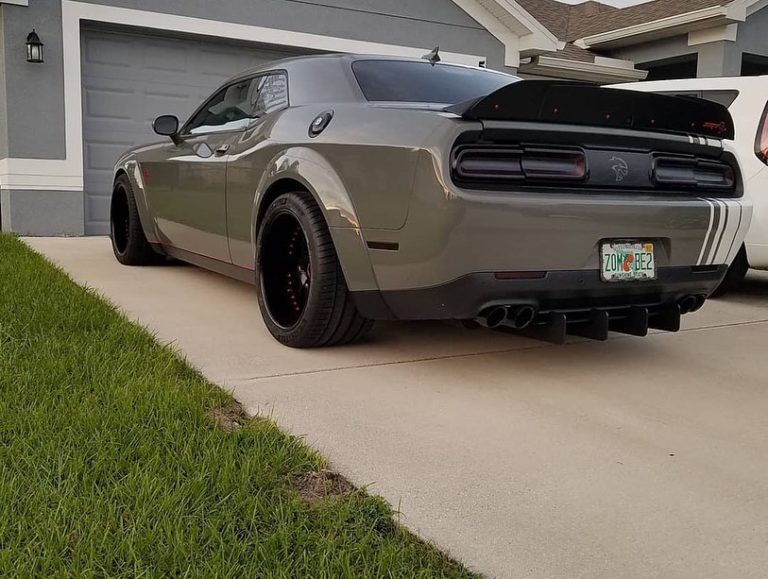
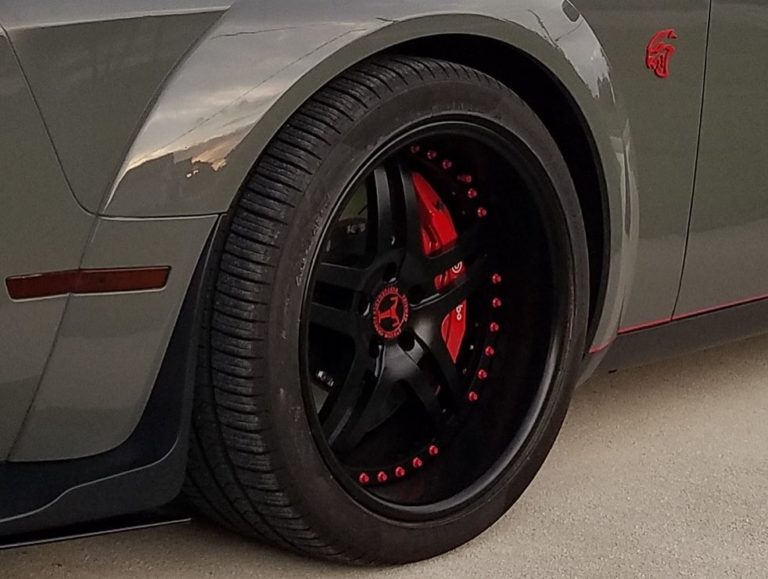
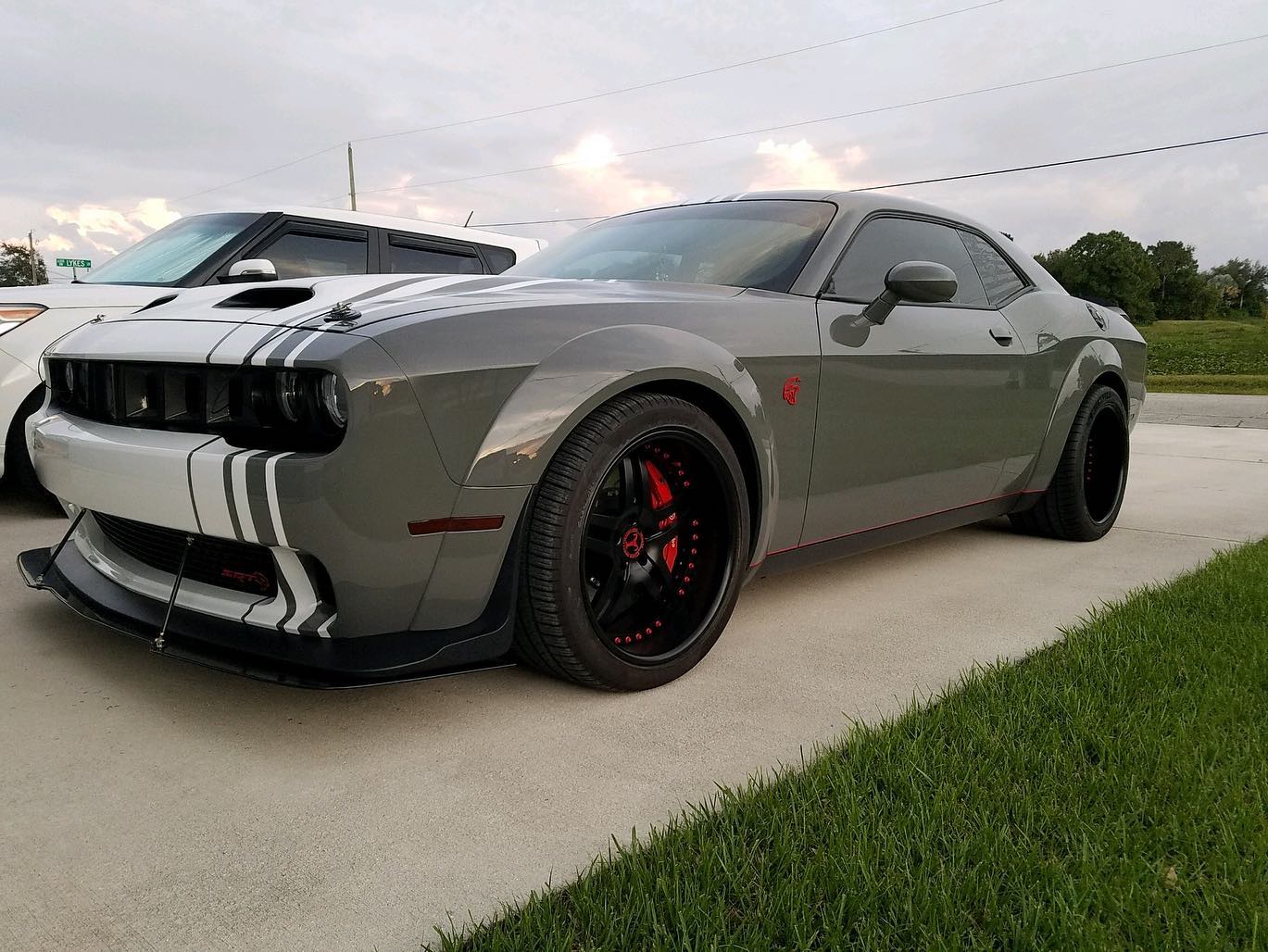
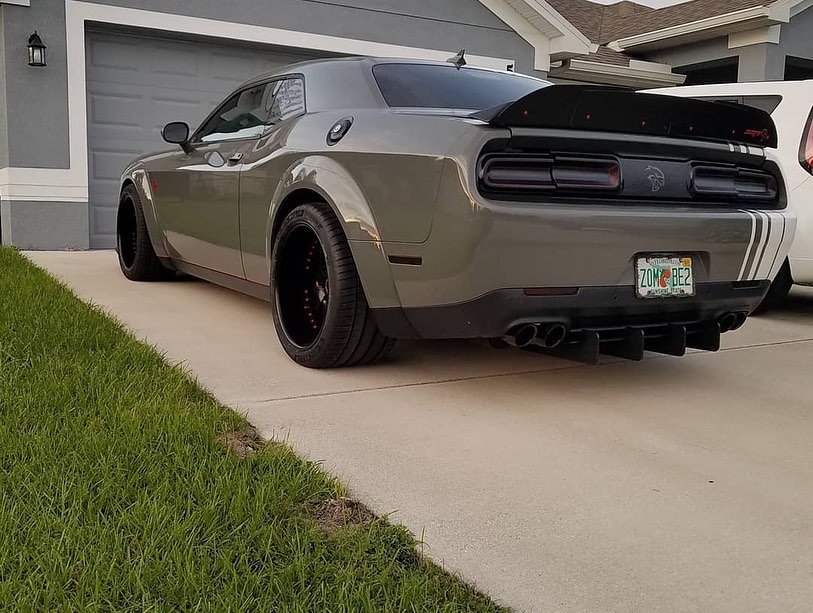
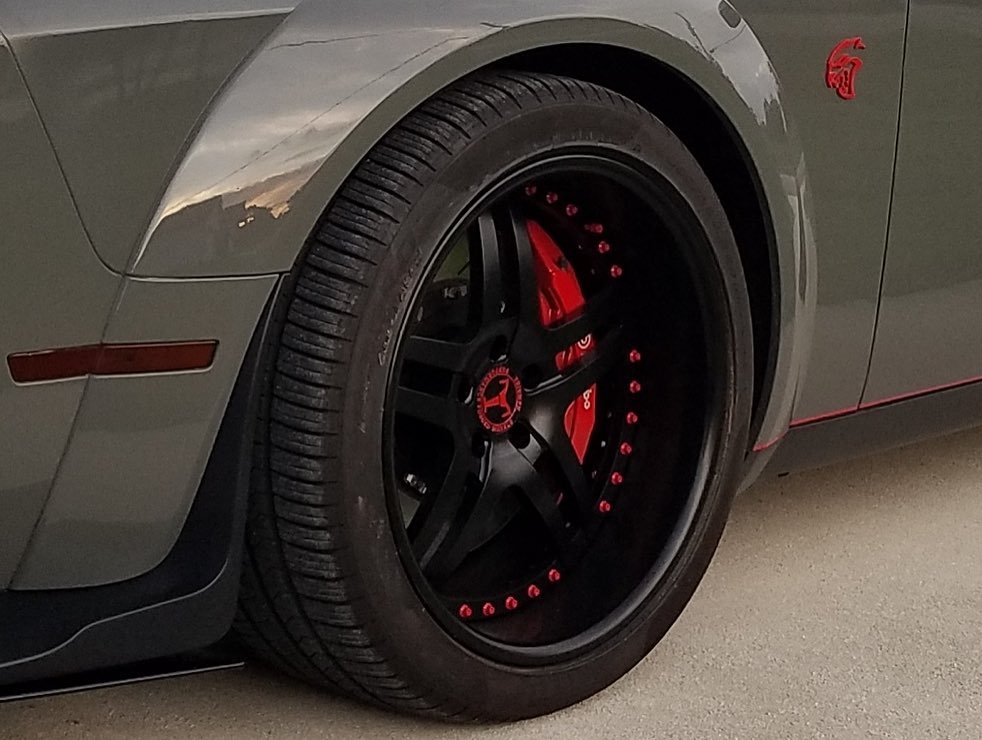
We love featuring real builds from real owners. This Grey Dodge Challenger sits on a set of 20×11 and 20×12.5-inch Triumph Forged SVS wheels, and the result speaks for itself.
The owner chose Triumph Forged for a reason. This brand delivers serious quality and a design language that turns heads at every car meet. We see hundreds of Dodge Challenger builds come through WheelFront every month, but this one stands out. The combination of the Grey exterior with the Triumph Forged SVS creates a look that balances aggression with elegance.
Fitment Breakdown: Triumph Forged SVS on the Dodge Challenger
I walked around this Challenger for twenty minutes just to soak in the stance. Running 20x11 up front and 20x12.5 in the rear is a massive commitment to grip. These Triumph Forged SVS wheels fill those cavernous Mopar wheel wells perfectly.
The 20x11 front setup requires careful offset selection to clear the massive Brembo calipers. We saw no interference here because the barrel profile on these SVS wheels provides generous clearance. The hub bore matches the Challenger factory specs to ensure a vibration-free ride at triple-digit speeds.
That 20x12.5 rear width changes the entire character of the car. It pushes the contact patch right to the edge of the quarter panel without looking like a circus wagon. You get that deep, aggressive lip that only a true wide-body style setup provides.
The spoke design on the SVS creates a visual bridge between the heavy muscle car aesthetic and modern racing tech. It keeps the weight down while maintaining the structural rigidity needed for a heavy Dodge. You can tell the engineers at Triumph calculated every millimeter of this offset.
Regarding suspension, this car sits on adjustable coilovers that bring the fenders down to the tire shoulder. This drop makes the 20-inch diameter look purposeful rather than gaudy. We checked the inner liners and saw just enough room for full steering lock without rubbing.
You have to be careful with the inner clearance on the rear trailing arm. We saw a tight gap, but it clears perfectly during hard cornering loads. If you go any wider than 12.5 in the rear, you are asking for frame contact or serious fender modifications.
I love how the wheel face stays tucked just enough to protect the paint from road debris. It is a functional, track-ready fitment that happens to look mean on the street. This is how you build a Challenger.
What We Recommend for Dodge Challenger Owners
If you want this look, do not just guess your offsets. We suggest sticking to a 20-inch diameter for the best balance of tire sidewall and wheel impact. A 10.5 or 11-inch front width is the absolute sweet spot for handling performance.
Staggered setups are non-negotiable for these cars. You need the extra rear width to put that Hemi torque to the pavement. A square setup just ruins the aggressive silhouette that defines the Challenger platform.
Watch your tire choice carefully when you move to these wider wheel specs. We recommend a high-performance radial to match the quality of a forged wheel. Do not stretch a narrow tire over a wide barrel just to get a look, as it destroys your grip.
Many owners make the mistake of buying cheap cast wheels that bend under the car's weight. Invest in forged construction like the SVS wheels on this build. You pay more upfront, but you save your alignment and your fenders in the long run.
If you plan to slam the car, you might need to roll the rear fenders slightly. Most modern Challenger builds can handle a 12-inch wide rear with the right offset, but check your clearance twice. Never assume a bolt-on fitment will work without a test fit.
Style and Build Analysis
The Satin Black finish on these Triumph wheels looks incredible against the muted Grey paint. It is a monochromatic, sinister vibe that feels professional and intentional. You do not see any chrome distractions here, just raw, dark metal.
The SVS spoke pattern has enough complexity to catch the light, even in black. It keeps the wheels from looking like flat, dark blobs in the wheel arches. You get a nice shadow play that highlights the craftsmanship of the forging process.
Proportion is the secret sauce for this build. Most people overdo it with 22s or tiny 19s, but the 20s provide the right weight and visual balance. The car looks planted, stable, and ready to attack a corner.
Compared to other builds we feature, this one avoids the "try-hard" trends. It relies on clean lines, a perfect drop, and premium hardware. It proves that you do not need wild colors to make a massive impact at a car meet.
Every time I look at the side profile, the connection between the grey body and the black wheels feels tight. It is a cohesive design language that commands respect. This is exactly how you customize a modern muscle car.
Why We Love This Build
This Challenger stops us in our tracks because it balances aggression with true build quality. The way the grey paint pops under the sun while the satin black wheels ground the car is pure perfection. It looks like a factory prototype that was built for the track rather than the showroom floor.
We see thousands of cars, but this specific combination of the Triumph Forged SVS and the Challenger body is an all-time great. It fills the arches with menace and tells the world this car means business. It makes me want to head to the garage and start my own project immediately.
You need to see this fitment in person to really appreciate the stance. It is the gold standard for how to modify a heavy American machine. Just get the offsets right and go drive the hell out of it.
Full Specs Breakdown
Here is exactly what this owner is running. We break down every detail so you can replicate this build or use it as a starting point for your own setup.
- Car Make & Model: Dodge Challenger
- Vehicle Color: Grey
- Wheel Brand & Model: Triumph Forged SVS
- Wheel Size: 20×11 and 20×12.5
- Offset: Contact dealer
- Wheel Finish: Satin Black
Before You Buy: Fitment Checklist
We talk to Dodge Challenger owners every day. These are the questions we hear most before they pull the trigger on new wheels.
Will 20×11 and 20×12.5-inch wheels fit my Dodge Challenger? Yes, but fitment depends on width, offset, and tire size working together. A wrong offset means rubbing. A wrong tire size means poor handling. Always verify all three.
Do I need to modify my fenders? That depends on your offset and suspension. A conservative offset with stock ride height usually fits without modification. Go aggressive and you may need to roll or pull your fenders.
Can I daily-drive this setup? Absolutely. Thousands of Dodge Challenger owners run 20×11 and 20×12.5-inch wheels every day. The key is choosing the right tire with enough sidewall to absorb road imperfections.