
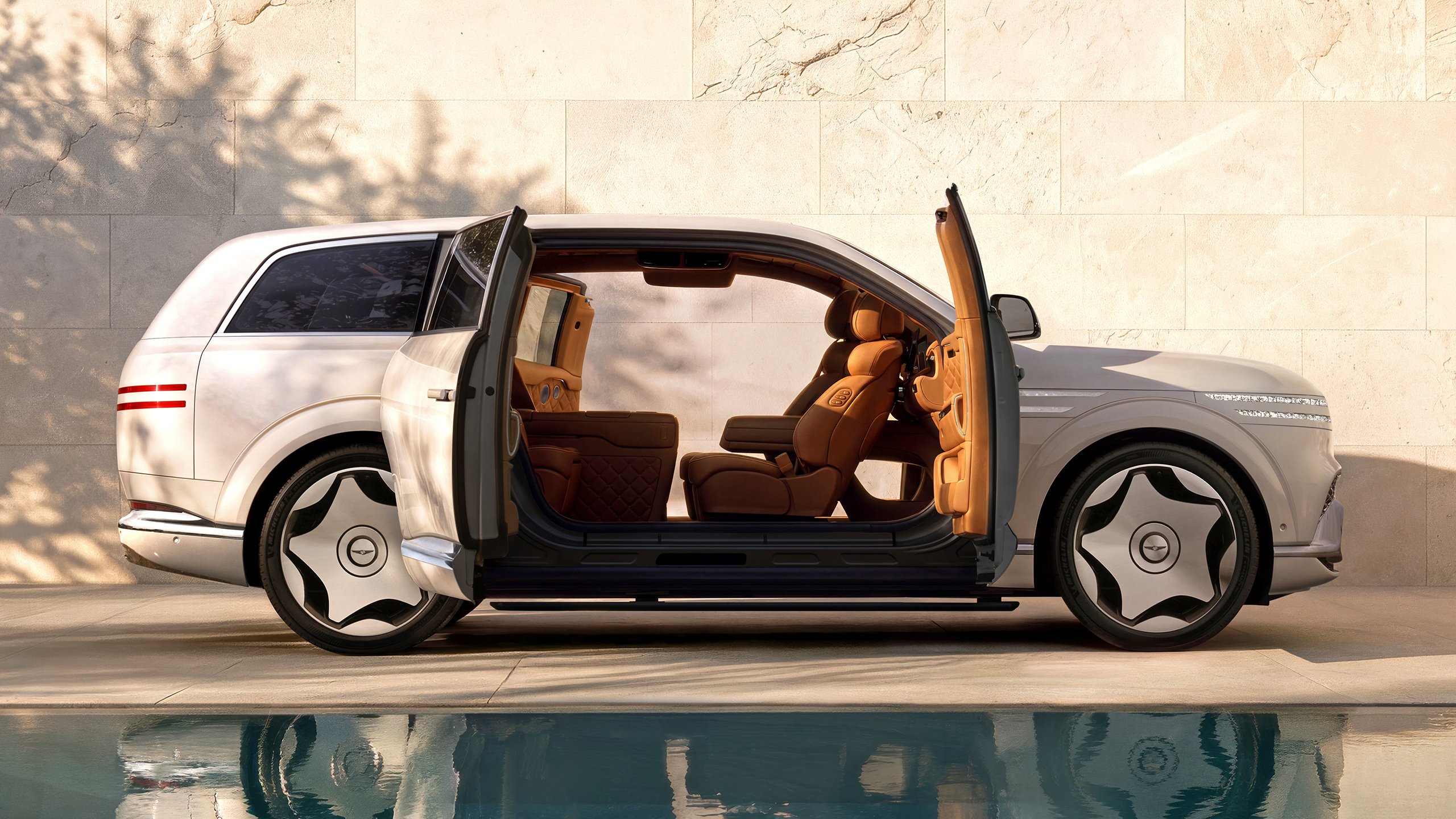


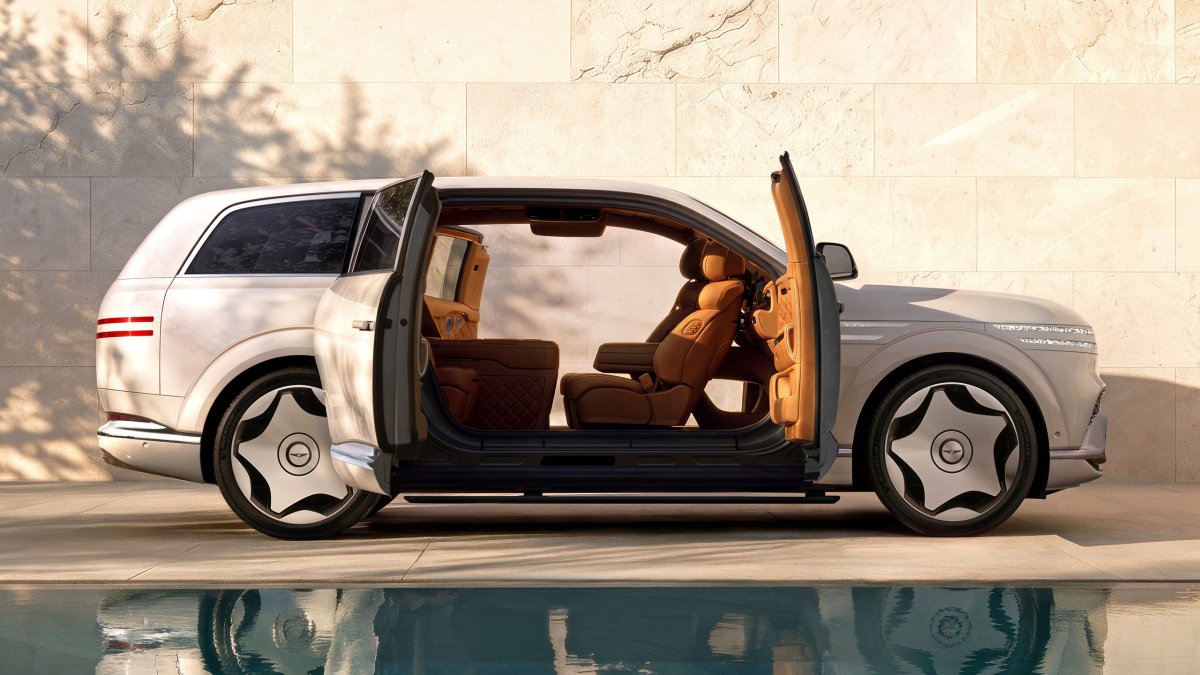
Two years after the Neolun concept turned heads, Genesis has pulled the sheet off the production 2027 GV90, and the wild stuff survived. The sliding rear-hinged doors, the swiveling front seats, the glass roof with its own airbag. All of it made the cut.
The GV90 is a full-size, all-electric luxury SUV riding on Genesis’ bespoke eMP architecture. A 123.5-kWh battery feeds dual motors producing 657 horsepower and 590 lb-ft of torque, with electronic limited-slip differentials at both axles. Multi-chamber air suspension and rear-wheel steering round out the mechanical spec, with estimated range sitting at 310 miles for the seven-seat configuration.
None of that is what makes this truck interesting.
The doors are the headline, and they deserve to be. Genesis calls them the Neolun Arch Gate, available on the Neolun trim. The rear doors slide outward before rotating open, which is why a prototype spotted last year had its rear fender panel removed.
Front and rear doors open simultaneously and independently, no latching sequence required. That’s a trick no other coach-door vehicle has pulled off in production. Without a traditional B-pillar, Genesis claims the cabin frame is 50 percent thicker than conventional vehicles and matches the crash performance of B-pillared SUVs.
Aluminum in the underbody is supposed to offset the weight penalty. Nobody should hold their breath for a light curb weight on a three-row electric SUV with 24-inch wheels and trick doors.
The interior is where Genesis really leans into its ambitions. There is no instrument cluster, digital or otherwise. All driver information runs through a heads-up display.
The 23.6-inch central OLED screen extends upward by 3.5 inches when parked, turning into a widescreen for media. It runs Hyundai Group’s latest Android Automotive-based software, called Pleos Connect.
A rotating pylon behind the steering wheel serves as the gear selector. When the vehicle is off and empty, it sits at 12 o’clock. Once the driver closes the door, it drops to 2 o’clock and becomes a shift stalk. There is no power button.
The glass roof on the Neolun Executive Suite uses electrochromic panels with adjustable opacity. More unusually, the roof packs an airbag designed to shield occupants from glass shards in a rollover. That’s a feature born from engineering pragmatism, not showmanship.
Outside, the double LED lightbar up front does double duty. Those strips, which Genesis calls the Wing Face Micro Lens Array, are the headlights. No separate projectors. It’s a clean look that will almost certainly carry an ugly repair bill.
The design translates from concept to production with remarkable fidelity. Side mirrors are the most obvious concession to real-world regulations. The body panels flow into each other without hard creases, giving the GV90 a sculpted, monolithic presence that avoids the slab-sided look plaguing most large SUVs.
Interior color options include green, indigo, and purple alongside the expected caramel. Genesis is clearly not chasing the conservative buyer here. This is a vehicle aimed squarely at the Bentley Bentayga and Rolls-Royce Cullinan crowd, but from a radically different design philosophy.
Genesis says the GV90 arrives at dealers in 2027. Pricing and an exact launch window remain unannounced. Given the tech on display, the number will tell us whether Genesis is serious about competing at the top of the luxury market or just visiting.
Share this Story