
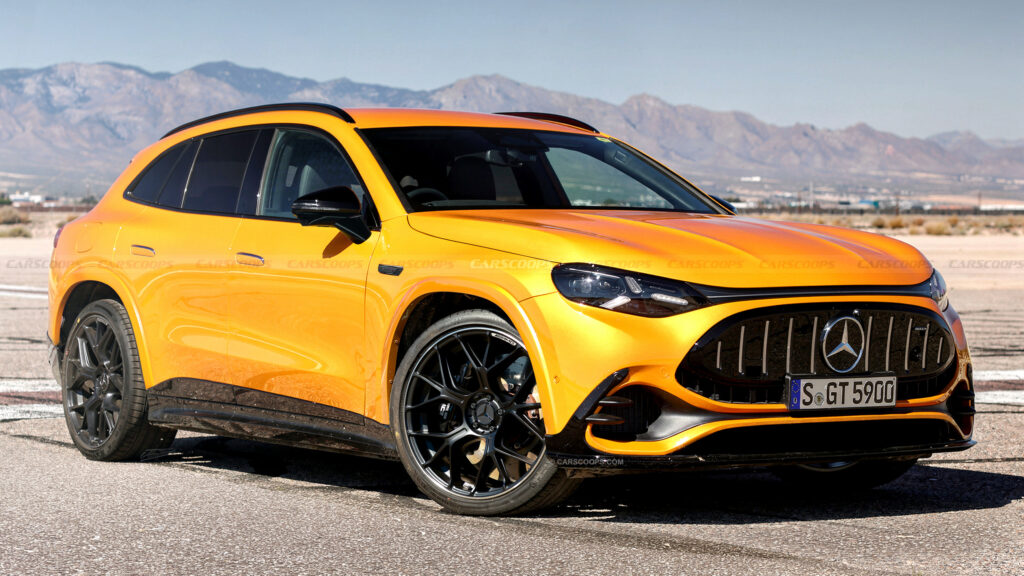


Mercedes-AMG is building a 1,153-horsepower electric SUV that simulates gear shifts it doesn’t need and plays a synthesized V8 soundtrack from an engine that doesn’t exist. That sentence alone tells you everything about where the performance car industry stands in 2025.
The unnamed SUV, a high-riding sibling to the already polarizing AMG GT 4-Door electric sedan, will ride on the dedicated AMG.EA platform and pack a tri-motor axial-flux powertrain developed with YASA. It targets a sub-2.5-second sprint to 60 mph, 435 miles of WLTP range from a 106-kWh battery, and DC fast charging at up to 600 kW on an 800-volt architecture derived from Formula 1 work.
Those are staggering numbers. They should speak for themselves. And yet AMG apparently doesn’t trust them to.
The fake V8 rumble and phantom gear changes are designed to inject drama into an experience that, by its nature, delivers torque instantaneously and silently. It’s a concession, not to physics, but to psychology. AMG knows its buyers associate performance with noise and mechanical ritual, and ripping that away, even while doubling the horsepower, risks alienating the customer base that made AMG what it is.
The lesser GT 55 variant still pumps out 805 horsepower, which would have been headline-grabbing lunacy a decade ago. Now it’s the “entry-level” option. The GT 63 tri-motor setup delivers 1,475 lb-ft of torque to all four wheels, a figure that makes the current V8-powered AMG GLE 63 S look quaint.
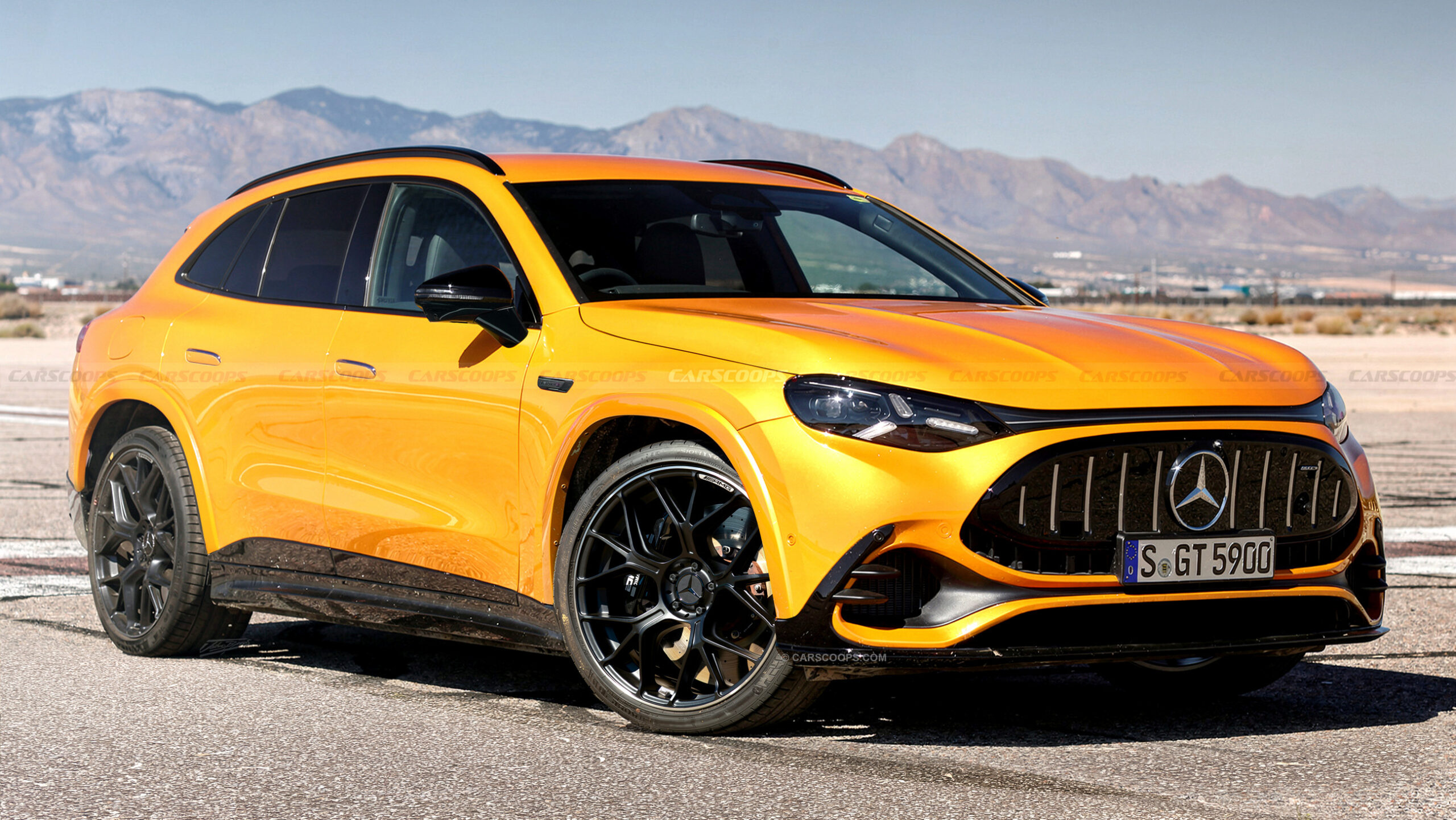
Spy shots and render work suggest the SUV resolves some of the sedan’s most controversial styling decisions. The gaping front end carries over, but proportions apparently work better on a taller body. Tri-circle taillights sit in a cleaner rear panel, and the overall stance reads more cohesive than its four-door sibling.
That sedan split opinion violently, and AMG needs the SUV to land cleaner because SUVs are where the actual money lives.
Inside, expect a near carbon copy of the sedan: a 14-inch digital instrument cluster, 10.2-inch infotainment screen running Mercedes’ new MB.OS software, augmented-reality head-up display, Burmester 4D audio, and the usual Alcantara-and-carbon-fiber performance theater.
The chassis uses adaptive air suspension, rear-axle steering, active roll stabilization, and torque vectoring to manage the inherent problem of a heavy, tall vehicle trying to behave like a sports car. The aluminum-intensive platform uses high-strength materials to contain weight, though AMG hasn’t disclosed curb figures yet. That silence is telling.
Competition is fierce and getting fiercer. The Porsche Cayenne Electric is the obvious benchmark, with Stuttgart’s SUV cash cow going battery-powered. The Lotus Eletre is already on the road with 905 horsepower in R+ trim, and Xiaomi’s YU7 GT lurks as a Chinese-market wildcard that could pressure pricing across the segment.
AMG has publicly committed to 27 new models in 36 months as it scrambles to close ground on BMW M. This SUV, expected to debut in early 2026 as the second AMG.EA product, is central to that blitz. The platform has to prove it can underpin an entire performance lineup, not just a single sedan that polarized everyone who looked at it.
The engineering here is genuinely impressive: axial-flux motors, 600-kW charging, F1-derived electrical architecture. AMG has built something that could redefine what an electric performance SUV delivers on paper and on pavement. But strapping a fake V8 soundtrack to 1,153 silent horsepower suggests that even AMG isn’t fully convinced the future sells itself yet.

Share this Story