
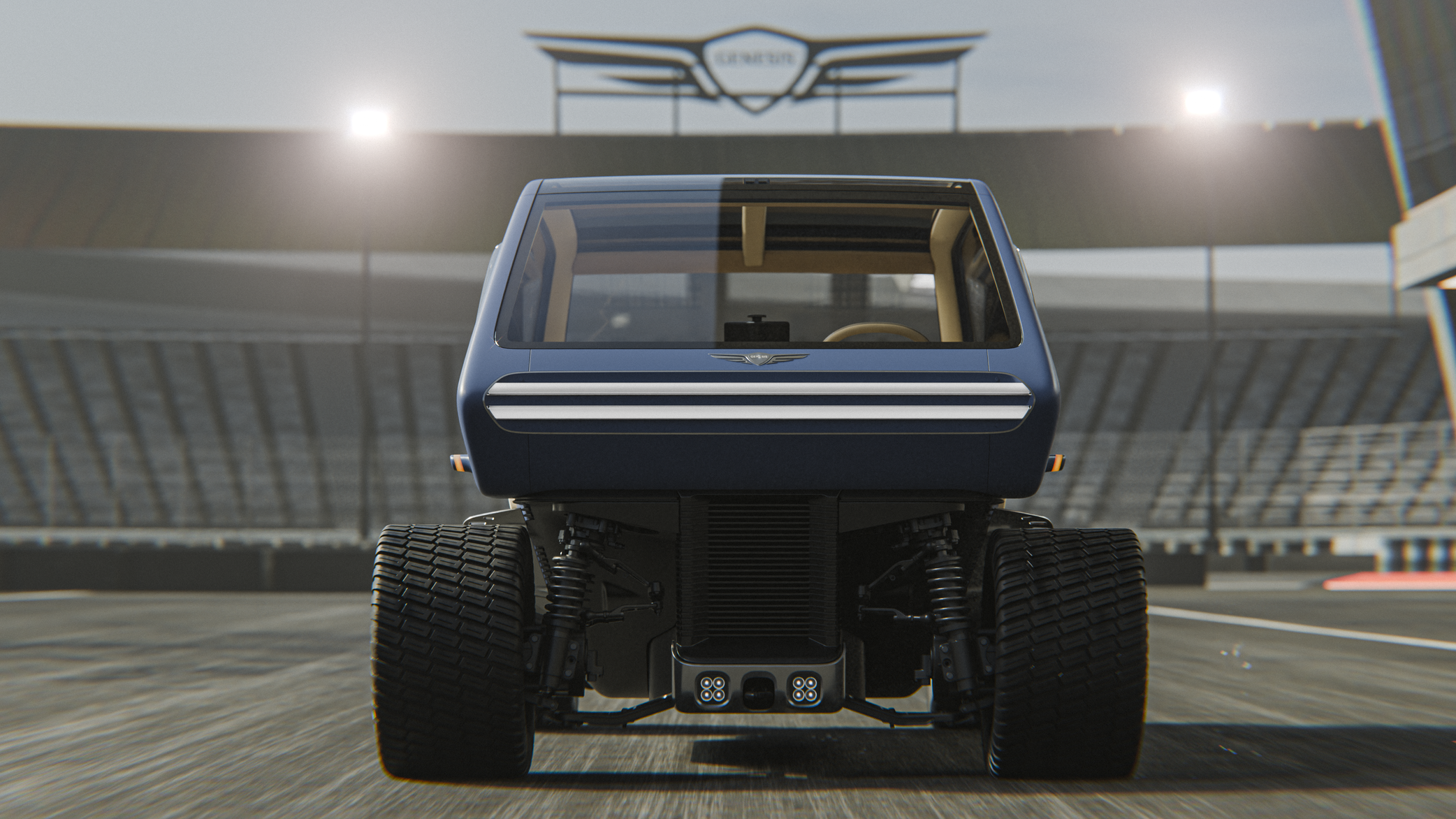


Genesis showed up to the 2026 24 Hours of Le Mans with a hypercar, a GT3 concept, a refined supercar, and — for reasons not entirely clear — a trapezoidal electric golf cart on steroids.
The Box Buggy, as the Korean luxury brand calls it, served as a pit-lane shuttle during the legendary endurance race. It packs four electric motors producing 40 horsepower each, four-wheel steering capable of 90-degree wheel rotation, and tartan-upholstered seats that look like they were lifted from a Scottish country club. No doors. Minimal controls. Maximum absurdity.
This is the pet project of Luc Donckerwolke, Genesis’s president and chief creative officer, who hand-picked a skeleton crew of four or five designers to bring the thing to life. Donckerwolke reportedly bragged that the combined 160 horses were more than enough to do four-wheel burnouts. In a pit lane buggy. At Le Mans.
The underlying technology is anything but frivolous. The Box Buggy rides on four “e-Corner modules” developed by Mobis, Hyundai Motor Group’s electrification and smart mobility subsidiary. Each module integrates an electric damper, electric motor, brake-by-wire, and steer-by-wire systems into a single unit.
The crabwalk capability — sliding perpendicularly into tight spaces — is a direct demonstration of what this tech could do in future production vehicles.
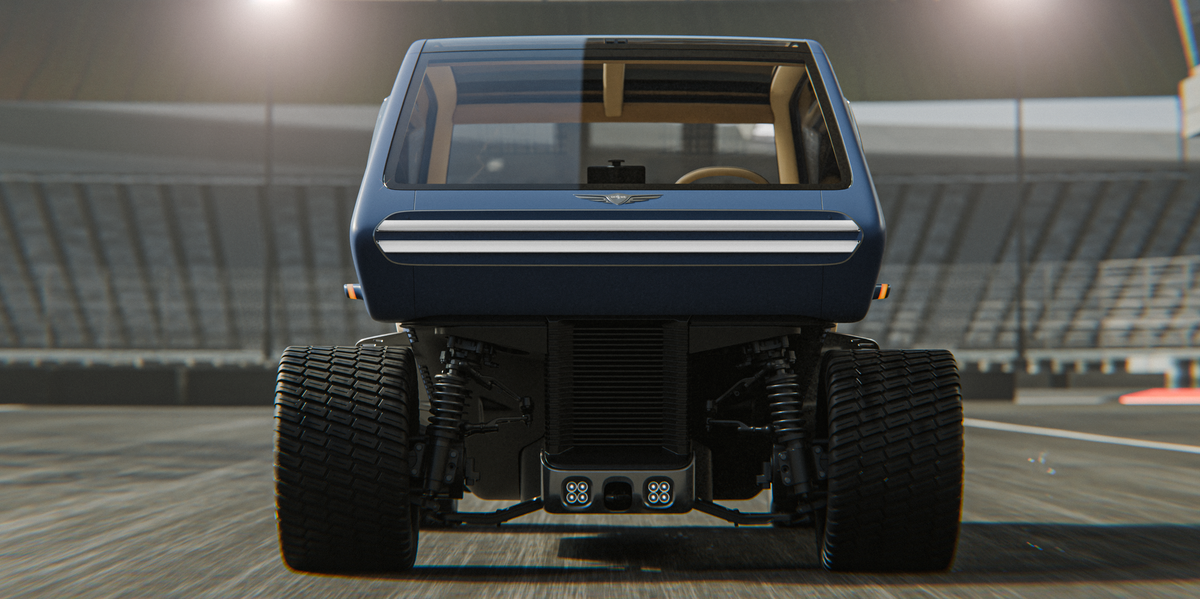
Genesis isn’t saying much about the battery, the range, or why exactly a buggy was the chosen form factor. The company also hasn’t disclosed any plans to put it into production, positioning it instead as a rolling technical exercise and a very expensive way to move team personnel between garages.
But context matters. Genesis wasn’t just playing around at Le Mans. The GMR-001 Hypercar made its competitive debut, a new GT3 concept hinted at a broader motorsport push, and the Magma GT supercar concept returned in more polished form. The Box Buggy sat alongside all of this, looking like an alien landed in the paddock, yet quietly showcasing the same modular electric architecture that could underpin far more serious machines.
That’s the real game here. Hyundai Motor Group has been pouring resources into integrated electric drive modules, and a doorless pit buggy doing crabwalks at Circuit de la Sarthe is a more memorable proof of concept than any engineering white paper. Donckerwolke knows spectacle sells technology. He’s been doing it since his days penning Lamborghinis.
For now, the Box Buggy will reportedly tag along with the Genesis Magma Racing team throughout the 2026 World Endurance Championship season, ferrying crew members and turning heads. Genesis says enough public interest could change its one-off status, which is the kind of thing automakers always say about concepts they have no intention of building.
Still, 160 horsepower, four driven and steered wheels, and zero doors make for one hell of a conversation starter. If nothing else, it’s the most overqualified pit vehicle in motorsport history — and a very expensive hint at where Hyundai’s electric platform strategy is headed next.




Share this Story