
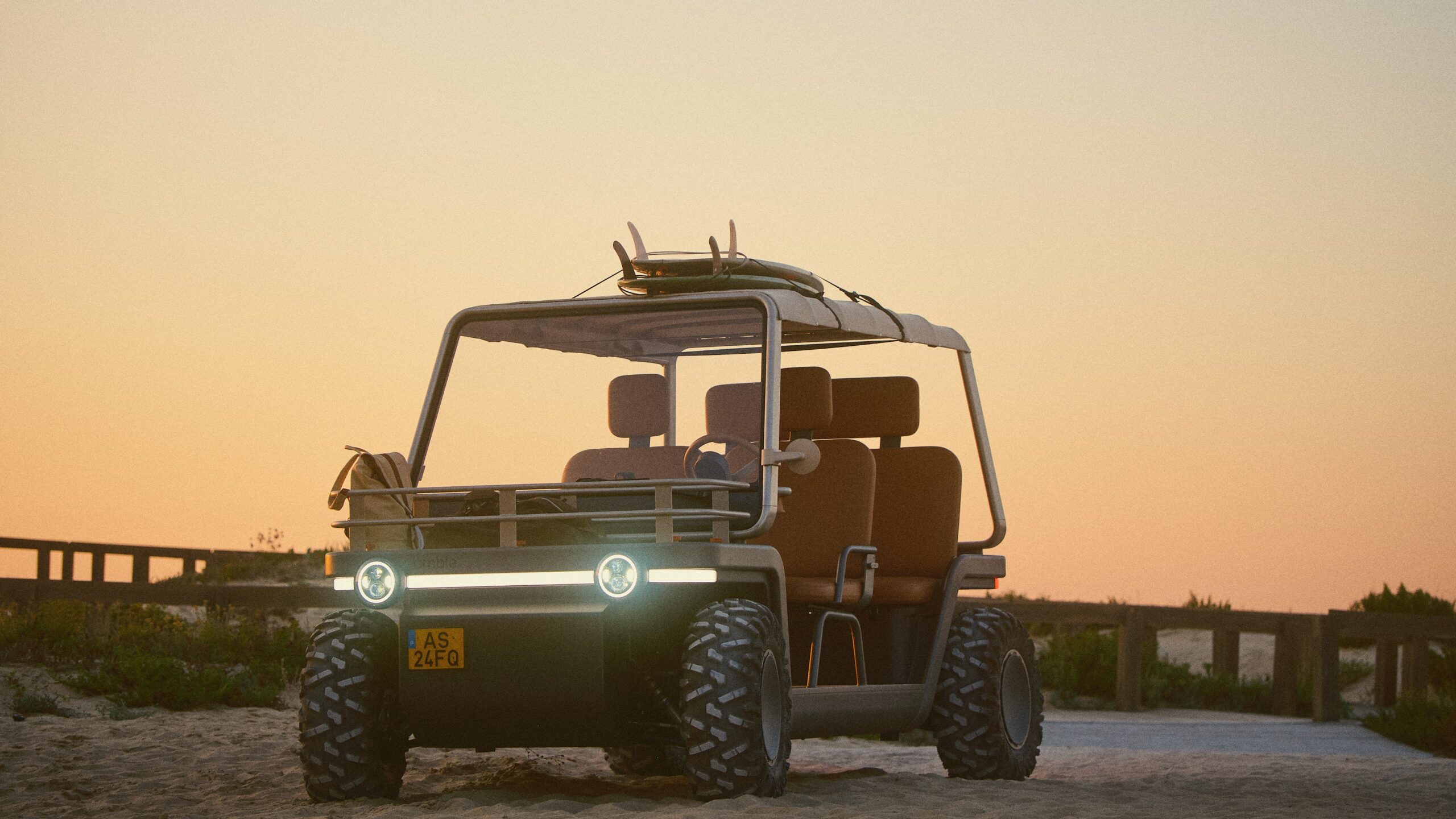


A Portuguese startup wants to replace the tired golf carts ferrying resort guests from lobby to cabana with something that actually has a pulse. The Amble One is a doorless, roofless electric beach buggy designed exclusively for luxury hospitality properties. It will never see a public road.
Amble isn’t chasing the EV market as we know it. There’s no range anxiety here because there’s barely any range to speak of. No top speed worth publishing, no Nürburgring lap time forthcoming.
The company hasn’t even released firm specs, which tells you everything about where this vehicle sits on the performance-versus-vibes spectrum.
The design team reads like an oddly compelling LinkedIn fever dream: the designer behind the Audi RSQ from the Will Smith film I, Robot, the crew responsible for the Nio Firefly EV, and a co-founder from the electric bicycle world. Then there’s José António Uva, who transformed a 19th-century farming estate in southern Portugal into a 780-hectare luxury compound. His problem was simple — guests needed a way to move across a property roughly the size of 1,400 football fields, and the anonymous white golf cart wasn’t going to cut it.
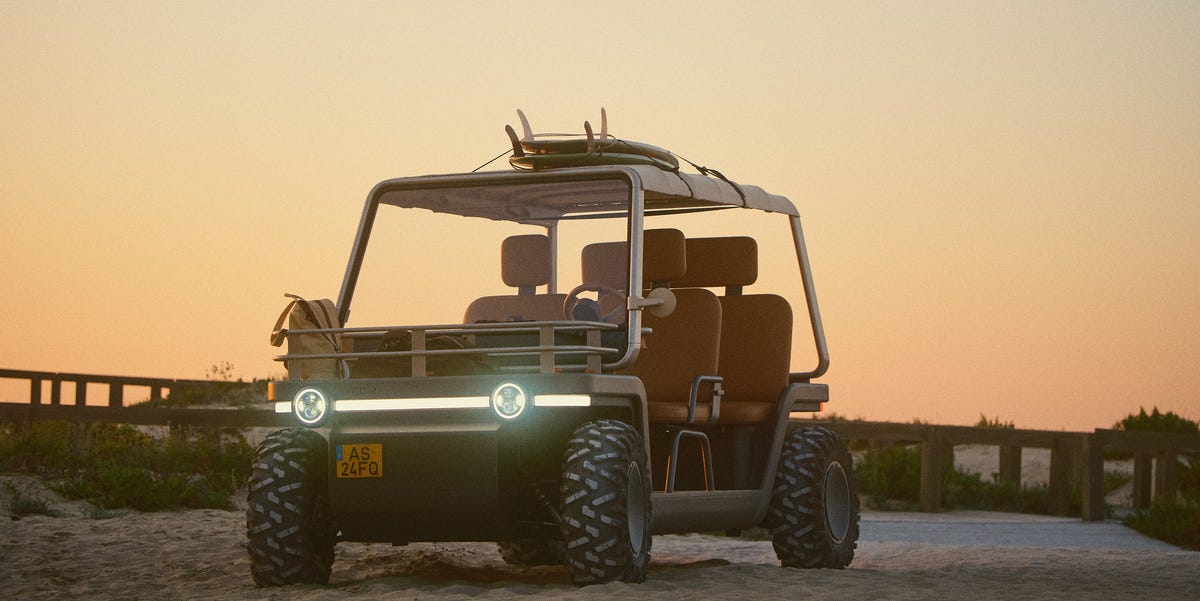
The Amble One borrows its soul from the Mini Moke rather than anything coming out of Detroit or Shenzhen. Chunky tires, a friendly face, a windshield up front and absolutely nothing else between you and the elements. No doors, no bulletproof glass, no pretense of toughness. If the Cybertruck is a middle finger to the world, the Amble One is an open palm.
That contrast isn’t accidental. The luxury hospitality sector has been stuck in a strange rut for decades, with properties spending millions on architecture, linens, and wine lists while shuttling guests around in vehicles that look like they were sourced from a municipal airport. Amble is betting that the ride between the spa and the beach house is itself a product worth designing.
The company says interest from hospitality operators is already strong. Deliveries are targeted for next year, with production slots available into 2028. Whether the economics make sense for resort operators — who tend to abuse fleet vehicles mercilessly — remains an open question.
Salt air, sand, and sunscreen-slathered guests are brutal on machinery. A small Portuguese startup will need to prove durability alongside charm.
Don’t expect to park one in your driveway. The Amble One isn’t street-legal and isn’t trying to be. It exists in that narrow sliver of the market occupied by low-speed vehicles confined to private property, gated communities, and pedestrianized zones.
Think Mediterranean coastal paths, Caribbean resort compounds, and the kind of sprawling European estates where the word “hectare” gets tossed around casually.
There’s a real question buried beneath the appealing renderings: can a startup sustain itself on hospitality fleet sales alone? The addressable market is wealthy but finite. Golf cart manufacturers like Club Car and E-Z-GO have owned this space for decades with cheap, durable, forgettable machines, and Amble is arguing that forgettable is the problem.
It’s a narrow bet, but a clear-eyed one. Nobody needs this vehicle. But the people who want it — the property owners, the resort brands, the experience-economy operators — tend to write large checks when something genuinely delights their guests. The Amble One doesn’t need to be fast or go far. It just needs to make someone smile on the way to dinner.



Share this Story