
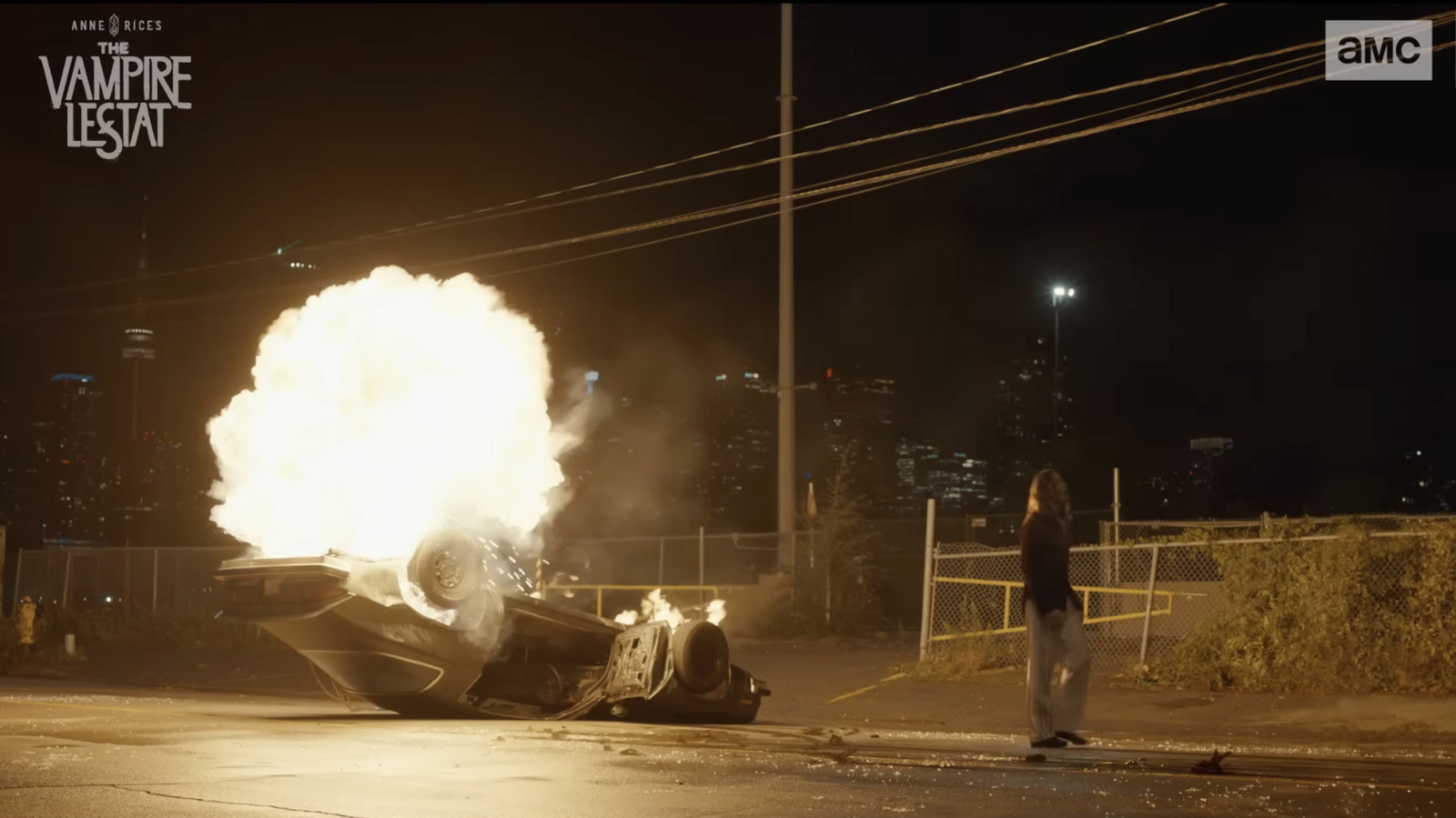


AMC’s adaptation of Anne Rice’s “The Vampire Lestat” has committed what might be the most baffling piece of automotive casting in recent television memory. The show stuck a 256-year-old immortal European aristocrat behind the wheel of a second-generation Chevrolet Camaro, and the car crowd has noticed.
In Rice’s novels, Lestat de Lioncourt drives a black Porsche. No specific model — Rice wasn’t a car person — but the choice was pitch-perfect. A flashy, overpriced European machine for a flashy, emotionally wrecked piece of European immortality. The shoe fit.
The show apparently decided otherwise. Lestat rolls up to a Detroit hotel in that Camaro, and by the second episode, he’s name-dropping a Mustang. Two American muscle cars for a character whose entire identity is built on aristocratic excess and Continental flair.
This isn’t a minor production detail. Cars in film and television function as costume, set design, and character development all at once. The vehicle a character drives tells the audience who they are before a single line of dialogue lands.
A Porsche says wealth, taste, and a hint of reckless vanity. A Camaro says something entirely different — and none of it maps onto a centuries-old French nobleman who prides himself on mastering every era he inhabits.
The conversation around automotive miscasting in entertainment runs deep. Jalopnik’s Erin Marquis, who flagged the Lestat situation, pointed to Apple TV’s “Severance” and “Pluribus” as recent examples of shows that get car casting right. Someone in those art departments clearly understood that the wrong vehicle in a frame can pull a knowledgeable viewer straight out of the story.
Getting it wrong creates a specific kind of dissonance. It’s the same feeling you get when a period piece parks a 1972 model in a scene set in 1969, or when a character supposedly living paycheck to paycheck climbs into a $55,000 truck. Your brain registers the lie before you can articulate it.
The Lestat problem is particularly bad because the character’s relationship with modernity is a core plot element. He adopts the slang, the technology, the culture of whatever decade he’s inhabiting. He doesn’t cling to the past.
A character written with that level of contemporary awareness would not be driving a second-gen Camaro in 2025. He’d be in something current, something that screams money and European pretension. The Porsche was already in the source material. All AMC had to do was read the book.
Product placement likely plays a role here, though AMC hasn’t said so explicitly. It almost always does when a character’s vehicle doesn’t match their established personality. The business of getting cars on screen involves dealerships, manufacturers, and marketing departments, and sometimes the deal that gets done has nothing to do with what the story needs.
Fans of the show seem willing to forgive. Marquis herself admits she’ll keep watching, teeth gritted. The show has taken far larger liberties with Rice’s novels — apparently including a scene where vampires urinate, which is a creative choice that deserves its own investigation — and audiences have stayed loyal.
But the Camaro stings in a way those other changes don’t, because it’s so visible and so easily fixed. Every time Lestat appears on screen with that car, it whispers that nobody in the production chain understood the assignment. Or worse, that they understood it and traded it away for a sponsorship check.
A black Porsche was right there in the text. Sometimes the author already did the work for you.


Share this Story